Oil Breaks $90 as the Strait of Hormuz Becomes a War Zone: What It Means for Your Portfolio
Brent crude surged past $90 a barrel after the US-Iran ceasefire expired and Trump threatened to bomb Oman, signaling a prolonged closure of the Strait of Hormuz. For wealth builders, this is a stark reminder that geopolitical risk is now the dominant driver of energy prices—and a potential hedge for portfolios.
There's a moment in every market cycle when the abstract risk of war becomes a concrete number on your screen. On Tuesday morning, that number was $91.63 for a barrel of Brent crude—the first time oil has traded above $90 since July 30. The trigger? The two-month ceasefire in the US-Israel war on Iran expired on Monday with no peace deal in sight, and President Trump escalated his rhetoric to a new level of menace. In a Fox News interview, he demanded Tehran "put up the white flag of surrender," then casually threatened to "bomb the shit out of" Oman if it "gets in the way" of his war-ending efforts. This isn't just saber-rattling; it's the sound of the world's most critical energy chokepoint being turned into a bargaining chip.
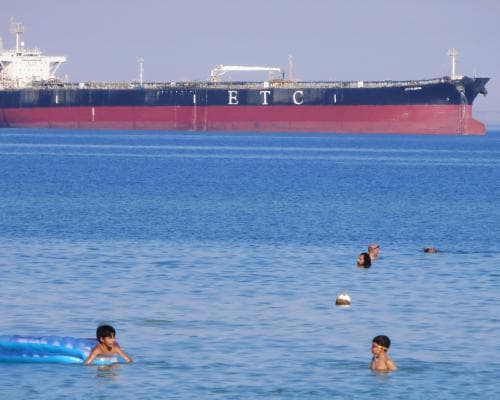
For the uninitiated, the Strait of Hormuz is the narrow waterway between the Persian Gulf and the Gulf of Oman, through which roughly 20% of global oil consumption passes every day. When Iran threatens to close it—and its military spokesperson now says vessels will "find several beautiful holes in their hulls"—the market listens. And it's not just talk. A cargo ship was attacked while transiting the strait early Tuesday, according to the UK Maritime Trade Operations agency. Meanwhile, shipping data from Kpler shows just six commodity ships used the waterway on Monday, up from five over the entire weekend. That's a trickle, not a flow, and it's getting harder to see how this gets resolved without a broader conflict.
The numbers tell the story. Brent crude has jumped roughly 8% in the last week, and analysts are scrambling to price in a more extended closure. Deutsche Bank wrote on Tuesday that rising prices reflect investors anticipating "a more extended closure" of the strait—not just a temporary disruption. Tim Waterer, chief market analyst at KCM, put it bluntly: "A deal to reopen the Strait of Hormuz still does not appear to be in sight." For context, the last time oil was at these levels, the world was still recovering from the pandemic and OPEC+ was managing supply with surgical precision. Now, we have a US president threatening to bomb a longtime strategic ally in the same breath as he demands Iran's surrender. The diplomatic playbook has been thrown out the window.
For wealth builders, this is a moment to reassess your energy exposure. The obvious play is to hold or increase positions in oil producers, tanker companies, and defense contractors—all of which benefit from geopolitical chaos. But the smarter move is to understand the deeper signal: the era of cheap, reliable energy is over, at least for now. Every time a US president threatens a bombing campaign in the Middle East, the risk premium on every barrel of oil rises, and that premium feeds into everything from gasoline prices to airline stocks to emerging-market currencies. The wealthy who hedged with commodities or energy equities are smiling today; those who ignored the geopolitical risk are feeling the pinch.
What's striking is how quickly this escalated. Two months ago, the ceasefire was seen as a diplomatic win—a pause that might lead to a deal. Instead, it's become a waiting game for the next missile strike. Iran's shift to a "fully offensive" military stance, as reported by Reuters, suggests Tehran is done with patience. And Trump's threat to bomb Oman—a country that hosts US military bases—shows he's willing to alienate even his allies to project strength. The market is now pricing in a prolonged closure, and that has implications for global inflation. If oil stays above $90, the Federal Reserve's path to rate cuts becomes murkier, and the "soft landing" narrative starts to crack.
What should you do now? First, don't panic. The market is volatile, but it's also rational in its own way. The risk premium is real, but it's also tradable. Consider adding a small allocation to energy equities or a broad commodities ETF if you haven't already. Second, watch the shipping data. If the number of transits through Hormuz stays in the single digits for another week, oil could easily test $95 or even $100. Third, listen to what the diplomats are saying—or not saying. The fact that there are no active negotiations right now is the most bearish signal of all for stability.
In the end, this is a story about power—military, political, and financial. The Strait of Hormuz has always been a choke point, but now it's a weapon. Trump's threat to bomb Oman is a reminder that no one is safe in this new world order, not even America's closest allies. For those of us watching from the sidelines, the play is clear: respect the risk, hedge your bets, and keep your eye on the barrel price. Because when oil moves like this, it moves the world.


