Oil at $91 Is the Market's New Inflation Tinderbox — and Bonds Are Already Smelling Smoke
Brent crude's climb past $91 a barrel is reigniting inflation fears and driving a global bond sell-off, with yields hitting fresh highs. For wealth builders, the message is clear: the era of cheap money is over, and every portfolio needs a hedge against sticky price pressures.
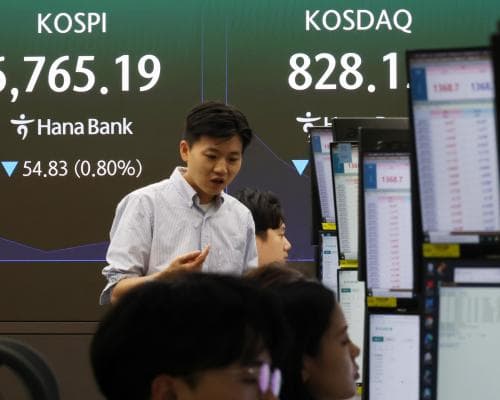
Oil is back above $91 a barrel, and the world's bond markets are flinching like a boxer who's seen the punch coming. Brent crude touched $91.13 on renewed Middle East fighting, and suddenly every fixed-income trader on the planet is asking the same question: how long can central banks pretend inflation is dead when the price of everything that moves by ship, truck, or plane is climbing again?
The sell-off is global. Government bonds from Tokyo to Frankfurt to New York are sliding, pushing yields to levels we haven't seen in months. The logic is brutal and simple: if oil keeps rising, inflation stays sticky, and central banks can't cut rates as aggressively as the market has been pricing in. That means bonds — the supposed safe haven — are becoming the source of the pain. The 10-year Treasury yield has been creeping higher, and European yields are following suit. For anyone holding long-duration paper, it's been a rough week.
Let's get to the numbers that matter. Brent crude at $91.13 isn't just a headline — it's a psychological threshold. Every dollar above $90 adds to the cost of energy, which feeds into everything from airline tickets to the plastics in your car dashboard. The mechanism is classic: oil is a supply-side shock, and central banks can't print their way out of it. The European Central Bank, the Federal Reserve, and the Bank of England all want to cut rates, but they're hostage to the commodity complex. The market is now pricing in fewer cuts for 2025 than it did a month ago. That's the real story here — not just the price of a barrel, but the repricing of every asset class that depends on cheap money.
The players in this drama are the usual suspects: OPEC+ and its production discipline, the geopolitical hot spots that keep threatening supply, and the hedge funds that are piling into crude futures as a hedge against everything else. But the quiet — and arguably more important — player is the bond market itself. When yields rise, equity multiples compress, and the cost of capital for every company in the world goes up. This is the transmission mechanism that keeps wealth managers up at night. If you own a portfolio of growth stocks, you're effectively short oil. If you own bonds, you're short inflation. The only winners are those who saw this coming and positioned accordingly — think energy equities, inflation-linked bonds, or just plain cash.
Now, let's talk about what this means for the wealthy. The days of the 60/40 portfolio are long gone. With bonds selling off and oil rising, the classic diversifier is no longer diversifying. The smartest capital is moving into real assets — commodities, infrastructure, and anything with pricing power. The ultra-wealthy are already rotating out of long-duration government bonds and into shorter-dated paper, floating-rate notes, and energy-backed private credit. They're also looking at gold, which has been quietly grinding higher as a hedge against the fiscal and inflationary reckoning that seems increasingly inevitable.
The signal for markets is unambiguous: the inflation trade is back, and it's not just a US story. Europe is feeling the heat too, with the EU's own energy dependence and the eurozone's fragile growth. The ECB is in a bind — it wants to ease, but it can't if oil keeps pushing the headline inflation number higher. The Bank of England is in the same boat. And in emerging markets, the pressure is even worse, because they import energy and export goods. The dollar is strong, which helps the US but hurts everyone else. This is a global squeeze, and it's not going to let up anytime soon.
What should you do with your money right now? Don't panic, but do rebalance. If you're overweight bonds, consider trimming duration. If you're underweight energy, it's not too late to add exposure. And remember that oil at $91 is not just a number — it's a tax on growth. The longer it stays here, the more it eats into corporate margins and consumer spending. The smartest investors are treating this as a regime shift, not a blip. They're building portfolios that can withstand oil at $100 and inflation at 4%. They're buying assets that throw off cash, not just promises. And they're keeping dry powder for the inevitable volatility that comes when the bond market finally forces the central banks to choose between fighting inflation and saving growth.
The forward-looking close is this: watch the next OPEC+ meeting, watch the next CPI print, and watch the 10-year Treasury yield like a hawk. If oil breaks above $95, the bond sell-off will accelerate, and equities will follow. If it retreats, we get a reprieve — but the structural pressures remain. The era of easy money is over, and the era of energy-driven volatility is just beginning. Position accordingly.