Nigel Farage Skips His Own Victory — and the Market for Political Brands Just Got More Volatile
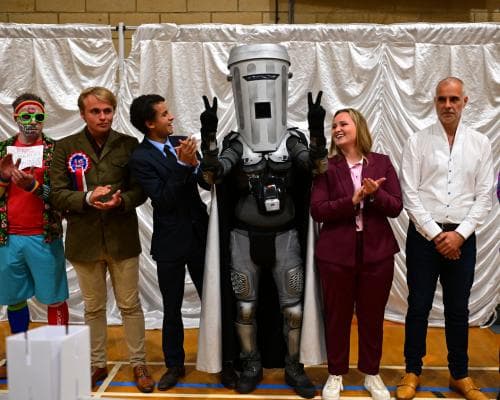
There's an old rule in wealth management: never let the crowd see you sweat. Nigel Farage just applied that to politics. On a night when he was all but guaranteed to win the Clacton seat — a constituency he's been courting like a prized asset — the Reform UK leader skipped the official declaration, leaving his own victory party without its star. The reason? A claimed 'credible threat' from Essex police. The police say no such advice was given. That mismatch isn't just a political spat; it's a lesson in how the most valuable capital in 2024 isn't cash — it's narrative control.
The scale of the event is easy to under-read. Farage didn't just win Clacton; he took it with a 8,405-vote majority, flipping a Conservative stronghold with 46.2% of the vote. That's not a marginal gain — that's a hostile takeover. For Reform UK, this is the kind of breakout moment that re-rates the entire party's valuation. But instead of standing in the spotlight, Farage went dark. He didn't appear at the Leisure Centre count. He didn't give the standard victory speech. He let a surrogate read a statement claiming police had warned him off. The result: headlines about his win were replaced by headlines about his absence. In attention markets, that's a classic short-term hit to brand equity — but it may be a deliberate long-term hedge.
Let's get into the mechanics. The claim, as pushed by a Reform UK spokesperson, was that Essex police advised Farage not to attend due to an 'organised campaign to disrupt and degrade the result.' The force's response was swift and categorical: no such advice was given. They said the decision to attend was 'for individuals and their security teams.' Lee Anderson, Reform's only other MP, doubled down on the party line, telling the BBC he believed Farage over the police — a statement that reads less like fact-finding and more like loyalty to the brand. This is the kind of narrative arbitrage that wealth managers see in distressed assets: when the underlying reality is murky, the story becomes the product. Farage is selling a story of persecution, and the police are selling a story of professionalism. The market for truth just got a flash crash.
Now, the rarity angle. Farage has spent decades building a political persona that's part insurgent, part institution-buster. He's not a billionaire in the traditional sense — no private jet, no hedge fund — but his political brand is worth a fortune. In the last election cycle, Reform UK attracted significant donor money, and Farage's personal brand is the equity behind it. By skipping the count, he's signaling that his own safety — or at least the perception of it — outranks a moment of triumph. That's a bold move in a world where most politicians would kill for a televised victory. It's also a reminder that for the ultra-wealthy, the real asset is not the win; it's the ability to control the narrative around the win. Farage just paid a premium for that control.
What does this signal for markets? For investors watching the UK political landscape, it's a volatility spike. Reform UK is now a credible third force, and that reshapes the risk profile for everything from infrastructure deals to energy policy. A party that can win seats with high-profile, high-drama campaigns is a party that can spook incumbents into faster, more erratic policy shifts. For the wealthy, that means the cost of hedging political risk just went up. But there's a deeper lesson: in an era where every move is live-streamed, the smartest capital deployment is sometimes the move you don't make. Farage's absence was his most powerful trade of the night — it kept him in the news cycle, kept his base energized, and kept his opponents guessing.
Looking forward, the question is whether this strategy compounds or collapses. If Farage's no-show becomes a rallying cry — 'they tried to silence him' — his political capital rises. If it's exposed as a tactical fib, the brand takes a hit. For investors, the takeaway is clear: treat political brands like volatile assets. They can double overnight, but they can also gap down on a single headline. The smart money isn't in Clacton; it's in understanding that in a world of contested narratives, the person who controls the story controls the price. Farage just showed he's willing to pay any price — even missing his own victory — to stay in control.