NGX and Nairobi Exchange Push Cross-Border Listing Model as Dangote Refinery Eyes East Africa
NGX Group and Nairobi Securities Exchange deepen ties, with Dangote backing a plan to let African firms list across multiple markets.
NAIROBI — The most interesting thing happening in African capital markets right now isn't a listing. It's a conversation about whether a company should ever again be confined to one exchange.
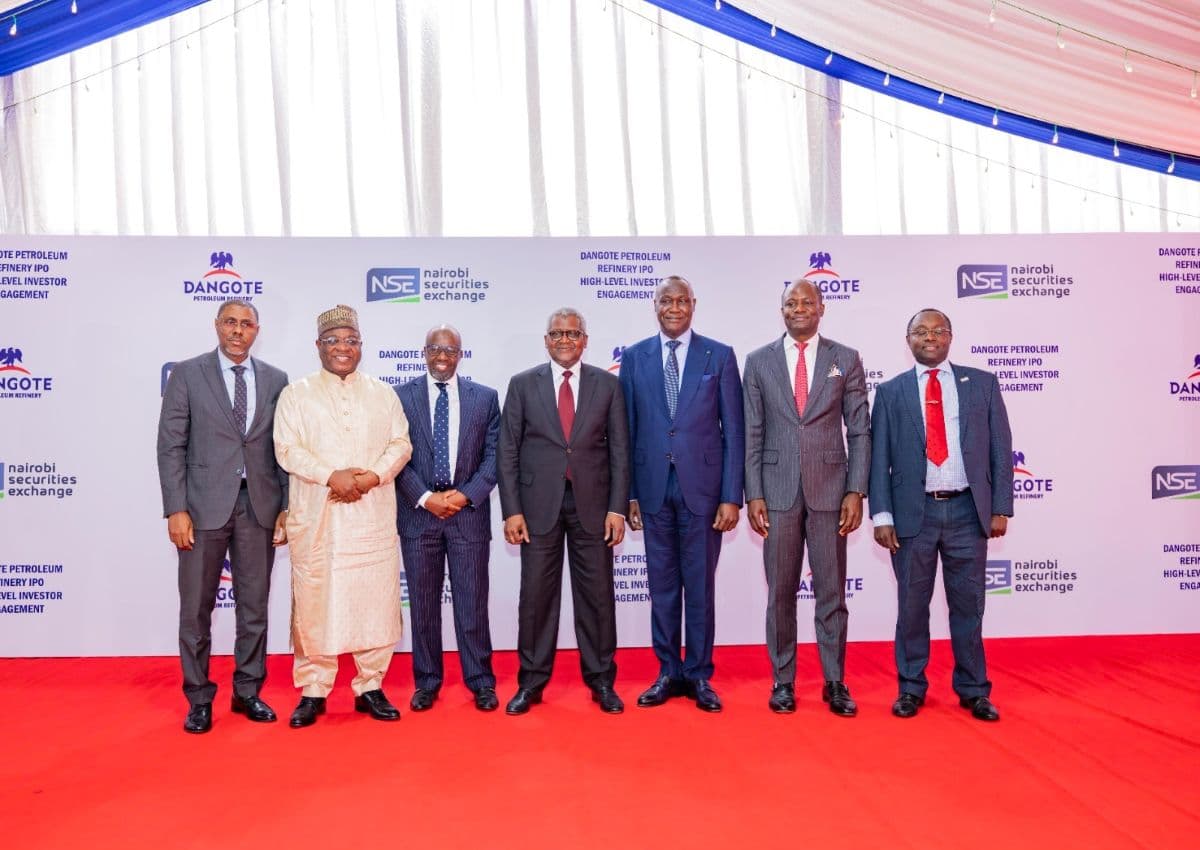
On Tuesday in Nairobi, the Nigerian Exchange Group and the Nairobi Securities Exchange pushed that conversation forward, convening Nigerian and Kenyan market stakeholders to explore deeper cross-border collaboration. The occasion was a high-level investor engagement around a potential initial public offering for Dangote Petroleum Refinery, hosted by the NSE. Aliko Dangote, president and chief executive of Dangote Industries Limited, used the platform to praise Umaru Kwairanga, NGX Group's group chairman, and Temi Popoola, its group managing director and CEO, for advancing cooperation among African capital-market institutions. Dangote's argument was straightforward: stronger ties between African exchanges would let companies raise capital across multiple markets instead of being tethered to their home bourse. He pointed to the planned Dangote refinery in Mokowe, Lamu, as an example of what integrated markets could unlock — a project built to serve East Africa, and one that arguably should be able to list beyond Nigeria's borders. No deal size, valuation or timetable for any listing was disclosed.
For readers outside the region, the players matter. NGX Group is the holding company behind the Nigerian Exchange, West Africa's largest equity market by capitalisation and the listing venue for many of the continent's biggest banks and consumer names. The NSE is East Africa's most established bourse, the gateway for Kenyan corporates and a frequent home for regional issuers. Dangote Industries is Africa's best-known industrial conglomerate, and its refinery project — a planned 700,000-barrel-per-day facility in Lamu — is one of the continent's most consequential private infrastructure bets. The Tuesday meeting did not emerge from nowhere: it builds on a strategic gathering NGX Group convened in Lagos in April, where leaders of major African exchanges met to discuss market connectivity.
The mechanics of that connectivity are where the real work lies. African exchanges have historically operated as silos — separate currencies, separate regulators, separate settlement systems, separate investor bases. The African Exchanges Linkage Project, a continental initiative to facilitate cross-border trading and investment, is the formal vehicle for changing that. Popoola framed Kenya as a deliberate first step rather than a one-off: a model to be strengthened and potentially replicated across other markets. Frank Mwiti, the NSE's chief executive, credited NGX Group with facilitating the engagement and noted that closer cooperation could deepen market relationships, spread expertise and widen opportunities for both investors and issuers.
Why should anyone tracking African wealth care? Because the continent's capital markets remain fragmented at precisely the moment its companies are outgrowing single-country scale. A refinery serving East Africa, a bank with subsidiaries in a dozen economies, a telecoms operator spanning multiple regions — these businesses are continental in footprint but often national in listing. Cross-border access to capital would give them deeper pools of investors, better price discovery and, in theory, cheaper funding. It would also give African pension funds and asset managers more ways to deploy the savings they steward at home. Popoola was explicit that the ambition extends beyond any single transaction, describing the goal as building a prototype for how African markets can support greater connectivity among themselves, with the potential to scale across West Africa and the wider continent.
None of this is guaranteed. Exchange linkages have been discussed for years, and regulatory harmonisation moves slowly. But the Nigeria–Kenya axis now has something earlier efforts lacked: a concrete commercial catalyst in the Dangote refinery's East African ambitions, and two exchange leaders willing to treat each other as partners rather than competitors. If the model holds, the next test will be whether other markets — in West Africa, Southern Africa, North Africa — sign on. Watch for whether the April Lagos discussions and this Nairobi engagement produce a repeatable template, or remain a promising bilateral experiment. For a continent that has spent decades exporting its best companies to London, New York and Johannesburg, that distinction matters enormously.


