Ness Digital Engineering bets on Sudip Singh to steer its AI-era pivot from Guadalajara to the world
Ness Digital Engineering names Sudip Singh CEO, effective March 2026, to lead AI-driven growth from its Guadalajara hub in Latin America.
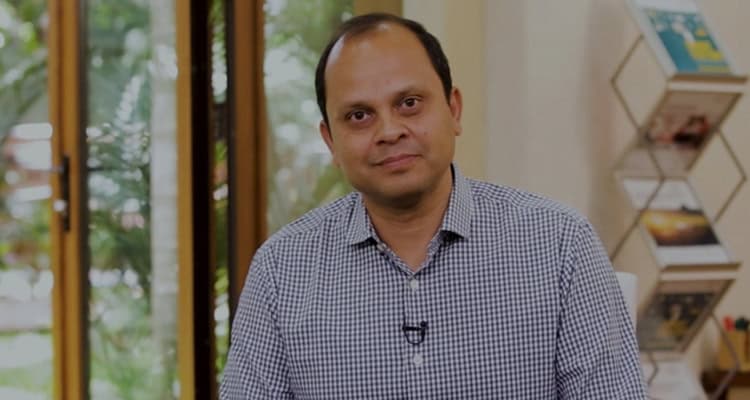
For anyone tracking where South American tech capital is heading, the news out of Ness Digital Engineering is not just a corporate handover. It is a quiet signal that the region's nearshoring boom is maturing into something far more ambitious. When a 25-year-old software engineering firm with roots in digital transformation hands its top job to a global operator like Sudip Singh, the message is clear: Latin America is no longer just a cheap place to build code. It is becoming a launchpad for the AI economy.
Singh, who previously ran ITC Infotech and held senior roles at Infosys, takes over as CEO on March 1, 2026, replacing Dr. Ranjit Tinaikar after six years at the helm. The appointment is effective and deliberate, timed to scale what Ness calls the AI economy. Singh inherits a company that has spent over two decades building proprietary platforms for critical industries, and his stated priority is to translate that foundation into measurable business outcomes rather than mere technological novelty. The company's recent work tracking over a hundred engineers using AI copilots in live production environments — where 70% reported higher job satisfaction — suggests Ness is already treating AI as a practical tool, not a buzzword.
For outsiders, the Guadalajara connection matters more than it might first appear. In 2025, under Tinaikar's leadership, Ness opened new offices in the Mexican city, strengthening its network of AI centers of excellence and deepening its footprint in Latin America. Guadalajara has long been a nearshoring hub for North American partners, but the strategic weight here goes beyond geography. By anchoring AI development in Mexico, Ness is betting that the region can host high-value intellectual work, not just cost-efficient labor. That bet aligns with a broader shift across South and Central America, where tech talent pools are being reframed as innovation engines rather than back-office support.
The leadership change also fits a wider pattern in South American capital flows. International firms are increasingly placing senior executives with global pedigrees into roles that oversee Latin American operations, signaling that the region is moving up the value chain. Singh's background at Infosys and ITC Infotech gives him the credibility to court enterprise clients who still associate the region with uncertainty. His challenge is to convince them that a software platform built in Guadalajara can run the world's most critical businesses as reliably as anything from Silicon Valley or Bangalore.
What makes this transition particularly telling is the timing. AI is reshaping how software is built, and companies that fail to adapt risk obsolescence. Ness's ATONIS, a full-lifecycle AI workbench designed to amplify human productivity in software development, is the kind of product that could define the next decade of the industry. Singh's mandate is to scale that innovation globally while maintaining the local expertise that made Ness attractive in the first place. That means balancing a global vision with the reality that Latin America's tech ecosystem is still young, fragmented, and hungry for investment.
For readers who follow wealth and capital in South America, the takeaway is straightforward: the region's tech sector is no longer a sideshow. It is a central piece of a global strategy, and leadership appointments like this one reflect a growing conviction that the next wave of AI value creation will be built, at least in part, on Latin American soil. Singh's success or failure will be watched closely not just in Guadalajara, but in boardrooms from Bogotá to Buenos Aires, where the promise of AI-driven growth remains both tantalizing and unproven. The next few years will reveal whether this bet pays off — and whether the region can turn its nearshoring advantage into lasting technological leadership.