Musk Says Tesla and SpaceX Committees Weigh Merger While He Steps Aside
Elon Musk says independent directors at Tesla and SpaceX will study a merger while he recuses himself, with a combined group potentially worth $3.5 trillion.
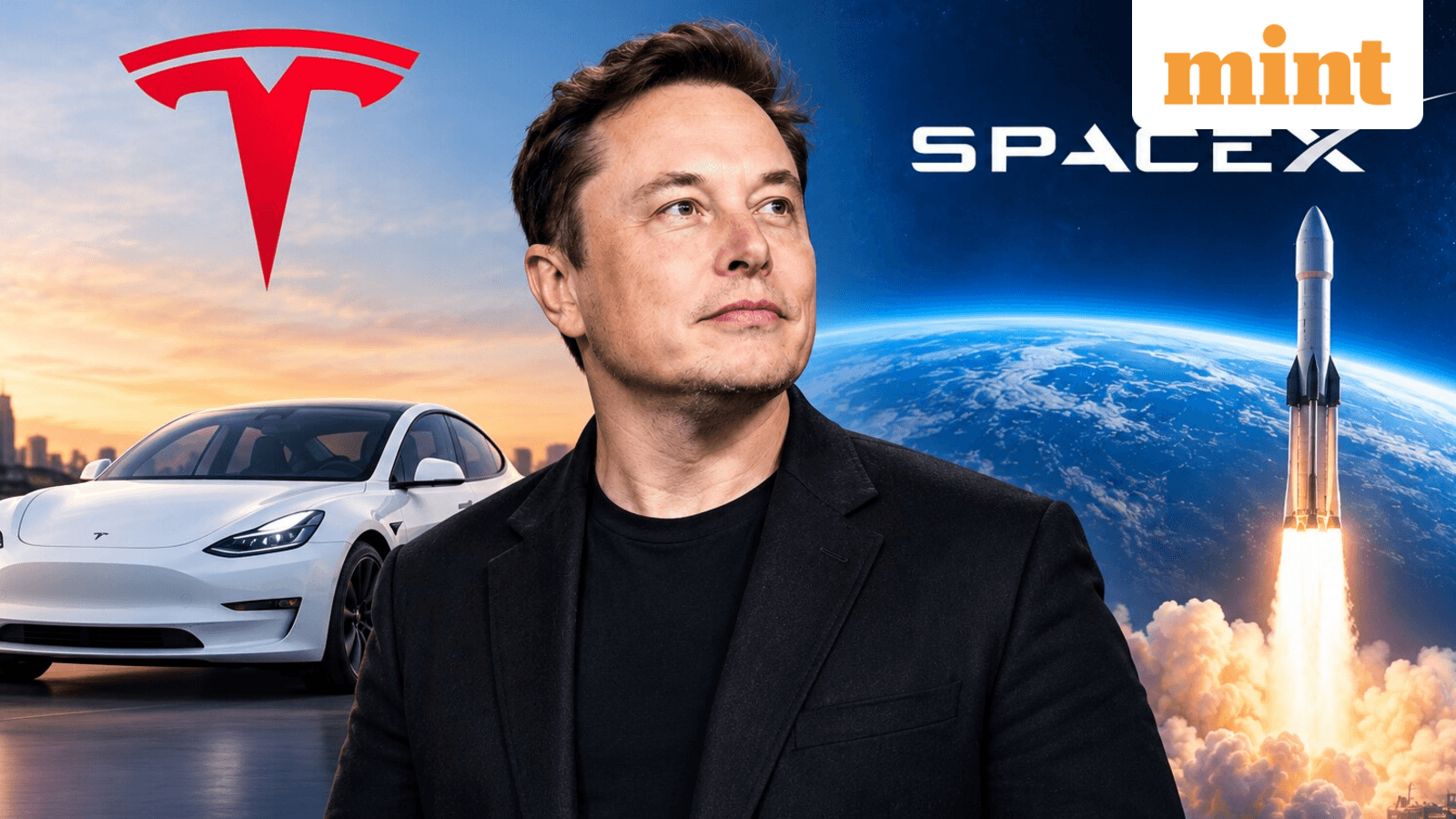
Elon Musk has spent two decades building companies that most investors treat as separate bets: an electric-vehicle maker listed in New York and a privately held rocket and satellite group. Now the world's richest man says the two may be worth more stitched together than apart — and that he will not be in the room when the question is decided.
Speaking to investors on a conference call, Musk confirmed that Tesla and SpaceX have formed special committees of independent directors to examine a potential merger, at the request of shareholders who would ultimately have to approve any deal. He put the logic plainly: he thinks it would be a good idea, but the decision rests with those committees. Because he sits on both sides of the table, he described himself as a conflicted party and said he cannot take part in their discussions. No transaction terms have been agreed, and Musk cautioned it would be premature to assume a merger happens at all. The scale is what makes the talk remarkable. SpaceX is valued at about $2 trillion and Tesla at nearly $1.5 trillion, which would put a combined entity at no less than $3.5 trillion — SpaceX ranking as the seventh most valuable company in the world and Tesla eleventh, by the report's reckoning. Musk owns roughly 20% of Tesla and 45% of SpaceX, controls about 82% of SpaceX's voting power, and would hold around a third of the combined company.
For readers outside the region, the corporate histories matter. Tesla was founded in 2003 by Martin Eberhard and Marc Tarpenning; Musk arrived in 2004 as lead investor and was formally recognised as co-founder in 2009 under a legal settlement. Its portfolio runs from passenger electric cars to autonomous vehicles, semi-trucks and robotaxis, with a newly unveiled Roadster positioned as a high-performance sports car. SpaceX, founded by Musk in 2002, operates across space missions, satellite internet through Starlink, and artificial intelligence under xAI. The two already share an industrial ambition: Terafab, their chip-manufacturing joint venture, is expected to produce a first test chip around May or June next year and reach volume production by the third quarter of 2028, Musk said.
His stated rationale is technological rather than financial. Musk argued there is merit in combining the companies because they are, in his words, in the superintelligence singularity, with much to gain from cooperating on superintelligence software, chip design, Terafab, robotics, mass-to-orbit launch and the Starmind constellation. That language will sound familiar to anyone who has tracked his habit of collapsing boundaries between his firms — and unfamiliar to Tesla shareholders who bought a carmaker and may not want exposure to rockets, satellites or frontier AI.
The governance choreography is the real story for Asia's capital allocators. Musk's dual role, and his lopsided voting control at SpaceX, is precisely why independent directors are being asked to negotiate on behalf of minority holders. The same tension runs through much of Asia's family- and founder-controlled corporate landscape, from Indian conglomerates to Korean chaebol and Chinese tech platforms, where controlling shareholders sit on both sides of related-party transactions. What is different here is the size and the public staging: a $3.5 trillion question being aired on an investor call, with the founder voluntarily sidelined.
Expect scrutiny to focus on valuation, the treatment of Tesla's public shareholders and whether the committees can extract terms that reflect the standalone worth of each business. The chip venture gives the two a concrete reason to coordinate regardless of ownership structure. For now, the merger remains a possibility rather than a plan — but the fact that it is being formally studied tells you how far Musk's empire has drifted from the conventional boundaries of a car company.