Mineral Resources bets on beachfront bling to win the FIFO talent war
Mineral Resources unveils a luxury seaside FIFO camp in WA's north to attract workers, signalling a new era in mining perks.
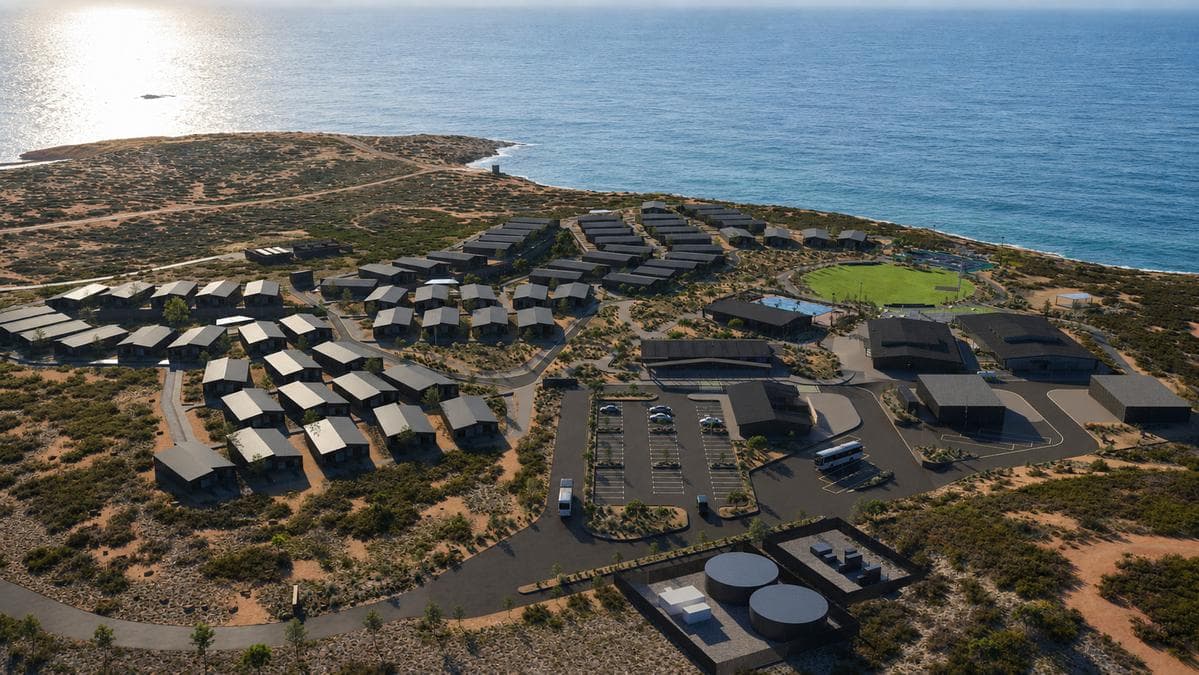
The image of a fly-in, fly-out miner's donga — tin walls, shared bathrooms, dust on everything — is being redrawn in Western Australia, and not by accident. Mineral Resources, the mining services and iron ore heavyweight founded by Chris Ellison, has just lifted the curtain on a new luxury seaside FIFO camp in the state's remote north, a move that reads less like accommodation and more like a recruitment billboard. For anyone tracking where capital flows in Oceania, this is not a story about beds and showers. It is a story about how hard it has become to keep people in the Pilbara, and what companies are willing to spend to do it.
The camp, unveiled exclusively in The West Australian, is part of Mineral Resources' broader pitch to lure and retain staff in a region where the mining industry has long struggled with turnover. The company, which operates in iron ore, lithium and mining services across Western Australia, has not disclosed the total cost of the development, but the strategic intent is clear: make the remote posting feel less like a punishment and more like a perk. The facility sits on the coast, a deliberate choice in a landscape typically associated with red dirt and relentless heat, and is designed to offer a level of comfort that would have been unthinkable a decade ago in the sector's standard-issue camps.
To understand why this matters, you need to know the terrain — both physical and economic. Mineral Resources is not a household name outside Australia, but inside the country's mining heartland, it is a force. Ellison, a self-made billionaire who started with a single truck, built the company into a diversified player that now moves millions of tonnes of ore annually. The company's workforce is heavily reliant on FIFO arrangements, where employees fly in from Perth or other cities for weeks at a time. In the current labour market, with unemployment low and competition fierce across iron ore, gold and the booming lithium sector, these workers have options. A camp with a seaside view, better food, private rooms and recreational facilities is no longer a nice-to-have; it is a bargaining chip.
This move also signals a deeper shift in how Oceania's resource giants view their most volatile asset: people. For decades, the industry treated accommodation as an afterthought, a cost centre to be minimised. The rise of the luxury camp flips that logic. It acknowledges that the next generation of miners, many of whom are weighing FIFO work against service jobs in cities, are making decisions based on quality of life, not just pay packets. The camp is a direct response to that calculus, and it places Mineral Resources at the front of a trend that other players, from BHP to Rio Tinto, are watching closely. If this model proves effective in attracting and holding skilled workers, expect copycat developments across the Pilbara and into the Northern Territory.
For the wider Oceania economy, the implications extend beyond one company's workforce strategy. Western Australia is the engine room of Australia's export wealth, and its ability to ship iron ore and lithium underpins national revenues and the federal budget. Any disruption to labour supply — whether from skills shortages, housing costs or the simple unattractiveness of remote life — is a direct threat to that output. By investing in premium accommodation, Mineral Resources is effectively underwriting the stability of its own supply chain, and in doing so, signalling to investors that the human element of mining is now as critical as the machinery in the ground.
Looking ahead, the seaside camp is more than a facility; it is a statement about the future of work in Australia's north. As the mining industry transitions toward automation and smaller crews, the workers who remain will be more specialised and harder to replace. Retaining them will require more than a competitive salary. It will require environments that feel less like outposts and more like destinations. Mineral Resources has placed its bet on that idea, and the ripple effects will be felt across every company that flies workers into the red centre. The donga, it seems, is finally getting a makeover — and the coast is the new frontier.


