Mauritius fund takes 26% of Nigeria's Hinckley in bet on e-waste gold rush
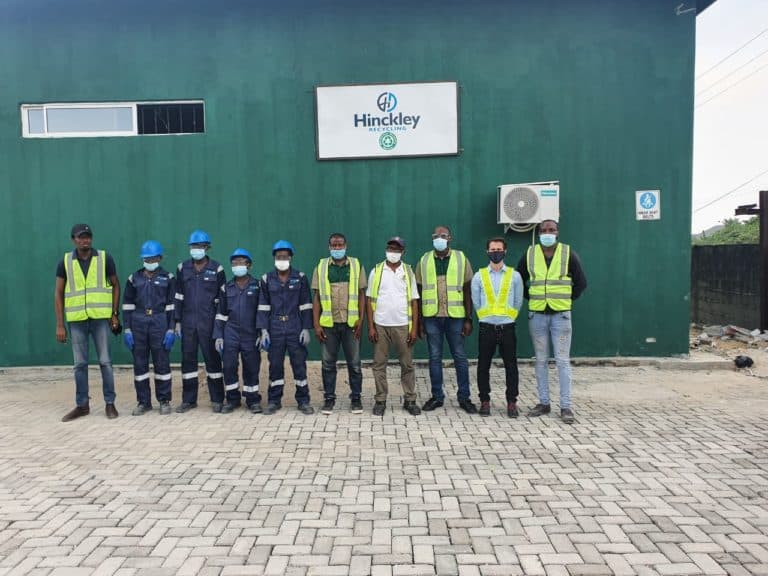
For anyone tracking where serious money is moving on the continent, the quiet filing landed like a signal flare. A Mauritius-based private equity fund has agreed to take a 26% stake in Hinckley Ewaste Recycling Limited, one of Nigeria's most prominent handlers of dead electronics. The deal, disclosed in a notification to Nigeria's Federal Competition and Consumer Protection Commission, involves the subscription of 47.8 million preference shares — a capital injection that turns a niche recycler into a test case for green investment in West Africa's largest economy.
The buyer is uMunthu Investment Company II, a pan-African impact fund managed by Goodwell Investments, a firm that has built its name on socially responsible capital. For outsiders, the name uMunthu — drawn from a Bantu philosophy of shared humanity — signals what this deal is really about. It is not a classic private equity play where you squeeze margins and flip an asset. It is a bet that environmental and social returns can walk hand-in-hand with financial ones, and that Nigeria's mounting pile of electronic junk is actually a resource waiting to be mined.
Hinckley, for the uninitiated, is not a flashy tech startup. It collects, dismantles, and resells end-of-life electrical and electronic equipment — the discarded phones, laptops, fridges, and cables that pour into Nigeria from both local consumption and, notoriously, imports of used electronics from richer nations. Lagos alone generates staggering volumes of e-waste, much of it handled informally by scrap dealers who burn cables and dump toxic residue. Hinckley's model offers a formal, safer alternative, and it has carved out a name as one of the few structured players in a chaotic sector.
This deal matters beyond the balance sheet. Nigeria is a major global recipient of e-waste, a status that has long been a source of embarrassment — a dumping ground for the developed world's obsolete gadgets. But the same flow of discarded devices contains recoverable gold, copper, and rare earths, and the circular economy is suddenly attracting serious institutional attention. uMunthu's move signals that impact investors see real money in cleaning up Africa's waste streams, not just charity in green packaging.
The timing is also telling. Nigerian regulators have begun enforcing stricter waste management rules, and the federal government has talked up the potential of a formal recycling industry to create jobs and cut pollution. An investment like this, structured through a Mauritius vehicle, also reflects how cross-border capital still funnels into Nigeria — through offshore funds that understand local risk but demand proper governance and measurable outcomes. The fund's stated logic, that Hinckley offers a compelling growth opportunity in a high-potential sector with an experienced management team, is the kind of language that used to be reserved for fintech or oil and gas.
What comes next will be watched closely. If uMunthu's capital helps Hinckley scale its collection networks and processing capacity, it could prove that waste management is not a peripheral cause but a core infrastructure play. It could also lure other impact funds and development finance institutions into what remains a fragmented, undercapitalised sector. For the international reader tracking African wealth, the signal is simple: the next frontier of high-growth investing on the continent may not be a mobile app or a gold mine, but the humble, dirty business of what happens to your old phone after you throw it away.