Lynas Rare Earths: The West Australian miner at the centre of a superpower tug-of-war
Inside Lynas Rare Earths, the WA miner racing to break China's grip on rare earths supply chains.
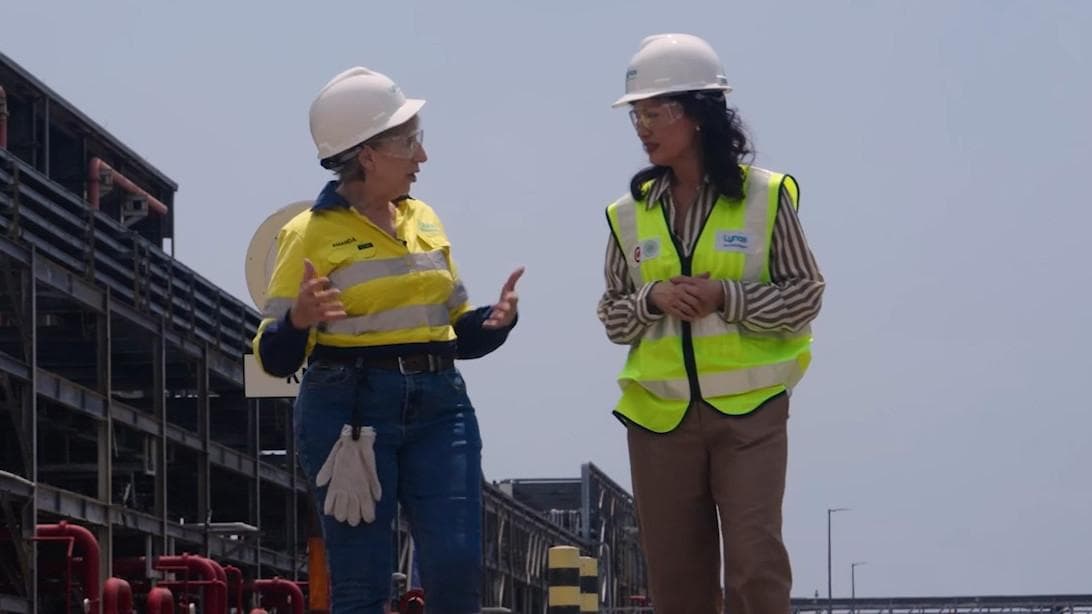
For anyone who tracks where the world's money is quietly moving, the map of the South China Sea has a new rival: the dusty red dirt of Western Australia's Goldfields. That is where Lynas Rare Earths, a company that most Australians outside the mining industry have barely heard of, is now sitting at the centre of a geopolitical and commercial chessboard. The race is no longer just about extracting ore; it is about who controls the tiny, specialised elements that power everything from electric car motors to fighter jet guidance systems. And for the international reader watching capital flows in Oceania, this is the story to watch.
Lynas operates one of the only significant rare earths processing facilities outside China, with its main mine at Mount Weld near Laverton and a cracking and leaching plant in Malaysia. The source material, drawn from a report in The West Australian, describes the company as being at the heart of a global push to build supply chains that do not pass through Beijing. China currently dominates roughly 90 percent of the world's refined rare earth output, a fact that has sent Western governments, from Washington to Canberra, scrambling for alternatives. Lynas, with its long-standing operational footprint and a rare earths separation facility that is already up and running, is the most tangible answer to that anxiety.
The company's history is a classic Australian story of boom, bust and reinvention. Founded in the 1980s and listed on the ASX, Lynas spent years struggling to find its footing, with critics questioning whether its Malaysia plant could ever compete with China's state-subsidised giants. But the global push for energy transition and defence security has flipped the narrative. Governments are no longer just encouraging private investment; they are actively underwriting it. The United States, for instance, has struck deals with Lynas to build a heavy rare earths processing facility in Texas, a move that underscores how a mid-cap Australian miner has become a strategic asset in the West's decoupling from Chinese manufacturing.
What makes this relevant beyond the boardrooms is what it says about the shape of Oceania's wealth economy. Australia has long been a quarry for the world, exporting iron ore, coal and gas to whoever pays the highest price. But rare earths are different. They are not a commodity you simply dig up and ship; they require complex chemistry, environmental approvals and, crucially, long-term contracts with governments that care about security of supply. For Australian investors, this represents a shift from passive resource extraction to active participation in global industrial policy. The country's superannuation funds, which manage over A$3.5 trillion in retirement savings, are increasingly looking at assets that offer geopolitical resilience, and Lynas fits that bill in a way that a coal mine never could.
The broader signal is that capital in Oceania is no longer content to ride the back of Chinese demand. The last decade taught Australian miners a harsh lesson about over-reliance on a single buyer. Now, with rare earths, the calculus has inverted: the buyers are Western governments desperate for supply, and the seller holds the leverage. That is a rare position for an Australian company to be in, and it explains why Lynas's every move is being watched from Washington, Brussels and Tokyo. The company's ability to scale up production, manage its Malaysian operations amid local regulatory scrutiny, and deliver on its US commitments will determine whether it becomes a genuine pillar of the Western supply chain or just another cautionary tale.
Looking ahead, the next twelve months will be telling. Lynas is not the only player in the game—there are junior explorers across Australia and Canada trying to replicate its success—but it is the one with the existing infrastructure and the proven ability to produce separated rare earths. The challenge is execution: expanding capacity while maintaining environmental and social licence, particularly in Malaysia where past waste disposal issues have drawn criticism. If Lynas can navigate that, it will not just be a corporate success story; it will be proof that a mid-sized Australian company can punch far above its weight in a contest that is as much about geopolitics as it is about geology. For the readers of this publication, who track where wealth is created and where it is at risk, Lynas is the name to keep on the radar. The race is on, and the finish line is not in sight.