Larry Ellison's Son Just Bet $110 Billion on Old Media—Now the Hard Part Begins
David Ellison, son of Oracle co-founder Larry Ellison, has closed a $110 billion merger of Paramount and Warner Bros. Discovery, creating a media giant saddled with over $80 billion in debt. The younger Ellison must now find $6 billion in savings in three years—a restructuring that will test whether tech money can fix Hollywood's fading economics.
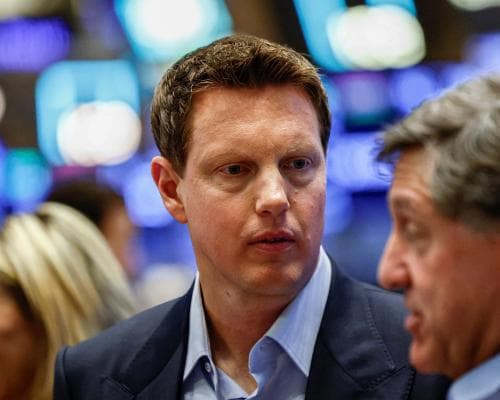
David Ellison, the 43-year-old son of Oracle co-founder Larry Ellison—the software billionaire whose personal fortune has hovered near $200 billion—has just pulled off the media deal of the decade. After a bruising battle that saw off Netflix and drew political heat, Ellison's Skydance has sealed a $110 billion merger of Paramount and Warner Bros. Discovery. The prize: two century-old Hollywood studios, HBO, MTV, Discovery, CBS, and CNN. The burden: more than $80 billion in debt and a mandate to cut $6 billion in costs within three years.
Inside the newly formed empire, the mood is tense. "It feels like the calm before the storm," one Skydance executive told The Guardian. "David has got what he wanted, but now there is a price to pay." Another put it more bluntly: "Cuts inevitably mean jobs." Management has warned of "difficult decisions that affect our workforce"—corporate speak for the layoffs that almost certainly lie ahead across a combined headcount of 53,000.
The deal itself is a monument to ambition and leverage. Ellison financed the takeover with a mix of equity from his family's fortune and a mountain of debt—hence the $80 billion overhang. The $6 billion savings target is roughly equal to the entire annual revenue of a major Hollywood studio, and analysts expect it to come from eliminating duplicate corporate functions, consolidating streaming platforms, and shrinking the legacy cable networks that once printed money but now bleed subscribers. The combined company will control roughly a quarter of U.S. box office and a sizable chunk of television news—a concentration of media power that would have been unthinkable a decade ago.
What makes this deal extraordinary is not just its size but its rarity. Megamergers of this scale in media have historically been blocked or abandoned—think Comcast-Time Warner Cable, or the AT&T-Time Warner saga. Ellison's political connections, including his father's longstanding friendship with Donald Trump, have raised eyebrows. David Ellison has insisted, "We do not want to politicise the company," but the perception of a Trump-aligned billionaire taking control of CNN and CBS has already sparked concern in newsrooms and among regulators. The deal closed, but the scrutiny is only beginning.
For wealth builders, the Skydance-Paramount-WBD combination is a case study in the use of legacy assets and cheap debt to buy scale in a declining industry. Traditional media is a melting ice cube: cable subscriptions are falling, advertising is migrating to digital, and streaming is a low-margin business. Ellison's bet is that consolidation and cost-cutting can stabilize cash flows long enough to pivot to a tech-driven future. It's a high-risk play that echoes the private equity playbook—buy, cut, merge, and hope the whole is worth more than the parts.
The broader signal is clear: the era of cheap money may be over, but the era of big, bold bets by billionaire heirs is not. David Ellison's move shows that family capital—patient, concentrated, and willing to take risks that public shareholders won't—can reshape entire industries. Whether it works will depend on execution. The first test is the $6 billion in savings. The second is whether Ellison can convince talent, advertisers, and audiences that a tech-infused Hollywood can thrive. For now, the storm clouds are gathering, and 53,000 employees are watching.
More in MONEY

Swipejobs founder Katrina Leslie wins EY Entrepreneur of the Year as AI hiring platform hits $1.3bn revenue
Ben Brayford, the Perth 'aquarium geek' chasing $4m to build Living Oceans into a billion-dollar venture
Zuckerberg Drawn Into Brazil's Election Fight as Sanders and Democrats Demand Answers on Meta's Treatment of Lula and Bolsonaro