Islay’s Quiet Revolution: How the World’s Most Coveted Whisky Island Is Rewriting the Rules of Terroir
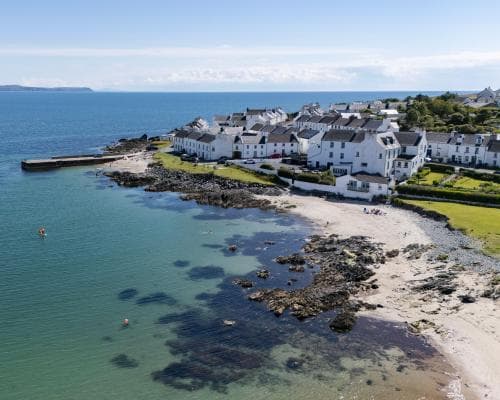
The rain on Islay doesn’t so much fall as it arrives — a gray curtain that sweeps across Loch Indaal with the urgency of a private jet’s departure. I’d been cycling along the shore, chasing the Paps of Jura as they dissolved into mist, when the sky finally caught me. I ditched the hire bike at a youth hostel in Port Charlotte, changed in record time, and slipped into Lochindaal Seafood Kitchen just as the heavens opened. Within minutes, a bowl of creamy fish chowder was warming my hands, and the promise of “plenty of fresh seafood just in” was all the persuasion I needed. What arrived was a feast for one — but a hungry one: fat langoustines, crab claws begging to be cracked, scallops swimming in hot whisky butter, and enough bread to mop up every last drop. It was a meal that would have made a Michelin inspector weep, yet it was served with the unpretentious warmth of a island that knows exactly what it has.
Islay, off Scotland’s west coast, is famous for one thing above all: whisky. With ten working distilleries — and an eleventh on the way — this windswept speck of land is synonymous with rich, heavily peated single malts that command cult-like devotion and four-figure prices at auction. But over several days of pedaling its single-track roads, I discovered that whisky here is doing something far more profound than filling warehouses or attracting tourists. It is quietly resurrecting an island where agriculture, fishing, and hospitality have long struggled to provide year-round employment. At Bruichladdich — one of Islay’s smallest distilleries yet its largest private employer — the revolution begins with barley. When the distillery was rescued from mothballs in the 1990s by a pair of wine merchants, they asked a question that would reshape the island’s economy: why was the barley arriving at their gates sourced from everywhere but here? Like vintners who understand that grapes carry the soil in their skins, they suspected that grain, too, might echo its birthplace. So they began encouraging local farmers to grow barley on Islay — something that hadn’t been done since before World War II.
It wasn’t an easy sell. Farmers were wary of an unfamiliar crop, especially with tens of thousands of Greenland’s migratory geese descending on young barley fields like feathered locusts. But when Islay’s last creamery closed in 2000, the dairy industry collapsed, and barley offered a lifeline. Bruichladdich guaranteed to buy every harvest, regardless of yield. Today, 21 Islay farms grow barley for the distillery, supplying half its needs. Early experiments with rye are already showing promise. This is terroir in the truest sense — not just a marketing buzzword, but a commitment that ties every bottle to a specific patch of peat, a particular farmer’s hands, and the island’s stubborn, salt-scoured soul. The craftsmanship angle is irresistible: each dram now carries the story of its soil, its weather, its people.
But the human thread is what truly elevates the narrative. Eva MacIntyre grew up on Islay, tried the mainland, and came home. Now a brand ambassador for Bruichladdich, she took me up a hill to see the distillery’s water source. “Growing up on Islay, whisky was a way of life,” she said. “It’s not just a drink; it’s about who you share it with.” Before her whisky presentations, she practices with her grandfather — a ritual that speaks to the island’s deep, intergenerational bond with the spirit. That bond is everywhere. Kate Hannett, a full-time forager, gathers 22 botanicals for the Botanist gin from peaty bogs and hillsides. Her brother Adam is Bruichladdich’s master blender, having started as a tour guide. Lisa Matthews, the assistant blender, is also an Ileach — a person born on Islay. Every family here, it seems, has at least one member in whisky. This isn’t corporate outsourcing; it’s a community’s pride distilled into liquid gold.
For the ultra-wealthy collector, Islay has long been a pilgrimage site — a place to acquire rare bottles and claim authenticity. But the island’s new story offers something even more coveted: a sense of belonging to a place that is actively thriving because of your patronage. When you buy a Bruichladdich single malt, you’re not just acquiring a peaty masterpiece; you’re supporting a model of luxury that values provenance over volume, heritage over hype. It’s the difference between owning a painting and owning the gallery. The luxury market is shifting toward meaning, and Islay is ahead of the curve. As the world’s wealthiest seek out experiences that are both exclusive and ethical, this island offers a blueprint: terroir-driven spirits, community-led revival, and a narrative that can’t be replicated in a factory.
Looking ahead, Islay’s eleventh distillery is a testament to confidence — not just in whisky, but in the island’s future. The barley fields are expanding, the rye experiments are maturing, and a new generation of Ileachs is choosing to stay. For those who can afford it, the ultimate luxury is no longer a bottle on a shelf; it’s a week on Islay, cycling past the very fields that will become next year’s release, sharing a dram with the farmer who grew the grain. That’s the kind of wealth that money can’t buy — but it can certainly be booked.
The Experience
Plan a private cycling tour of Islay’s distilleries with a bespoke whisky broker, and arrange a tasting with Bruichladdich’s master blender to secure future cask allocations before they’re released.