Inside the 24-Firm Syndicate Steering Dangote Refinery's $1.6bn IPO
Vetiva leads a 24-firm syndicate managing Dangote Refinery's $1.6bn IPO, Nigeria's largest corporate offering, targeting 10 million retail investors.
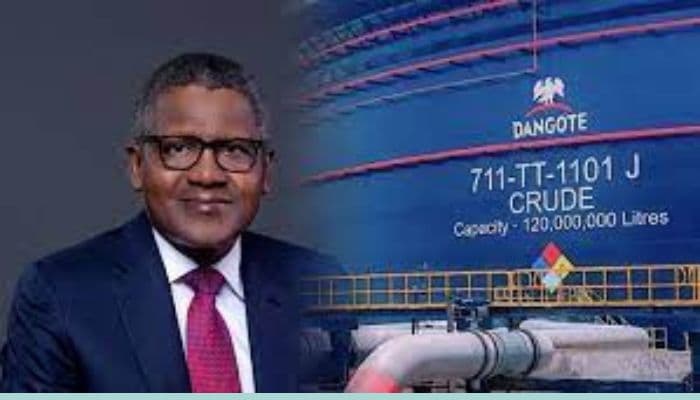
When Nigeria's largest private refinery decides to sell shares to the public, the question that matters in Lagos and London alike is not whether the deal is big. It is who gets to run it. Dangote Petroleum Refinery has assembled a syndicate of 24 joint issuing houses for an initial public offering aiming to raise $1.6 billion — N2.152 trillion — by offering 4.1 billion shares at N525 each. That is Africa's largest corporate public offering, and the roster of banks behind it reads like a who's who of Nigerian capital markets.
At the top sits Vetiva Advisory Services Limited, the lead adviser and lead issuing house, led by chief executive Chuka Eseka. Vetiva is the architect: it coordinates the advisory, structuring and execution of the entire transaction. Around it sits the syndicate — FirstCap Limited, under CEO Ukandu Eme Ukandu, which is tasked with the operational push to onboard an estimated 10 million retail investors; Stanbic IBTC Capital Limited, a Standard Bank Group subsidiary acting as joint managing house and financial adviser, bringing cross-border distribution muscle; and Chapel Hill Denham Advisory Limited, Absa Capital Markets Nigeria Limited and Afrinvest Capital Limited, each a joint issuing house. CardinalStone Partners and Comercio Partners Capital round out a group that mixes bulge-bracket institutional reach with boutique agility.
For readers outside Nigeria, the names need translation. Vetiva is one of the country's most established independent investment banks, known for steering complex, mega-scale capital markets transactions. Chapel Hill Denham is a leading independent investment banking and asset management firm with a track record in infrastructure finance and institutional placements. Absa Capital Markets is the Nigerian investment banking arm of Absa Group, the pan-African financial services giant, which bridges local demand with wider African and international capital pools. Afrinvest is a research-heavy independent known for retail-focused distribution. FirstCap is the operational engine for grassroots participation. Together they form an unprecedented coalition — 24 firms where a typical Nigerian IPO might use a handful.
The size of the syndicate tells you what Dangote is attempting. This is not a placement to a few pension funds and asset managers. The target of 10 million retail investors is a deliberate bet on democratising the shareholder base, pulling everyday Nigerians into a capital market that has historically been dominated by institutions and high-net-worth individuals. Stanbic IBTC and Absa bring the foreign and regional institutional book-building; Afrinvest, FirstCap and CardinalStone chase domestic liquidity and retail depth. The structure is designed to do two things at once: raise hard currency-scale equity and broaden political and economic legitimacy for a refinery that has already reshaped Nigeria's downstream sector.
Why does this matter beyond Nigeria? Because African capital markets have long been criticised for shallow retail participation and over-reliance on a handful of institutional buyers. A deal of this scale, executed through a syndicate that explicitly targets millions of small investors, is a test case for whether the continent's largest economies can widen ownership of strategic assets. It also signals that Nigerian investment banks — not just global bulge brackets — can lead and syndicate a transaction of this size. Vetiva's role as lead adviser is a statement about local capacity.
The refinery's record first-half revenue of N19.13 trillion has laid the groundwork for this listing. Now the market will judge whether the distribution machine can deliver. If the syndicate succeeds, it will not just be Dangote's victory. It will be a template for how African mega-assets are taken public — and a signal that the continent's capital markets can, when the deal is right, reach far beyond the usual circle of institutional money.