Great Southern's Mon Ami deep hits hint at a bigger gold story in WA's proven Laverton ground
Great Southern Mining's Mon Ami drilling extends high-grade gold deeper, signalling growth potential in Western Australia's Laverton district.
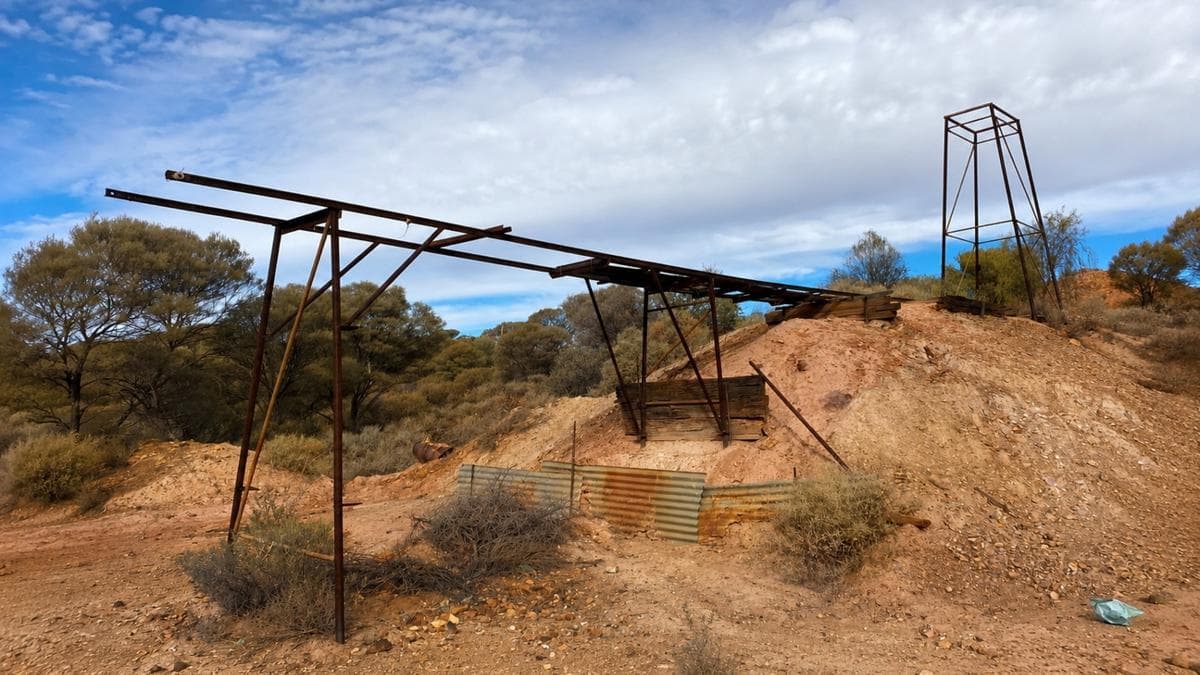
For anyone tracking serious money in Oceania's resources game, the name Laverton carries a certain weight — a dusty patch of Western Australia that has already given up millions of ounces and still refuses to go quietly. So when a junior explorer starts talking about wide zones of higher grade opening up at depth, investors tend to lean in. Great Southern Mining has just done exactly that, reporting a batch of drill results from its Mon Ami project that stretch the known mineralisation well beyond where the resource envelope used to end.
The numbers, released from a 16-hole reverse circulation campaign, are the kind that make a geologist's eyebrows rise. The standout hit was 16 metres at 3.37 grams per tonne gold from 178 metres down-hole, including a four-metre core running 8.54 grams and a two-metre section at 6.86 grams. Other intercepts — 19 metres at 1.12 grams, 16 metres at 1.28 grams, and six metres at 1.83 grams with a one-metre spike at 7.28 grams — have pushed the deposit up to 70 metres further down-dip and 55 metres down-plunge. That matters because Mon Ami's existing JORC resource of 1.56 million tonnes at 1.11 grams per tonne has historically been capped at around 150 metres below surface. The new drilling is chasing a north-plunging higher-grade shoot that the company's model has long suggested sits beneath that shallow shell.
For outsiders, Laverton might just be a dot on the map, but for anyone who follows Western Australian gold, it is a proven address. The regional shear zone that hosts Mon Ami also produced the historic Ida H mine, just eight kilometres along strike — a high-grade beast that yielded 170,650 ounces at an average grade of 22.6 grams per tonne from underground. That is not a guarantee Mon Ami will replicate such riches, but it is a compelling geological analogue for the deeper hunt. The company has also ticked off the boring but essential boxes — archaeological, ethnographic, flora and fauna surveys, plus metallurgical and waste-rock studies — with previous testwork showing roughly 95 per cent gold recovery from oxide and transitional material using conventional processing. With gold hovering around A$6,250 an ounce, the timing of fresh ounces in established gold country is hardly accidental.
What makes this more than just another junior's drill diary is the project's proximity to infrastructure. Mon Ami sits on a granted mining licence with an approved haulage route linking it to the sealed Elora-Mount Weld Road. The Granny Smith processing facility is roughly 12 kilometres away, and multiple operating and planned gold plants fall within a 50-kilometre trucking radius. That opens the door to satellite-feed or toll-treatment arrangements, meaning Great Southern could potentially develop Mon Ami without building a standalone mill — a significant cost saver in a capital-intensive industry. The company itself calls it a potential near-term development opportunity, and for good reason.
This drilling campaign is really the first serious test of Mon Ami's depth potential, and the results fit neatly with the geological model of a plunging shoot extending beneath the shallow resource. Assays are still pending from another 10 holes at the nearby Blanc Platt prospect, which is testing for a possible repeat lode immediately north of the existing resource. Beyond Mon Ami, Great Southern has 38 holes awaiting results at its Golden Boulder gold discovery, reverse circulation drilling continuing at Amy Clarke in Western Australia, and diamond drilling underway with joint venture partner Gold Fields at the Mt Dillon prospect in northern Queensland.
For the broader Oceania wealth picture, this is a reminder that the region's resource sector still rewards patience and geological conviction. Juniors like Great Southern are not just poking holes in the dark — they are methodically extending known deposits in world-class addresses, and the market is watching to see just how much bigger Mon Ami can become. With another 10 holes waiting to show their hand, the next batch of assays could well determine whether this becomes a development story or just another exploration footnote. Either way, the ground has spoken once, and it has hinted it has more to say.


