Gina Rinehart’s $2b SpaceX bet reshapes the map of Australian capital
Gina Rinehart disclosed a $2b stake in SpaceX ahead of its IPO, a bold pivot from iron ore to Musk’s rockets.
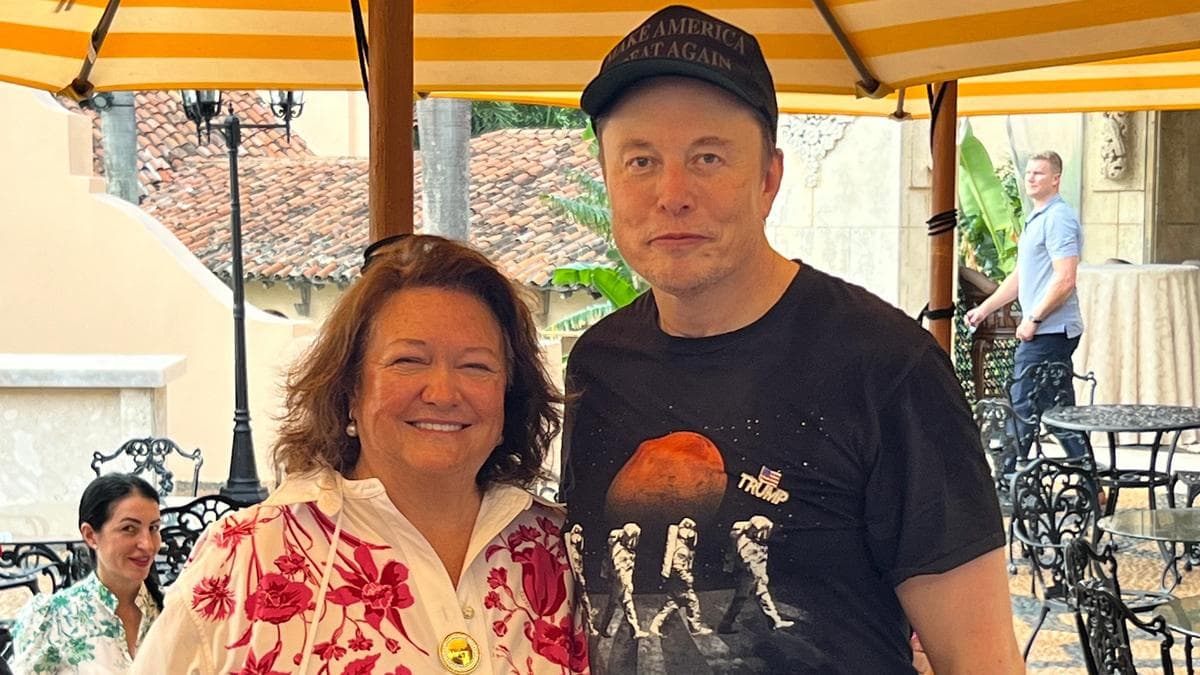
For decades, the fortunes of Australia’s richest woman were written in iron ore, in the red dust of the Pilbara, in the heft of bulk carriers leaving Port Hedland. So when US regulatory disclosures revealed that Gina Rinehart had quietly assembled a $2 billion stake in SpaceX, the news landed like a seismic event in the quiet corridors of Perth’s mining establishment. The woman who built her empire on the most terrestrial of commodities — dirt, literally — has placed a monumental bet on the most extraterrestrial of ventures. The filing, reported by Bloomberg and picked up by The West Australian, confirms that Rinehart’s private investment vehicle has taken a position in Elon Musk’s rocket company ahead of its much-anticipated initial public offering. She has called Musk, in private correspondence that has now surfaced, an “exceptional and brilliant person.” For a woman who rarely gushes, that is as close to a love letter as the business world will ever see.
The scale of the stake is staggering by any measure, but particularly for an investor whose public portfolio has historically been anchored in resources. Two billion dollars is not a toe in the water; it is a declaration. The disclosure comes as SpaceX prepares to list, a moment that has been circled on every serious investor’s calendar for years. Musk has long resisted taking his most valuable private company public, but the pressure of capital needs and the maturation of the Starship program have apparently shifted the calculus. For Rinehart, whose fortune was built on cyclical commodities and the patience to ride out downturns, this represents a fundamental diversification of risk. She is not selling her iron ore assets — far from it — but she is clearly signalling that the next century of wealth creation will not be found in the ground.
To understand why this matters, you need to understand the peculiar ecology of Western Australian capital. Perth is a city of mining dynasties, where family fortunes are tied to the whims of Chinese steel demand and the geological luck of the ancient craton. The Rinehart family name is synonymous with the Hancock Prospecting empire, a business that has survived scandals, legal battles and the death of its founder, Lang Hancock, to remain one of the most powerful private companies in the country. Gina took the reins in 1992 and turned a struggling inheritance into a global powerhouse, riding the Chinese commodity supercycle to become Australia’s richest person. But the supercycle is over, and the smart money in Perth has been quietly looking for new horizons. Some have moved into lithium, others into agriculture. Rinehart has now made the boldest statement yet: she is looking to the stars.
This bet is not merely a personal portfolio choice; it is a signal about the direction of capital in Oceania. For years, Australian wealth has been criticised for being too conservative, too wedded to the resources sector, too slow to embrace the technology revolution that has transformed American and Asian fortunes. Rinehart’s SpaceX stake is a rebuke to that characterisation. It suggests that even the most traditional of Australian fortunes are now willing to embrace frontier technology, to back visionary founders and to accept the volatility that comes with pre-IPO investments. It also speaks to the growing interconnectedness of global wealth. A woman whose fortune was made in the Australian outback is now betting on a company headquartered in Hawthorne, California, whose ultimate customer is NASA and whose ultimate ambition is Mars. The Pacific Ocean is no longer a barrier; it is a highway.
The timing is also telling. With iron ore prices stabilising but unlikely to return to their peak, and with global pressure mounting on fossil fuels, Rinehart has been under pressure to articulate a vision for the next generation of her family’s wealth. This SpaceX stake is that vision, made tangible. It is a hedge against the decarbonisation of the global economy, a bet that the future belongs to those who can move beyond the planet’s atmosphere rather than merely extract from its crust. It is also a bet on Musk himself, a figure who polarises opinion but who has consistently delivered on his most audacious promises, from electric vehicles to reusable rockets. Rinehart’s willingness to back him, publicly and with billions of dollars, suggests she sees something in his method that resonates with her own — a refusal to accept conventional limits, a willingness to be hated, and an almost religious conviction in the power of engineering.
What happens next will be watched closely in both Perth and Silicon Valley. If SpaceX’s IPO delivers the kind of returns that early investors in Tesla enjoyed, Rinehart will have cemented her legacy not just as a mining magnate but as one of the most prescient capital allocators of her generation. If it falters, she will absorb the loss with the same stoicism she has shown through decades of commodity cycles. Either way, the message is clear: the old guard of Australian wealth is no longer content to sit on its hands. It is reaching for the stars, and it is bringing billions with it. For anyone who follows capital in Oceania, that is not just a headline; it is a turning point.


