Forrestania's $145M bet turns WA gold ambitions into a production race
Forrestania Resources awards a $145M mining contract at Johnson Range, signalling its shift from explorer to WA gold producer.
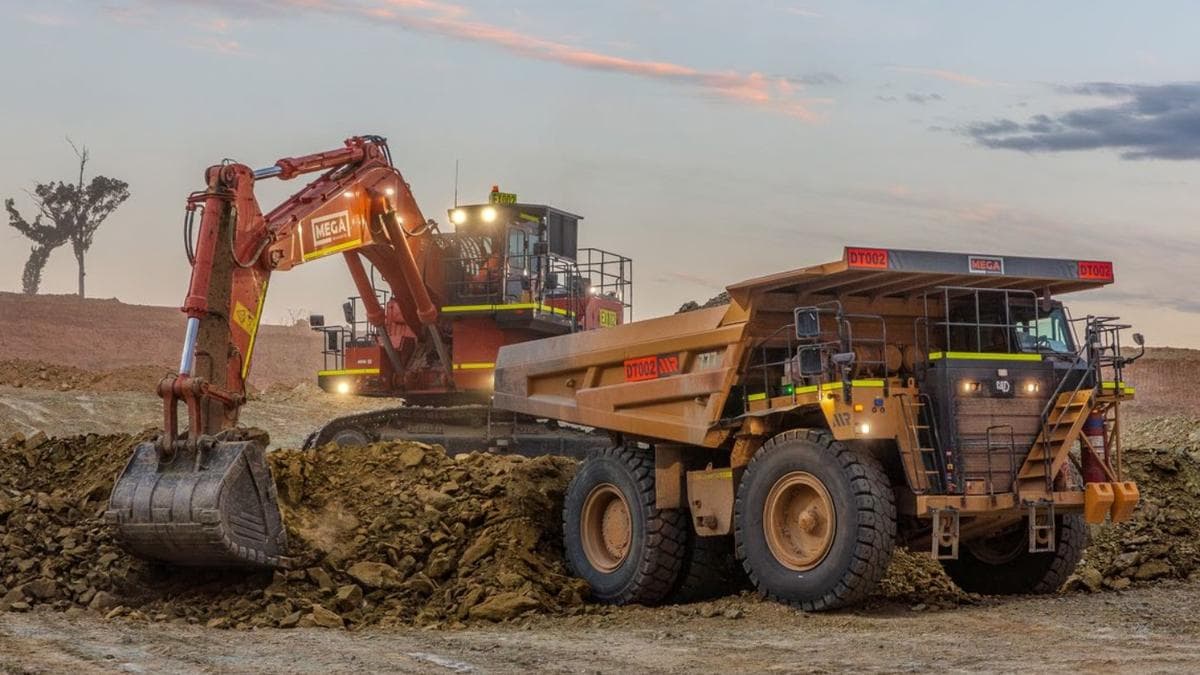
Forrestania Resources has stopped talking and started digging. The Perth-based junior has handed MEGA Resources a two-year, roughly $145 million contract to develop its Johnson Range gold project in Western Australia, a clear signal that the company is done being an explorer and is now serious about becoming a producer. For anyone tracking capital flows in Oceania's mining heartland, this is the moment a plan becomes a project.
The deal covers the full sweep of open-pit work — drill and blast, mining, ore and waste haulage, and infrastructure development — and follows a competitive tender that landed on MEGA for its technical chops and track record. Alongside this, Forrestania confirmed that refurbishment of its nearby Lake Johnston processing hub is accelerating, with long-lead items secured and civil works handed to Marlee Resources, a wholly Indigenous-owned contractor. That dual announcement is a deliberate one-two punch: we have the mine, and we have the mill.
To understand why this matters, you need to know the shape of Forrestania's recent past. Over the past year, the company has gone on an acquisition spree that would make a seasoned dealmaker blink. It snapped up Kula Gold's Mt Palmer project for $58.2 million, bought Newcam Minerals' Southern Cross assets for $24 million, and merged with Zenith Minerals in a $93.5 million deal, building a resource base approaching two million ounces. The centrepiece was the $310 million acquisition of Edna May from Ramelius Resources, which brought a 2.9-million-tonne-per-annum processing plant. The strategy is a classic hub-and-spoke model: feed satellite deposits into central mills, and let the ore do the talking.
This is not just corporate manoeuvring in a vacuum. The timing is deliberate, and the market backdrop is electric. Gold is trading at A$6,486 per ounce, according to the Perth Mint, and the WA sector is consolidating hard. Genesis Minerals launched a $5.6 billion bid for Vault Minerals, and OceanaGold paid $776 million for Ausgold. Established producers are hungry for quality ounces, and juniors like Forrestania are racing to get their projects into production before the wave crests. The message is clear: in this environment, ounces in the ground are only worth something if you can pull them out and sell them.
Forrestania's Lake Johnston mill is the quieter half of this story, but it is arguably the more important one. The company has already started trucking ore from its British Hill project — recently upgraded to 175,690 ounces — to the facility, giving it an immediate pathway to cash flow. Once both Lake Johnston and Edna May are fully operational, Forrestania will control more than six million tonnes of combined processing capacity per year by early 2027. That is not a small player's ambition; that is the architecture of a mid-tier producer.
What does this signal about wealth and capital in Oceania? It shows that the region's mining sector is not just about the big names. There is a vibrant middle tier of companies using clever deal-making and infrastructure leverage to punch above their weight. Forrestania is betting that the hub-and-spoke model, which has worked for giants like Northern Star, can work for a company that was, until recently, a relative unknown. The risk is execution — refurbishing old plants and mobilising contractors is never as smooth as the PowerPoint suggests — but the reward is a seat at the table in a gold market that shows no signs of cooling.
As MEGA Resources prepares to move equipment to Johnson Range and the Lake Johnston mill gathers steam, the watch begins. Forrestania has told the market it is shifting from explorer to producer-in-waiting, and the clock is now ticking on whether it can deliver. For investors following Oceania's wealth creation stories, this is a name to keep on the radar — not because of the size of the contract, but because of the speed and conviction with which this company is moving. In a gold rush, the ones who win are not always the biggest; they are the ones who are ready when the ground opens up.