Trump's Strait of Hormuz Toll: A $3 Trillion Gamble on Global Oil's Most Dangerous Chokepoint
Imagine owning a tollbooth on the world's most valuable highway. That's essentially what Donald Trump just proposed for the Strait of Hormuz — a 21-mile-wide ribbon of water that carries about 21 million barrels of oil and liquefied natural gas every single day. The former president announced he would reinstate a US blockade of Iranian vessels in the strait and slap a 20% fee on every ship passing through, ostensibly to cover the cost of providing security. The International Maritime Organization immediately pushed back, calling the move a threat to international law. But for anyone managing capital, the real story is simpler: the price of friction just went up.
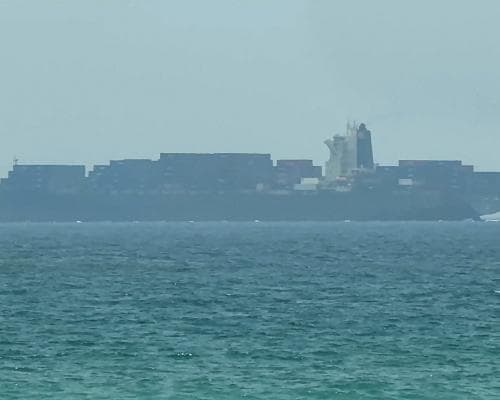
Let's talk about what's at stake. The Strait of Hormuz connects the Persian Gulf to the Gulf of Oman and the open ocean. Roughly 30% of all seaborne-traded crude oil passes through it. That's about 17 million barrels per day from Saudi Arabia, Iraq, Kuwait, the UAE, and Iran itself. Qatar ships the world's largest LNG exports through the same channel. If you put a 20% toll on every barrel transiting that strait, you're essentially adding a surcharge to a commodity that already trades on razor-thin margins. The math is brutal: at $80 oil, that's $16 per barrel in extra costs — a margin-crushing hit for refiners and a direct pass-through to consumers.
The mechanics of this blockade are where things get interesting — and risky. Trump's plan would reimpose a naval exclusion zone around Iranian waters, effectively stopping Iranian-flagged tankers from leaving the strait. But the 20% fee applies to all ships, not just Iranian ones. That means a Chinese supertanker carrying Saudi crude to Shanghai would be charged for using a waterway that international law says must remain free. The US Navy would be tasked with collecting this toll, which is unprecedented. The IMO's 40 member nations, including the US, have a treaty obligation under the UN Convention on the Law of the Sea to guarantee unimpeded transit passage. This isn't just a diplomatic spat — it's a direct challenge to the legal framework that keeps global trade moving.
For the wealthy and their capital allocators, this is a reminder that geopolitical risk is not a theoretical concept — it's a line item. Hedge funds are already pricing in a 5-10% volatility premium on crude options tied to Hormuz. Shipping insurance premiums for vessels entering the strait have spiked 300% since the announcement. If the blockade is enforced, we could see a repeat of 2019, when tanker attacks in the Gulf of Oman sent oil prices surging 15% in a single week. The difference this time is the fee: it's a recurring cost, not a one-off shock. For a family office with a $500 million energy portfolio, that could mean a $50 million annual drag on returns.
Here's what this signals for markets. First, energy infrastructure — pipelines, storage terminals, and alternative shipping routes — just became the most sought-after asset class. The UAE's $5 billion investment in the Fujairah pipeline, which bypasses Hormuz entirely, looks like a stroke of genius. Second, the US dollar's role as the world's reserve currency gets a boost, because any toll would likely be denominated in dollars. Third, and most subtly, this is a test of whether the global trading system can absorb a direct tax on a strategic chokepoint. If it can, other straits — Malacca, Suez, Bab el-Mandeb — could become toll roads too. That's a nightmare for global supply chains and a gold mine for anyone who owns the infrastructure around them.
The forward-looking play for investors is clear: position for a world where friction costs rise. Buy tanker stocks (they'll charge higher rates). Short consumer discretionary sectors that depend on cheap energy. And keep an eye on the IMO's response — if the US ignores international law, the entire framework for free trade starts to crack. For now, the Strait of Hormuz remains open, but the tollbooth is being built. The smartest capital is already figuring out who pays — and who profits.