Netanyahu's October Election Gamble: A $60 Billion Market Rerating Hangs in the Balance
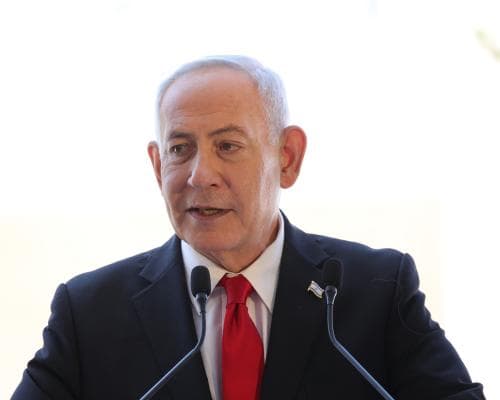
Benjamin Netanyahu is about to face the one jury that truly matters for his wealth and power: the Israeli electorate. On October 27, after three years of war, a genocide case at the International Court of Justice, and a corruption trial that has dragged on for half a decade, the man who has dominated Israeli politics for 30 years will finally let voters render their verdict. For the investors, family offices, and sovereign funds that park serious capital in Israeli tech, defense, and bonds, this is not just a political story. It is a portfolio event.
Here is the financial scale of what is at stake. Israel's tech sector, which once accounted for nearly 20% of GDP and attracted $25 billion in venture capital in 2021, has seen foreign direct investment drop by over 60% since the October 7 attacks. The shekel has been a rollercoaster. The Tel Aviv Stock Exchange's TA-35 index has underperformed every major developed market except Russia since 2023. And in August 2024, Moody's downgraded Israel's credit rating two notches to Baa1, citing 'a material deterioration in fiscal strength.' The cost of insuring Israeli debt against default has tripled. This is a market screaming for political clarity.
The mechanics of this election are brutal for Netanyahu. Current polling shows his Likud party losing a third of its seats, with the opposition centrist bloc led by Benny Gantz and Yair Lapid likely to form a coalition that excludes the far-right settlers who have been his power base. But the numbers are not the whole story. Netanyahu is a master of the last-minute pivot. He has already rushed through a law that makes it harder for the Supreme Court to disqualify him from office, and his allies are pushing legislation to grant immunity to sitting prime ministers. The man is fighting for his freedom as much as his job. His corruption trial, which involves charges of bribery, fraud, and breach of trust, could land him in prison. Donald Trump has publicly called for a pre-emptive pardon. That is how high the stakes are.
For the wealthy, this election is about asset location and risk pricing. Israeli real estate, particularly in Tel Aviv and Jerusalem, has been a haven for global Jewish capital for decades. But since the war, luxury property transactions have slowed by 40%, and developers are sitting on unsold inventory. The bond market tells an even starker story: Israel's 10-year government bond now yields 5.2%, a full 200 basis points above comparable US Treasuries. That is a risk premium that screams 'uncertainty.' If Netanyahu loses, the market will price in a ceasefire in Gaza, a normalization of relations with Saudi Arabia (the Abraham Accords 2.0), and a potential return to the pre-war economic trajectory. If he wins, expect more settlement expansion, more international isolation, and more pressure on the shekel.
Here is the rare asset angle that wealth managers are watching. Israel's defense tech sector—cybersecurity, drone systems, missile defense—has actually boomed during the war. Companies like Elbit Systems and Israel Aerospace Industries have seen their order books swell. But that boom is a double-edged sword. It has crowded out civilian tech investment and created a two-speed economy: defense up, everything else down. The election will determine whether the government pivots back toward civilian innovation or doubles down on the war economy. For family offices with exposure to Israeli venture capital, this is the key variable.
What does this mean for the smart capital crowd? First, the October election is a liquidity event for anyone holding Israeli assets. Expect volatility to spike as polls narrow. Second, the outcome will reset the country's risk profile for at least two years. A Gantz-Lapid government would likely be more business-friendly, more focused on fiscal consolidation, and more open to foreign investment. A Netanyahu victory would mean more of the same: coalition instability, international legal battles, and a continued drain on the treasury. The math is simple: the market is pricing in a 60% chance of a change in government. If that does not happen, bonds will sell off and the shekel will weaken. If it does, expect a relief rally.
For now, the smartest money is sitting on the sidelines, waiting for October 27. But the truly sharp operators are already positioning for the post-election play. Israeli tech is cheap by historical standards. The country's startup ecosystem still produces world-class companies in AI, agtech, and medtech. The question is whether the political system will let them thrive. Netanyahu has been a brilliant political survivor, but markets do not care about survival. They care about growth. And right now, the growth story in Israel is on life support. The election is the defibrillator. Whether it delivers a shock or a flatline is the bet of the year.