The Prairie, Restored: Netflix’s Little House Reboot as a Lesson in Heirloom Storytelling
There is a particular kind of silence that settles over a room when something true is being told. It happened at the private screening I attended last week in a wood-paneled salon off Madison Avenue, where the first two episodes of Netflix’s *Little House on the Prairie* reboot unspooled before a crowd of collectors, editors, and a few quiet billionaires who usually only stir for a Bugatti reveal. The room didn’t breathe. And afterward, over glasses of Willamette Valley pinot noir, the conversation turned not to plot points but to provenance. To the idea that some stories, like a 1963 Ferrari 250 GTO, only gain resonance as they pass through the hands of careful custodians. This reboot, premiering 9 July, is the latest chassis for a narrative that has survived the Great Depression, an oil crisis, a pandemic, and now the fractious noise of the current cultural moment. It’s not just a show. It’s an heirloom.
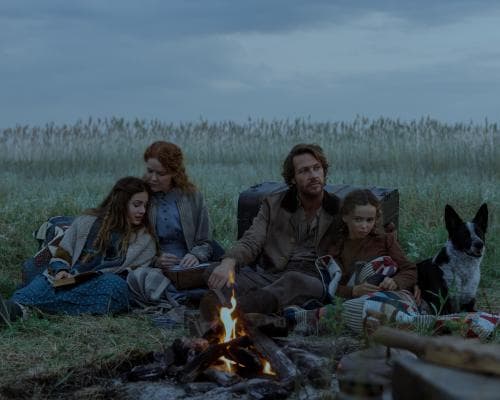
The object of fascination here is not a car or a watch but a story—specifically, the semi-autobiographical novels of Laura Ingalls Wilder, which have sold over 73 million copies, and the 1974 television series that became the most streamed legacy show of 2024 with 13 billion streaming minutes. But to the discerning eye, the Ingalls family saga is a kind of engine: a survival machine built from wood, wool, and will. The new series, starring Luke Bracey as the ruggedly handsome Charles “Pa” Ingalls and Crosby Fitzgerald as Caroline “Ma” Ingalls, strips away the saccharine veneer of earlier adaptations and leans into the grit. Bracey told me, with a quiet intensity that reminded me of a master watchmaker describing a balance spring, “This is a family trying to get along in the world.” That’s it. No irony. No filter. In an era of curated authenticity, that rawness is the rarest commodity.
Craftsmanship here is measured in narrative grain, not horsepower. The original books, first published in 1932 during the Great Depression, read like a manual for self-sufficient isolation—a quality that saw them surge in popularity during Covid-19, when families sought a blueprint for hunkering down. The 1974 series, which premiered amid a recession and an oil crisis, mirrored a nation’s anxiety about scarcity. Now, Netflix’s reboot arrives in a moment of “tradwife” aesthetics and “anti-woke” backlash, and the show’s producers have wisely leaned into the tension. They have not sanitized the frontier’s harshness—the winter that kills the livestock, the drought that cracks the earth, the loneliness that gnaws at Ma’s spirit. Instead, they treat it with the reverence of a furniture restorer who knows that a scratch tells a story. Fitzgerald described the familiarity of the story as “cozy and heartwarming,” but the coziness is earned, not manufactured. It’s the comfort of a well-worn leather driving glove, not a synthetic blanket.
The market for this kind of storytelling is, paradoxically, hotter than ever. The ultra-wealthy have long collected physical artifacts—vintage wine, rare books, classic cars—but the new frontier is intangible: memory, mood, and meaning. A 2024 study by the Luxury Institute found that 68% of high-net-worth individuals now prioritize experiences that offer “emotional durability” over sheer novelty. The *Little House* reboot fits that brief perfectly. It is not a speculative investment; it is a fixed anchor in a shifting cultural tide. The original series saw a 40% spike in streaming minutes during the pandemic, and Netflix is betting that the same appetite for resilience will draw audiences now. For the collector who owns a 1930s log cabin in Montana or a ranch in Wyoming, this show is a mirror. For the one who has never chopped wood, it is a vicarious lesson in what it means to build something that lasts.
What this signals about luxury taste is a quiet revolution. The loud logos and hypercars of the past decade are giving way to a more austere elegance—the kind that values provenance over price, and patina over polish. The Ingalls family’s world is one of hand-hewn beams, cast-iron stoves, and butter churned by hand. In a culture obsessed with optimization and speed, that slowness is the ultimate status signal. It says: I have time. I value endurance. I understand that a well-told story, like a well-tuned V12, only improves with age. The reboot’s production design is meticulous—every button, every stitch, every log in the cabin was sourced to match the 1870s Minnesota setting. It is the kind of obsessive detail that would make a Horology enthusiast nod in approval.
Looking forward, the *Little House* reboot may well define a new genre of luxury entertainment: the heritage narrative. As Bracey put it, “The stories are able to transcend generations, which speaks to its basic nature.” That basic nature—survival, family, craft—is the same force that drives a collector to restore a 1929 Duesenberg or a vintner to wait a decade for a single vintage. Netflix has placed a quiet, confident bet on the idea that the most aspirational thing you can own is a story that doesn’t break. On 9 July, the prairie calls. And for those of us who know that the finest things in life are built to last, it is the only reservation that matters.