The $17 Parmesan That Outclasses a Private Jet: What Your Cheese Says About Your Palate
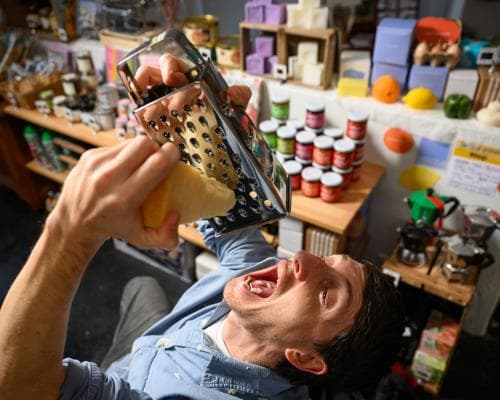
Imagine this: a cheese so humble it arrives in a plastic-wrapped wedge, clammy as a nervous suitor on a first date. Yet, when blind-tasted by a panel of judges that includes the chair of the Sydney Royal Cheese Show and a microbial ecologist, it scores an 8 out of 10. That’s the Colla Parmigiano Reggiano — $16.99 for 200 grams — and it beat wedges costing three times as much. For the ultra-wealthy, this is not a bargain hunt. It’s a revelation: the most expensive ingredient is not always the most exquisite. Sometimes, the truest craftsmanship whispers, not shouts.
Here’s the setup. A group of six experts — a sommelier, a cheese judge, a microbial ecologist, a deli owner, and a wine importer — gathered at Marani Deli in Sydney to blind-taste 13 supermarket Parmesans. They crumbled, sniffed, and rated each on aroma, texture, and taste. The results upended every assumption about price and pedigree. The cheapest wedge, a plastic-wrapped Australian parmesan at $4.99 per 100 grams, was deemed “perfectly fine.” The most expensive, a 48-month aged Parmigiano Reggiano at $22 per 100 grams, was complex but not universally adored. The winner? A mid-tier Italian wedge wrapped in paper, not plastic. Because cheese, like a vintage wine, is alive. It sweats in plastic. It ages gracefully in paper.
This is where rarity and heritage collide. True Parmigiano Reggiano — the only cheese legally allowed to call itself that in Europe — must be made in Emilia-Romagna, using only milk, salt, and rennet, and aged at least 12 months. The Colla version is a 24-month wheel, cracked open at the deli, wrapped in paper, and sold for $8.50 per 100 grams. That’s less than a single espresso at a Manhattan café. Yet it delivers the crystalline crunch of tyrosine crystals — the hallmark of a well-aged wheel — and a savory depth that makes a truffle shaver blush. The lesson: you don’t need a private-label wheel from a Michelin-starred supplier. You need a cheesemonger who knows not to suffocate the rind.
What does this signal about wealth and taste? That the new luxury is knowledge, not opacity. The ultra-wealthy are abandoning the “most expensive must be best” dogma. They’re seeking provenance, yes, but also transparency: how was it wrapped? Who cut it? How long has it sat under fluorescent lights? The plastic-wrapped wedge scored lower not because it tasted bad, but because it felt “clammy,” as one judge put it — as if it were about to ask someone on a date. That’s a critique of handling, not terroir. In a world where a Hermès Birkin can be bought online with a click, the true status symbol is a conversation with a cheesemonger who remembers your name and your preference for paper over plastic.
Looking forward, the market is shifting. Small-batch producers in Australia are now making Parmesans that rival the Italian originals, but they’re sold in paper, not plastic, and priced at a premium that still undercuts the imports by 30%. The next wave of luxury food is not about scarcity — it’s about authenticity of process. A $17 wedge that beats a $40 wedge is not an anomaly. It’s a signal. The rich are learning that the best things in life are not always the most expensive. They’re the ones that have been treated with respect, from the cow to the counter. And that, my friends, is worth more than a private jet full of truffles.
The Experience
Book a private cheese-tasting at Marani Deli in Sydney, where you can sample paper-wrapped Parmigiano Reggiano alongside a sommelier-curated wine flight.