The Grace of Grit: When a Champion’s Cramp Becomes the Ultimate Accessory
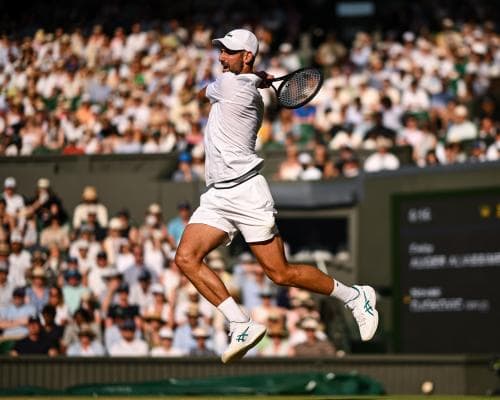
The first sign of trouble was subtle. A slight hitch in the stride. A grimace that flickered like a candle in a draft. Novak Djokovic, all six-foot-two of lean, sculpted muscle, began to favour his left leg. The trainer came out, kneaded the shin, and the crowd held its breath. This was not a moment for champagne flutes or hushed applause. This was the raw, unvarnished theatre of elite sport, where the true luxury isn’t the box seat—it’s the privilege of watching a master work through pain.
Djokovic’s tiebreak against Félix Auger-Aliassime, which ended 12-10 in the first set, was a 28-minute epic of moon balls, pinpoint returns, and aces that landed like exclamation points. At 39, Djokovic’s legs are the stuff of legend—long, lean, and absurdly powerful. But here, they betrayed him. He cramped. He limped. And then, as if remembering his own mythology, he held serve, broke back, and eventually took the set. It was not pretty. It was better. It was honest.
What makes a champion at this level is not the absence of flaw but the ability to conceal it. Djokovic’s cramp was a crack in the facade, and yet he played on, his returns still razor-sharp, his court coverage still elastic. Auger-Aliassime, the younger man by a decade and a half, was relentless—bouncing, serving aces, pumping his fist. But Djokovic, even on one good leg, is a creature of composure. He does not panic. He adapts. That is the rarest craftsmanship in tennis: the art of making adversity look like a choice.
For the collector of rare moments, this match was a masterpiece. The price of admission? A ground pass, or a hospitality package that runs into five figures. But the value was in the details: the way Djokovic paused for water at 6-6, the way he slid full pelt into a corner return, the way his face remained impassive even as his body screamed. This is the heritage of a player who has won 24 Grand Slams, but it is also the heritage of a man who knows that elegance is not about looking effortless—it is about making effort look inevitable.
In the world of ultra-luxury, we talk about provenance, about rarity, about the story behind the object. Djokovic’s cramping leg is provenance. It is the patina on a first-edition book, the scratch on a vintage Patek Philippe. It tells you that this thing—this moment—was earned. The market for such moments is insatiable. Tennis collectors don’t just want the trophy; they want the match where the trophy almost slipped away. This was that match.
As the tournament progresses, one wonders: can Djokovic’s body hold? The leg will be iced, massaged, and prayed over. But the mind is already there. And that, perhaps, is the ultimate luxury: the ability to command a room—or a court—when everything else is falling apart. The final set is yet to be written, but the tiebreak alone was worth the price of a lifetime subscription to Centre Court. Because in the end, we don’t remember the easy wins. We remember the ones that bleed.