The Sound of Stealth: How Plas Johnson’s Tenor Sax Became the Ultimate Trophy of Cool
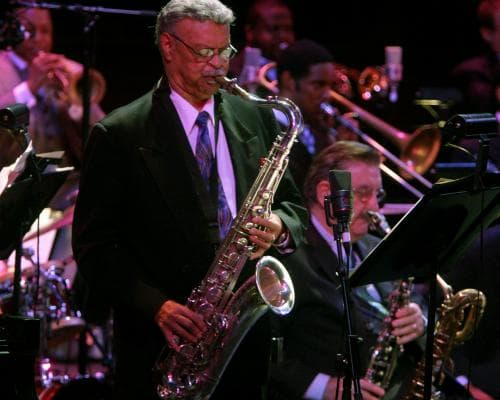
Imagine the scene: a Hollywood soundstage, 1963. Twenty of the finest session musicians in Los Angeles, arranged in a semicircle, waiting. The air is cool, the lighting clinical. In front of them, Henry Mancini lifts his baton. He has written a melody that is part slink, part smirk — a musical embodiment of a cartoon cat who is somehow more elegant than any human in the room. Mancini looks directly at one player: Plas Johnson, a tenor saxophonist with a sound like polished obsidian. Johnson takes a breath, and the world changes. That four-note motif — da-dum, da-dum-dum — would become the most recognizable saxophone line in cinema history. And Johnson, the man who gave it voice, was paid scale for the session. No royalties. No credit on the single. Just the quiet satisfaction of having done something perfect.
What makes this story so seductive to the collector of intangibles — the person who owns a vintage Ferrari because of its racing pedigree, not its top speed — is the sheer craftsmanship behind Johnson’s anonymity. He was the definition of a first-call musician: the player producers called when they couldn’t afford a mistake. His tenor saxophone had a tone that was warm but never syrupy, agile but never frantic. Mancini, in his autobiography, wrote that he ‘pre-cast’ his players, writing parts specifically for their voices. For The Pink Panther, he needed a sound that suggested nocturnal prowling — stealth, sophistication, a hint of mischief. Johnson delivered it in one take. That is the kind of mastery that cannot be bought; it can only be recognized, and then coveted.
Johnson’s biography reads like a secret history of 20th-century popular music. He played on the Platters’ The Great Pretender, Sam Cooke’s Twistin’ the Night Away, and Bobby Day’s Rockin’ Robin (on piccolo, no less). He was in the room for Frank Sinatra, Nat King Cole, Ella Fitzgerald, and later Steely Dan, Tom Waits, and Marvin Gaye. But his versatility extended beyond pop: he played all saxophones from soprano to baritone, plus flute and clarinet. In an era when the Los Angeles studio scene was still healing from racial segregation — the two local musicians’ unions had only merged a decade earlier — Johnson was the only Black musician in that Pink Panther session. He broke through not with protest, but with a sound so indispensable that the industry had no choice but to call him. That is a kind of quiet power that the ultra-wealthy understand deeply: influence without ostentation.
For the collector of cultural artifacts, Johnson’s legacy is a reminder that the most valuable things are often the least visible. A first-pressing vinyl of The Pink Panther soundtrack might fetch a few hundred dollars. But the real prize is the story: the knowledge that a single session musician, paid by the hour, created a sound that has been imprinted on the global imagination for six decades. In the world of yachts, hypercars, and private islands, provenance is everything. A vessel once owned by Aristotle Onassis commands a premium not because of its nautical specs, but because of the stories it carries. Johnson’s saxophone is the same: a tool that produced a cultural treasure, and the man behind it remains the ultimate insider’s trophy.
What Plas Johnson’s life teaches us about luxury is that true refinement is invisible. It is not the logo on the hull or the name on the marquee; it is the hand that shapes the moment before anyone notices. The Pink Panther theme is synonymous with cool — a word that has been co-opted by every brand from cars to colognes, but which Johnson embodied without trying. His sound was not loud; it was present. It did not demand attention; it earned it. In an age of relentless self-promotion, that is the rarest commodity of all.
As we mourn Johnson’s passing at 94, we are left with a question: what will we collect when the thing we truly want is a feeling? A yacht can be chartered, a painting can be hung, a watch can be wound. But a sound — the perfect, fleeting, four-note distillation of elegance — can only be remembered. And if you are lucky enough to know the story behind it, you own something that no amount of money can replicate. Plas Johnson did not just play the saxophone. He played the room, the era, the culture. And he did it all on a session fee.