The Man Who Made Zippy Talk: Remembering Ronnie Le Drew, Master of the Inanimate Soul
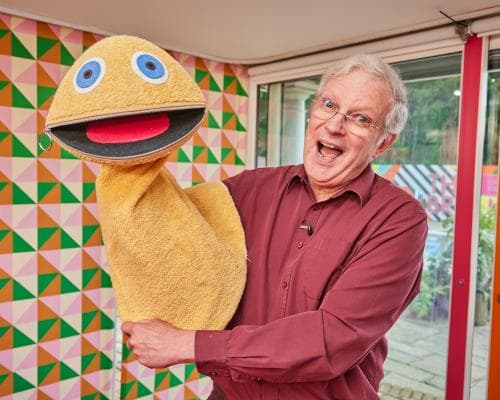
The most expensive thing in the world isn’t a car or a watch. It’s a performance that makes you forget you’re watching felt and foam.
Ronnie Le Drew, who died this week at 78 after a short illness, understood that better than almost anyone. He was the hands behind Zippy — that brash, orange, know-it-all puppet from Rainbow — and the puppeteer who made David Bowie’s goblins in Labyrinth feel like real, breathing creatures. He worked on The Muppet Christmas Carol, Little Shop of Horrors, and decades of Sooty, often as Sweep, the silent sidekick who communicated in squeaks and shivers.
To the ultra-wealthy collector, a hand-built hypercar or a rare Patek Philippe is a triumph of engineering and material. But a Le Drew puppet was something rarer: a triumph of soul. There is no factory for that. No limited edition run. Only a pair of hands, a rod, and an imagination so precise it could make a strip of felt seem stubborn, or shy, or heartbroken.
Le Drew trained at London’s Little Angel Theatre, a jewel-box puppet venue in Islington where the craft is treated with the same reverence as a Stradivarius. He later co-founded the London School of Puppetry, passing on techniques that can’t be Googled. The British Puppet Guild, which he served as president for a decade, called him “the most active and supportive president we have ever had or will have.” He performed at nearly every event, often unasked, just for the joy of it.
In an age where everything is digitised — where CGI can conjure a dragon or a dinosaur with a few keystrokes — Le Drew’s work feels almost radical. It was analogue. It was human. It required a kind of physical intelligence that no algorithm can replicate. When Zippy argued with George, or when a goblin in Labyrinth shuffled across the screen with a look of comic menace, it wasn’t a special effect. It was Ronnie, crouched in a corner, sweating under a black cloth, making a piece of fabric seem alive.
For the collector of rare cultural artefacts, a Le Drew puppet is not a toy. It is a piece of performance history. The original Zippy puppet, now in the care of the Rainbow legacy, is as irreplaceable as a first-edition Shakespeare folio. And the craft itself — the rods, the strings, the split-second timing — is a dying art. There are no more Ronnie Le Drews being made.
His son John wrote on social media: “We’re devastated to announce that dad passed away this morning, after a brief illness. We’re all grieving and sorry for our loss of such a sweet beautiful man.” The sweetness is the point. In a world of polished surfaces and curated lives, Le Drew’s genius was in the imperfection — the wobble, the stutter, the tiny hesitation that made a puppet feel like a person.
What does his passing say about luxury taste? That the most refined collectors are beginning to look beyond the object and toward the maker. A Le Drew performance can’t be hung on a wall or parked in a garage. But it can be remembered. And in the rarefied world of the ultra-wealthy, where everything is available for a price, the truly valuable things are the ones you can’t buy. Ronnie Le Drew’s hands gave us those things. He will not be replaced.