The 16-Year-Old Who Outswam the World: Amalie Smith’s Quiet Coronation
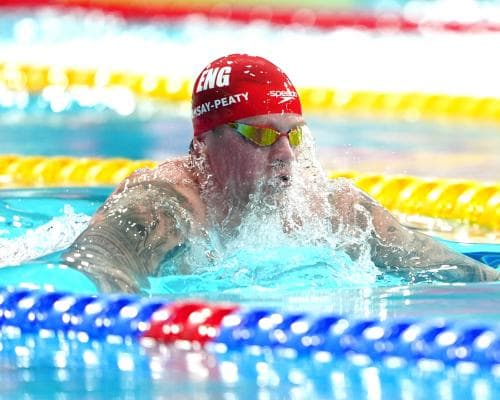
The water doesn’t care about your age. It doesn’t know you’re sixteen, that your parents are in the stands clutching their programs, or that you’re sharing a lane with Olympians who have spent a decade perfecting their turns. It only knows speed, rhythm, and the quiet courage of a girl who refuses to blink. That was Amalie Smith at the Commonwealth Games 2026, in the women’s 400m medley final—a race that began with three Australians on the blocks and ended with an English teenager stealing the silver from under their streamlined noses.
Smith’s swim was not a fluke. It was a study in controlled ambition. From the opening butterfly leg, she shadowed the leader, Jenna Forrester, with a stroke that commentators described as “long and languid”—the kind of effortless glide that suggests hours of unseen work. At the 250m mark, Forrester pulled ahead on the breaststroke, but Smith closed the gap on the freestyle finale, finishing just 1.92 seconds behind. For a 16-year-old in a field of decorated Aussies—Tara Kinder, Ella Ramsay, and Forrester—that margin is not a loss. It is a calling card.
What makes Smith’s performance so compelling is not just the medal, but the manner. She did not flinch. She did not let the roar of the crowd or the weight of the occasion fracture her form. In a sport where milliseconds separate glory from obscurity, her composure was the rarest currency. “She stayed calm, kept her form, and wasn’t intimidated by what was going on around her,” the commentary noted. That kind of poise cannot be coached into a swimmer; it is either there, like a quiet current beneath the surface, or it is not. For Smith, it runs deep.
The significance of this race extends beyond the medal table. It is a signal to the collecting world—of talent, of futures, of the kind of raw asset that appreciates not in price but in legacy. For those who follow elite sport as a form of living art, Smith is a piece worth watching. Her coach, her parents, and a small circle of friends will celebrate tonight, but the real celebration is for anyone who witnessed the birth of a career. In two years, as one commentator predicted, she is going to be something. And that something will be formidable.
This is the essence of luxury: not the trophy, but the journey toward it. Smith’s silver is not a finish line; it is a foundation stone. For the ultra-wealthy who collect experiences rather than objects, her race offers a rare thrill—the chance to say, “I saw her before everyone else did.” In a world of hypercars and private islands, the most exclusive commodity remains human potential. And Amalie Smith, at sixteen, is swimming straight into it.
As the Commonwealth Games continue, Smith’s name will be whispered in the same breath as Peaty and Ramsay. But for now, let us simply watch. Let us admire the stroke, the breath, the quiet victory of a girl who looked at the scoreboard and saw her name among champions. That is the kind of wealth that cannot be bought. It can only be witnessed.