The Last Unbuyable Door: Inside Qantas’s Chairman’s Lounge
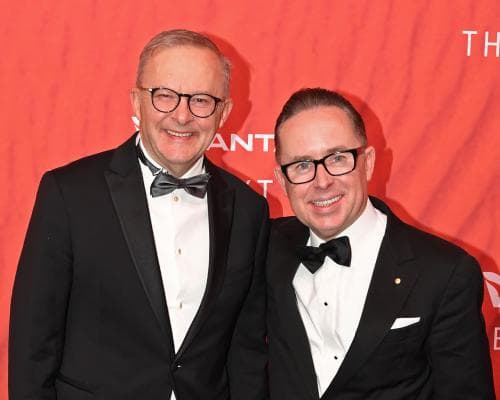
A former CEO of Qantas, Alan Joyce, has finally let slip the secret handshake. In his new memoir, *Riding the Jet Stream*, he reveals the arcane admissions process for the airline’s Chairman’s Lounge—a place the ultra-wealthy whisper about but cannot buy. This is not your grandfather’s business-class lounge. It’s a private clubhouse hidden inside Australia’s major airports, where the carpet is thick, the Champagne is Krug, and the conversation is off the record.
Joyce calls it “arguably the most exclusive club in the country.” He’s not wrong. The lounge has no published price list, no public application form, and no credit-card shortcut. Membership is invitation-only, approved by a tiny cabal of senior Qantas executives. Joyce himself admits he and the chair had only “occasional input.” The real gatekeepers are a silent committee that decides who belongs—and who does not.
So who gets the nod? The “core” list reads like a Who’s Who of Australian power: federal and state politicians, High Court and federal judges, editors of national newspapers, a select few journalists, and high-profile celebrities. Joyce writes that companies spending roughly $1 million annually on Qantas flights are “likely” granted one membership each, which can be rotated among executives. That’s a million dollars in airfare—not a one-time fee, but an ongoing allegiance. The lounge is less a reward than a relationship.
Craftsmanship and rarity here are not about leather stitching or bespoke furniture. The true luxury is access. Joyce recounts that famous Australians have “begged” to be let in. The club has no brochure, no keycard, no visible branding—just a discreet door past security, known only to those who have been told it exists. In 2023, Qantas told a Senate inquiry that invitations also extend to secretaries and deputy secretaries of federal departments, agency chairs, chief executives, and commissioners. The membership list is a living map of influence.
The collector context is fascinating. Joyce writes that the lounge once grew “out of control” due to “inconsistent oversight,” forcing Qantas to rescind memberships. That’s a rare admission of scarcity management. In the world of luxury, nothing signals value like being kicked out. The lounge’s mystique is built on its opacity: you cannot buy your way in, but you can earn your way in—through power, prominence, or patronage. For the ultra-wealthy, that is the ultimate status marker. A $100 million superyacht can be ordered from a brochure. A Chairman’s Lounge membership cannot.
What does this say about luxury taste today? It signals a shift from conspicuous consumption to quiet influence. The wealthy no longer want to flash a logo; they want to be waved through a door that others cannot see. The Chairman’s Lounge is the physical embodiment of that shift—a place where the currency is not money, but access. For the truly connected, it is more valuable than a private jet. For the rest of us, it remains a rumor.
Looking forward, Joyce’s revelations may force Qantas to tighten or formalize its admissions process. But the allure will only grow. In an era of algorithm-driven loyalty programs, the Chairman’s Lounge is a defiantly human institution—a handshake, a nod, a quiet word. It is the last unbuyable door in travel. And that, in the end, is the most luxurious thing of all.