The Heat That Burns Portfolios: Why Climate Risk Is Now a Capital Killer
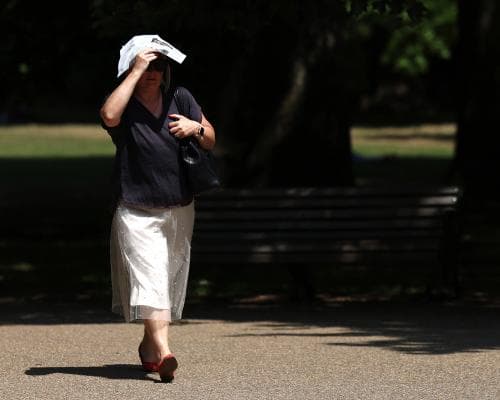
Imagine losing 440 people a day — not from a war, not from a pandemic, but from the silent, creeping weight of a heatwave. That's exactly what happened in England and Wales this June, when three consecutive days of red warnings from the UK Health Security Agency and the Met Office marked the deadliest stretch of extreme heat the country has ever recorded. Scientists at Imperial College London now estimate that, across the June and May heatwaves combined, roughly 2,700 people died prematurely. To put that in perspective: about four people die each day from road traffic collisions. About 35 from alcohol and drug use. This? This was 440 a day. And for the wealthy, this isn't just a humanitarian crisis — it's a capital crisis in slow motion.
Let's talk about the numbers that matter to your portfolio. The analysis, led by Dr Clair Barnes at Imperial College, found that more than 40% of those deaths would not have occurred without the 1.4°C of human-caused global heating we've already locked in. That's not a prediction. That's a rearview mirror. The June heatwave was the widest and most intense ever recorded in Europe, and it's estimated to have cost billions in lost productivity, strained healthcare systems, and damaged infrastructure. For context, the UK Health Security Agency previously found that over 10,000 people died in Britain due to summer heatwaves between 2020 and 2024 alone. This isn't a one-off. It's a compounding trend.
Here's where the wealth angle gets sharp. The Climate Change Committee has warned for over a decade that the UK's plans to protect people from rapidly worsening extreme weather are inadequate. That's a polite way of saying: the system is not priced for this. Think about what that means for real estate in southern England, for agricultural land in the Thames Valley, for energy infrastructure that buckles under peak demand. When the government's own advisory body says protections are inadequate, you're looking at a regulatory and insurance shock waiting to happen. Insurers are already pulling back from flood-prone areas in the US and Europe. Heat is the next frontier. If you own assets in regions that aren't climate-resilient, you're holding unhedged risk.
The mechanics are brutal but simple. Continued fossil fuel burning pumps pollution into the atmosphere, trapping heat and making extreme temperatures more frequent and severe. The UK's heatwave was supercharged by the climate crisis — that's not activist language, it's the conclusion of peer-reviewed science. For wealth builders, the question isn't whether to believe it. The question is whether your capital is positioned for the repricing that's coming. Infrastructure bonds? Check the geographic exposure. Private equity in logistics? Check the cooling costs and worker safety compliance. Even your personal residence — is it in a zone that will see more 40°C days? Because those days are coming faster than most valuation models account for.
What does this signal for markets? A slow, grinding repricing of risk across sectors that have long been considered 'safe'. UK gilts? They're not immune if the government has to spend billions on heat-defensive infrastructure. Energy stocks? The winners will be those that can provide cooling, grid stability, and low-carbon generation — not just extractors. Real estate investment trusts focused on London offices? Think about the capital expenditure needed to retrofit buildings for extreme heat. The smartest capital is already rotating into adaptation plays: water management, resilient construction, climate data analytics, and insurance-linked securities that actually reflect the new normal.
The forward-looking takeaway is uncomfortable but unavoidable. The June heatwave killed 440 people a day. That's a human tragedy. But for those who manage wealth across generations, it's also a data point that demands action. The climate is not a political debate. It's a balance sheet item. The question is whether you'll adjust your portfolio before the market forces you to. Because the heat is only going to get more intense — and the capital that ignores it will get burned.