Dubai’s new trick: running the world without owning it
Dubai is becoming the coordination hub for globally distributed digital businesses, not a replacement for Silicon Valley.
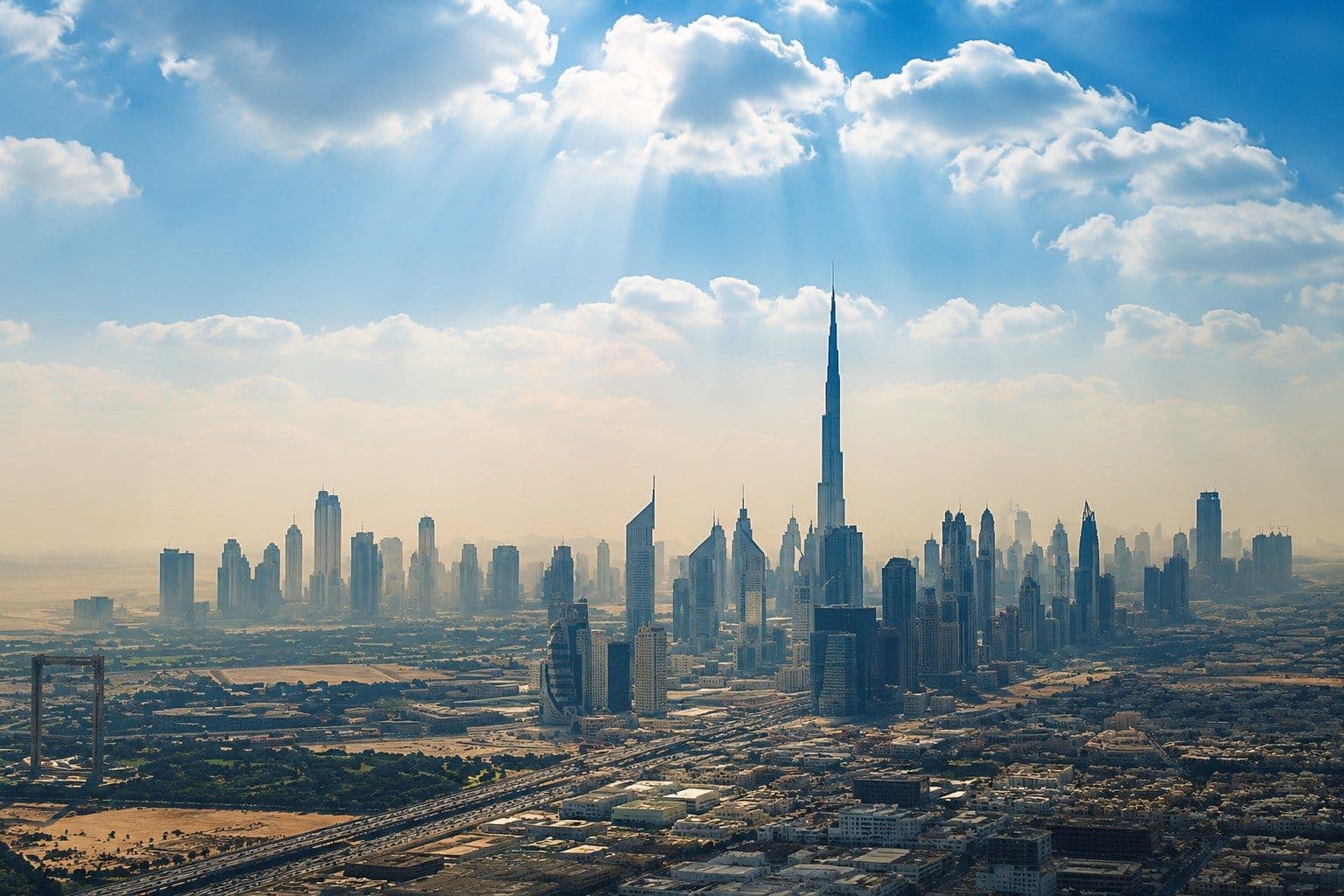
For anyone who tracks where Middle Eastern capital actually lands, the old mental map is obsolete. Twenty years ago, a founder with global ambitions packed a bag for San Francisco, London or Singapore. Today, that same founder might book a flight to Dubai instead — not to build everything there, but to run the whole scattered machine from a single desk. Geography hasn't stopped mattering in the digital economy. It just matters differently now.
That is the argument Artem Shargin, a UAE-based entrepreneur and co-founder of the digital venture 0to8, makes in a recent essay. He knows the terrain firsthand, having built companies in digital fashion and music from the Emirates. His current business is headquartered in Dubai while its teams, partners and customers stretch across continents. The point is not that Dubai has replaced the old hubs. It is that for companies whose operations are inherently cross-border, the city now works as a kind of operational brain — coordinating legal structures, banking, partnerships and in-person meetings from one accessible spot, while the actual revenue and audiences live elsewhere.
The numbers back up the narrative. Startup Genome's 2026 Global Startup Ecosystem Report values Dubai's startup ecosystem at $30 billion and ranks it No. 2 in the Middle East and North Africa, the highest-ranked Gulf city. But Shargin is careful to note that a growing ecosystem does not mean self-sufficiency. Specialist talent is still thin in some niches, operating costs are high, and a company serving only a domestic market would be better off elsewhere. Dubai's edge is not about replacing local markets — it is about bridging them.
That bridging role is where the story gets interesting for wealth watchers. Dubai's time zone sits neatly between Asia and the Americas, letting a founder talk to Tokyo in the morning, Berlin by midday and New York in the evening. By mid-2026, Dubai International Airport connects to 217 destinations across 99 countries, which matters more than any fiber-optic cable for businesses that still need real handshakes. A company can build audiences in Latin America, source talent in Europe, serve customers in the United States — and coordinate it all from a marina office. Dubai becomes the layer that holds the network together, not the network's final destination.
This is a subtle shift from how Gulf cities have traditionally chased the digital economy. Instead of trying to incubate every unicorn locally, Dubai is positioning itself as the command center for globally distributed businesses. The rise of the creator economy reinforces the model: a TikTok economic impact report for the UAE, developed with Redseer Strategy Consultants, points to a growing ecosystem of influencers, brands and media talent who treat Dubai as a launchpad rather than a home market. The city's cultural mix — fashion, music, sport, entertainment — gives those creators proximity to partners and audiences that would be harder to reach from a purely financial hub.
For an international reader watching Middle Eastern capital, the implication is clear. The region's wealth is no longer just buying assets abroad; it is building infrastructure that lets other people's businesses operate globally from its soil. Dubai is not trying to be the next Silicon Valley. It is trying to be the switchboard through which the next generation of global companies routes their calls. That is a quieter ambition, but arguably a more durable one. As growth decentralizes across Asia, Africa and Latin America, the city that can coordinate those flows without owning them may end up profiting the most. The real question is whether Dubai can keep its cost and talent advantages as more founders arrive — and whether its role as a coordination layer can scale beyond the current wave of digital nomads and cross-border startups. For now, it has found a niche that suits its strengths: not the engine of the global economy, but the cockpit.
More in MONEY