The Day the Pyrenees Burned: Inside the Tour de France’s Most Brutal Stage
There is a particular kind of silence that falls over a Provençal villa when the mercury touches 40 degrees. The cicadas go quiet. The pool water turns tepid. And on the winding roads below, men on carbon-fibre machines are being slowly, beautifully cooked. Stage four of the 2026 Tour de France was not a race. It was an ordeal dressed in lycra, a pageant of pain unfolding across 181 kilometres of sun-blasted asphalt from the Aude to the Ariège. For the traveller who believes that luxury is best measured in proximity to greatness, this was the day to be nowhere else.
Let us begin with the heat. It arrived like an uninvited guest who refuses to leave, settling over the peloton with the weight of a wet blanket. The organisers, in a rare act of mercy, deployed emergency measures: extra water stations, ice vests, and a revised feed zone. But for the riders, there was no escape. The road to Foix climbed four categorised passes, each one a slow burn of lactic acid and willpower. For the spectator — say, from the shaded balcony of a private château near Mirepoix, a chilled Sancerre in hand — the scene was operatic. Bodies shimmered in the heat haze. Team cars crawled like beetles. And at the front, a small group of men decided the day.
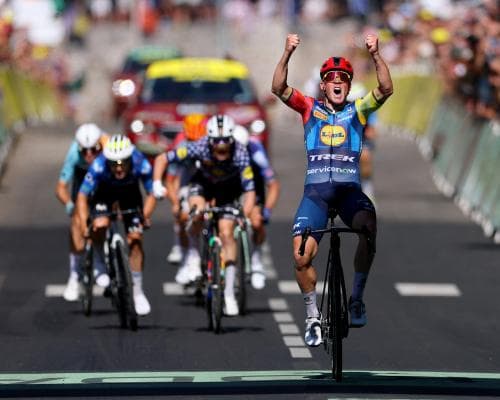
Mads Pedersen, the former world champion from Denmark, had been waiting for this moment. His sprint into Foix was not a burst of chaos but a calculation — a cool-headed, Scandinavian dissection of the final kilometre. He crossed the line with his arms raised, the green jersey of the points classification already his. But the real story was unfolding further back, where a 30-year-old Norwegian named Torstein Træen was writing the kind of narrative that makes even the most jaded luxury traveller sit up straighter. Diagnosed with testicular cancer in 2022, Træen had spent months in treatment, then months more clawing back his form. Here, in the furnace of the French summer, he stole the yellow jersey from four-time champion Tadej Pogacar, building an eight-minute lead that felt less like a sporting upset and more like a declaration of life.
This is the kind of access that money cannot buy — not quite. For the ultra-wealthy, the Tour is not a broadcast; it is an itinerary. Private helicopters ferry guests between stages. Luxury lodges in the Pyrenees, like the Domaine de la Petite Sagne or the Château de Camon, offer front-row seats to the suffering, with Michelin-starred picnics laid out on linen cloths. The price for a week-long package during the Tour can run from €25,000 for a basic villa to €150,000 for a fully staffed estate with a chef, a sommelier, and a masseuse on call. But the real currency is rarity. To watch a man who has looked death in the face ride into the yellow jersey is to witness something that cannot be engineered. It is the opposite of a VIP box. It is raw, unfiltered, and utterly compelling.
What does this signal about luxury travel in 2026? That the wealthy are no longer satisfied with passive observation. They want proximity to authenticity — even when that authenticity comes wrapped in sweat and exhaustion. The Tour de France has become a pilgrimage for those who understand that the most luxurious experience is often the hardest to attain. Not the finish line in Paris, but the lonely climb up the Col de la Core, where the only sound is the crunch of gravel and the ragged breath of a rider fighting for his career. Tomorrow’s stage to Pau promises the first bunch sprint of the race — a chance for the pure sprinters to reclaim the spotlight. But for now, the story is heat, heart, and a Norwegian who refused to quit.
Where do the wealthy go next? They follow the race, of course. But they also follow the weather. As the Tour moves toward the Alps, private chalets in Courchevel and Méribel are already booked, their owners tracking the peloton’s progress on iPad screens while a private chef prepares a tasting menu of local charcuterie and aged Comté. The Pyrenees, though, will linger. There is a reason the ultra-wealthy are drawn to mountains: they remind us that nature is still in charge. And on a day when the sun tried to kill a bicycle race, the most exclusive seat in the house was the one that let you feel every degree of it.