The Country House Hotel That Locals Actually Want to Visit
The golden hour hits the Orangery at Teffont House, and the room glows. Sunlight catches cocktails the color of spun sugar, spills across a terrace tangled with fleabane, and bounces off spoons sinking into raspberry trifles. But the real sparkle here isn't the light. It's the crowd. On a warm June evening, this new hotel—ten minutes from the Wiltshire village of Tisbury—is packed with local people. Not weekenders. Not tourists. Neighbors. That is the quiet revolution unfolding in the Nadder valley.
This is the first hotel from the Beckford Group, the quiet force behind a handful of West Country inns and restaurants that have become cult favorites among those who know—the Talbot Inn in Mells, the Beckford Canteen in Bath. They have a gift for making hospitality feel like a dinner party you were lucky to be invited to. At Teffont House, they've taken that instinct and sharpened it. The furnishings are unflashy: chalky pink and moss green paintwork, antiques jostling with contemporary art. The menu is built for locavores with serious appetites. The pricing is deliberate—unstuffy, inclusive. Underpinning it all is a rare ability to tap into community and create soul. They call it a "village" hotel, not a country house hotel. That distinction matters.
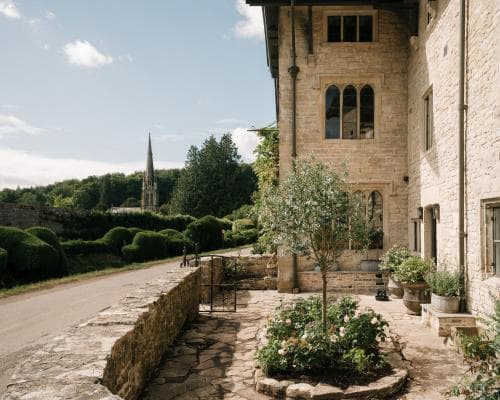
The drive alone is a ritual worth savoring. From the open chalk downs of Cranborne Chase, the roads narrow. By the time you reach Teffont Evias, it's a single track tracing a rare chalk stream, past rose- and hollyhock-frilled cottages, deep in the valley. Teffont House sits at the village heart: part genteel stone dower house, part cuckoo clock. Built in the 17th century, it was reimagined in the 19th in then-voguish Swiss style, its sedate bones spiked with gothic windows, chalet eaves, and surprise carvings. Inside, 17 bedrooms. Mine, number seven, looks out over the walled garden toward the church through soaring arched windows. No oversized minibars or fluffy robes. Instead: proper cups and saucers on a silver tea tray, a tiny decanter of vermouth with two vintage glasses, and botanical Bramley toiletries. It whispers restraint. That is the point.
Founder Charlie Luxton explains the philosophy over a drink in the bar. “There’s no sweeping drive taking you away from everything; the drive is the road into the village.” He drew inspiration from French auberges—those family-run inns where the same faces have greeted guests for generations. “We can’t recreate that history,” he says, “but we can create that feeling.” And they do. The guest guide doesn't point you toward Stonehenge or Salisbury Cathedral. It recommends the village pilates teacher. Locals are actively encouraged to use the walled garden and the croquet court. Hospitality flows both ways.
This is the new signal of wealth: not isolation, but integration. The ultra-wealthy have long retreated behind gates and long drives. Teffont House suggests a different kind of status—the ability to belong, to be known, to walk into a room and see familiar faces. It is a quiet flex, but a powerful one. In a market cluttered with over-polished resorts and anonymous luxury, this hotel offers something rarer: soul. It is a place where the cocktail tastes better because the person next to you lives down the lane.
What comes next? The Beckford Group has proven that rural luxury doesn't need to be exclusive to be coveted. If this model holds—and early signs suggest it will—expect more hotels to tear down their gates and invite the village in. For the discerning traveler, Teffont House is not just a weekend escape. It is a masterclass in how to live well, quietly, and among people who matter.
The Experience
Book a night in Room Seven at Teffont House through the Beckford Group's private reservations line, and ask the concierge to arrange a croquet lesson with a local champion.