The Unseen Estate: How a Red Card in Queens Became a Geopolitical Chessboard

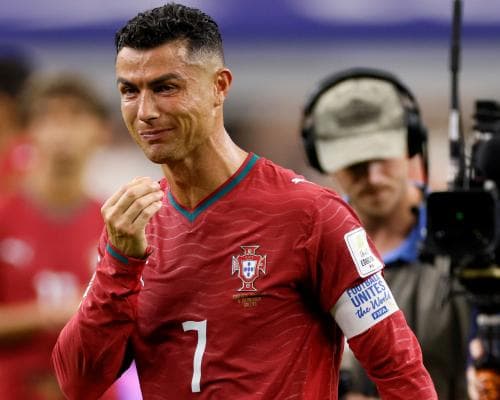
The most coveted real estate in the world isn’t a penthouse overlooking Central Park or a vineyard in Napa. It’s a loophole. Last week, that loophole sat squarely on the pitch of the 2026 World Cup, where Folarin Balogun—a striker born in New York City to a mother who was merely passing through—found himself at the center of a controversy that had Donald Trump lobbying FIFA, Marco Rubio issuing statements, and the Belgian national team wondering if victory could ever be clean. This was not a sports story. This was a story about who gets to own the game.
Balogun’s red card—a decision that would have sidelined him for a critical match against Belgium—was overturned after what can only be described as a masterful display of soft power. The US secretary of state waded in. The president admitted to lobbying FIFA. Even Sir Keir Starmer, the British prime minister, intervened on the kick-off time, as if the entire apparatus of Western diplomacy had been repurposed for a single, gleaming object: a footballer’s availability. For the ultra-wealthy, this is the ultimate luxury: the ability to bend the rules of the game through sheer gravitational pull. It is not about the money—it is about who answers the phone when you call.
The craftsmanship here is not in leather or stitching but in the architecture of influence. Consider the irony that Rob Young, an American living in Germany, pointed out: “In Trump’s America, Balogun wouldn’t even be a citizen.” The Supreme Court had just invalidated an executive order denying birthright citizenship to children of “illegal or temporary internationals.” Balogun, born in NYC only because the airline refused to let his very pregnant mother fly back to London, was a living testament to the caprice of borders. Yet here he was, being defended by the very administration that sought to strip such rights from others. This is the kind of cognitive dissonance that the super-rich navigate daily: they fund the walls while buying the keys to the gate.
The market context is deliciously absurd. FIFA, initially silent, sent a push notification through its media app to every user—Gianni Infantino’s statement on the overturn delivered like a royal decree. The message was clear: the game’s governing body answers to the highest bidder of political capital. In the world of luxury, we call this “bespoke access.” For the rest of us, it’s called a fix. But let’s be honest: the ultra-wealthy do not want a level playing field. They want a field that tilts when they lean. And here, Trump leaned. Rubio leaned. Starmer leaned. The field tilted.
What does this signal about luxury taste? It signals that the most expensive thing you can own is not a car or a château—it is a narrative. Balogun’s red card became a story about citizenship, about who belongs, about the value of a single player in a multibillion-dollar tournament. The ultra-wealthy collect narratives the way others collect art: as markers of status, as tools of leverage, as proof that they can rewrite reality. The Belgian team’s complaint—“why would you want to win a match that everyone will argue you didn’t really win?”—misses the point entirely. The point is that the argument itself is the trophy.
Looking forward, this will not be the last time a red card becomes a diplomatic incident. As the 2026 World Cup approaches, expect more such dramas. The estates of power—White House briefings, FIFA boardrooms, NATO sidelines—will continue to host a match within the match. The rest of us can only watch, admire the choreography, and perhaps invest in a good lawyer. Because in the end, the most valuable estate is the one you can’t see: the invisible grid of influence that decides who plays and who sits out.