The Billionaire’s Quiet Rebellion: Why the World’s Most Powerful Are Ditching Their Screens
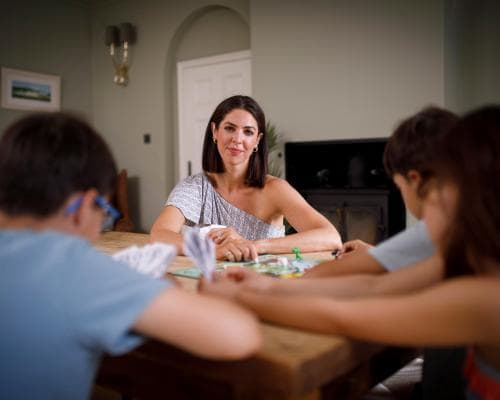
Picture this: a woman who spends her days advising frazzled, high-net-worth parents on how to find calm, caught in the very trap she’s paid to dismantle. She’s a psychotherapist, writing about why we struggle to be present. Yet her own thumb hovers over her phone hundreds of times a day. Each notification—a new email, a like, a work ping—offers a tiny hit of dopamine that motherhood, in its messy, unrewarding reality, simply cannot match. The phone was her office, her income, her lifeline. It was also her secret shame. That screen-time number wasn’t just data; it was the distance between the mother she wanted to be and the one she had become.
Here’s the twist that reeks of status: she didn’t buy a $5,000 wellness retreat or install a meditation pod in her closet. She did something far more radical. She downloaded an app called App Block and simply banned herself from social media and email during the hours her children (ages seven, nine, and eleven) are home. Fifteen minutes at night to check in. That’s it. For work, she uses a laptop—an intentionally clunky, single-purpose tool that feels like a deliberate act, not a reflex. The shift was not gradual. It was tectonic. The low hum of overstimulation she had normalized turned out to be costing her more than she knew. Her nervous system, finally free of the algorithm’s grip, began to breathe. She became less irritable, more present, without effort. And her children? They have never been happier.
Now, let’s talk about the craftsmanship of this solution. It’s not about willpower—she learned that willpower is a frontal-lobe function that weakens when you’re tired, stressed, or, in her case, navigating perimenopause. (Falling estrogen makes the brain more reward-seeking, a biological fact that no amount of luxury discipline can override.) The true luxury here is intentionality. She narrates her phone use out loud in front of her kids: “I’m just adding bananas to the shopping.” That single sentence is a piece of behavioral architecture more refined than any Swiss timepiece. It holds her accountable. It tells her children she is not disappearing. And when the kids settle in front of the TV in the evening, she reads a book beside them. No algorithm vies for her attention. No notification spikes her stress. Being interrupted mid-chapter no longer feels like an assault—it feels like connection.
What does this signal about wealth, taste, and the luxury market? Everything. The ultra-wealthy have long understood that the rarest commodity is not a Birkin or a Bugatti—it is attention. Unfractured, undivided, sovereign attention. This mother’s story is a quiet rebellion against the attention economy that even the most powerful cannot escape. The same billionaires who fly private to remote wellness clinics are now realizing that the greatest upgrade to their lives costs zero dollars: a hard boundary with the screen. The market is already responding. Private schools in Gstaad and St. Moritz now offer “digital sabbaticals” for parents. High-end family offices are hiring “attention coaches” to help clients reclaim focus. The message is clear: the ultimate status symbol is not what you own, but what you choose to ignore.
Looking forward, expect this trend to accelerate. The next wave of luxury will not be about more—more notifications, more content, more connection. It will be about less. Less noise. Less reactivity. Less of the biological hijack that turns a calm parent into a snappy one. The psychotherapist’s story is a blueprint for the elite who are tired of treating their own brains as a shared workspace. She didn’t buy her way out of the trap. She engineered her way out. And in doing so, she discovered that the most exclusive experience of all is simply being present—without the hum of a screen in your pocket. For those who can afford any luxury, that kind of quiet may be the most expensive thing they’ve never tried.
The Experience
Book a private consultation with a digital-wellness architect to design your own attention protocol—no app required, just a willingness to disconnect.