The Trump Card: How a Presidential Call Reshaped the World Cup’s Most Controversial Red Card
The image is already legendary. An AI-generated Folarin Balogun, face composed, holds up a photo of Donald Trump flipping the bird. “Nah bro, I have the Trump card. I win,” the deepfake says in an American accent—a detail that would be hilarious if it weren’t so pointed. The real Balogun was born in New York by accident, raised in London, and speaks with a British lilt. But in the surreal theater of modern power, reality is optional. What matters is the phone call.
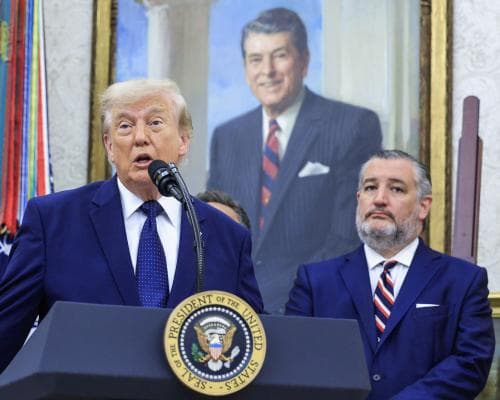
That call, placed by Trump to FIFA president Gianni Infantino, overturned Balogun’s red card and cleared him to play in the USA’s knockout match against Belgium. Trump insists he didn’t pressure anyone. “All I did was ask for a review,” he told reporters in the Oval Office, adding with a shrug, “I didn’t tell him what to do.” But in the world of the ultra-wealthy, a request from a sitting president is never just a request. It’s a command wrapped in velvet.
This is the kind of influence that money can’t buy—but proximity to power can. For the collector who owns a Bugatti Chiron and a private island, the ultimate luxury isn’t a watch or a wine cellar. It’s the ability to rewrite the rules of the game. Trump’s intervention was a masterstroke of soft power, leveraging a personal relationship with Infantino—who has repeatedly buttered up the president—to secure a competitive advantage. The red card, for a challenge Trump deemed “not a foul,” was overturned not on the merits of the tackle, but on the merits of the caller.
The AI video that went viral—viewed nearly 20 million times on X—captures the zeitgeist perfectly. It’s a parody, yes, but also a prophecy. In an era where truth is fungible and influence is the only real currency, the Trump card is the ultimate status symbol. It’s not about the money; it’s about the ability to make a phone call that changes the outcome of a World Cup match. That’s the kind of access that separates the merely rich from the truly powerful.
Critics were quick to point out the irony: Trump, who has tried to deny birthright citizenship to children like Balogun—born in New York to non-citizens—demanded that the striker be allowed to represent the US. But irony is a luxury the powerful can afford. Trump’s own father, Frederick, was also an accidental American, born in New York to a German mother who arrived six months pregnant. The parallels are messy, but in the world of high-stakes diplomacy, consistency is for the little people.
What does this mean for the luxury collector? It’s a reminder that the most coveted items in life are not objects but outcomes. A private jet gets you to the game faster; a presidential call gets you on the pitch. For the ultra-wealthy, the ultimate acquisition is influence—the ability to bend institutions, rewrite narratives, and secure victories that others can only dream of. Balogun’s red card suspension is a footnote in World Cup history, but the call that overturned it is a lesson in how the game is really played.
As the USA faces Belgium tonight, Balogun will take the field with a second chance that few players ever get. The AI video will keep looping, a digital monument to the moment power met sport. For the rest of us, it’s a glimpse into a world where the rules are suggestions, and the only card that matters is the one in the president’s hand. The Trump card, it turns out, is not a metaphor. It’s a strategy.