Dangote's giant refinery rewires Nigeria's oil story as refining sector logs record 43.94% growth
Nigeria's oil refining sector grew 43.94% in Q2 2026, driven by Dangote's expanded 700,000 b/d refinery and surging exports.
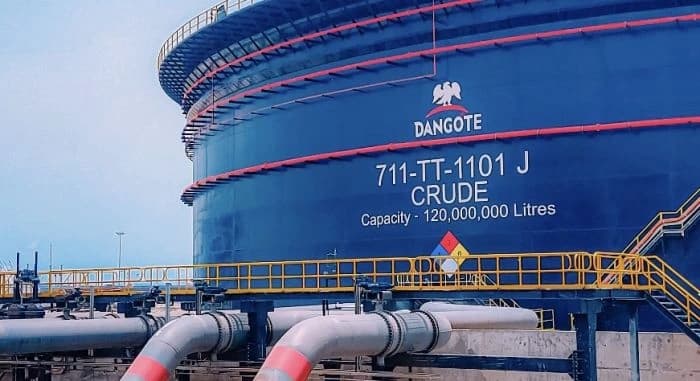
For anyone tracking the flow of capital across Africa, the most telling number out of Lagos this week isn't a billionaire's fortune or a flashy acquisition. It's a dry statistic from Nigeria's National Bureau of Statistics: oil refining output grew by 43.94% year-on-year in the second quarter of 2026. That's the strongest quarterly jump on record, and it signals something far bigger than a rebound — it marks the moment Africa's biggest economy finally starts processing its own crude at scale, with Aliko Dangote's $20 billion megaproject leading the charge.
The numbers, buried in the NBS's rebased GDP report released on August 31, show a sector transformed. Dangote Petroleum Refinery, which completed maintenance and expansion work in February 2026, now has a crude distillation capacity of 700,000 barrels per day, up from 650,000 b/d. That extra muscle has translated directly into output: domestic crude and condensate supply to local refineries hit 97.4% in Q2, with 53.7 million barrels delivered between April and June — nearly double the 28.5 million barrels in Q1. Dangote alone took the overwhelming share of that crude, and the result is visible in Nigeria's trade flows. Seaborne petroleum product exports reached 350,000 b/d in Q2, up from an annual average of just 46,000 b/d in 2023, with Europe taking about 130,000 b/d, other African markets nearly 120,000 b/d, and Asia and Oceania around 110,000 b/d.
To understand why this matters, you have to remember Nigeria's long, painful paradox: it's Africa's largest oil producer, yet for decades it imported nearly all its fuel, paying billions in subsidies to keep prices low while its own refineries rusted. The Dangote refinery, built on a swampy peninsula outside Lagos, was dismissed by skeptics as vanity — a project too big, too expensive, too ambitious for a country notorious for broken infrastructure. Dangote, already Africa's richest man and the continent's most prolific industrialist, pushed ahead anyway, and the facility has become the engine of a quiet revolution. The NBS data shows oil refining growth accelerating through 2025 and into 2026, a stark contrast to the anaemic single-digit growth of late 2024, when the sector expanded just 9.59% in Q4. Back then, the old refineries were barely running; today, Dangote's operations dwarf everything else.
This isn't just a corporate success story — it's a structural shift in how wealth moves through the continent. For years, African oil wealth flowed outward: crude extracted, shipped abroad, refined elsewhere, and sold back at a premium. The Dangote refinery inverts that logic, keeping more value onshore and turning Nigeria into a supplier of finished petroleum products to its neighbors and beyond. The oil sector's contribution to real GDP rose to 4.16% in Q2, from 4.05% a year earlier, and the broader economy grew 4.31% in the non-oil sector — a sign that the refinery's knock-on effects are rippling through logistics, shipping, and local manufacturing. For international investors, the message is clear: Nigeria is no longer just a place to extract resources; it's becoming a place to process them, with all the margins that implies.
Still, the road ahead is not without potholes. The refinery has already clashed with regulators over fuel quality standards and import licenses, and Dangote has threatened to cut supplies to marketers who prefer cheaper imports. The government's subsidy regime, long a fiscal drain, remains a political minefield. But the underlying trend is unmistakable: Nigeria's refining capacity is now a strategic asset, not a pipe dream. As Dangote scales further and other players eye similar projects, the country's petroleum trade is being rewritten in real time. For those who follow African capital, the lesson is simple — the continent's wealth is no longer just dug out of the ground; it's increasingly refined, processed, and shipped out as finished goods, and the man who bet his fortune on that vision is now setting the pace for everyone else.