Dangote Refinery Takes Import Licence Fight to Appeal Court as Nigeria's Fuel Market Rewires
Dangote Refinery seeks leave to appeal a ruling forcing Nigeria's regulator to keep issuing fuel import licences to three marketers, escalating a fight over the country's fuel supply.
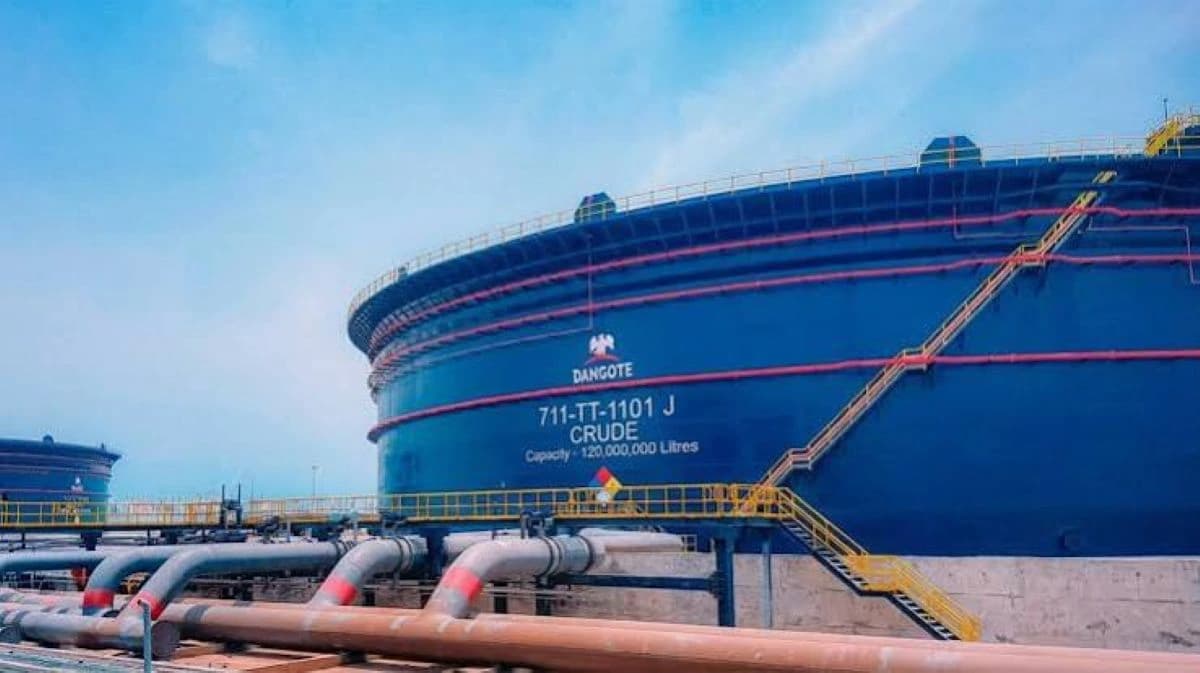
Nigeria's biggest private refinery is not done fighting over who gets to ship petrol into the country. On October 6, 2026, Dangote Petroleum Refinery Petrochemicals FZE filed a motion on notice at the Court of Appeal in Abuja, asking for permission to challenge a Federal High Court judgment that compels the Nigerian Midstream and Downstream Petroleum Regulatory Authority (NMDPRA) to keep issuing petroleum product import licences to three major oil marketers: Matrix Energy, AA Rano, and AYM Shafa. The motion was seen exclusively by Nairametrics.
The dispute traces back to a September 28, 2026 ruling by Justice Inyang E. Ekwo of the Federal High Court, Abuja Judicial Division, in Suit No. FHC/ABJ/CS/1363/2026. Matrix Energy and two others had sued the NMDPRA after the regulator refused to issue or renew their import licences. Justice Ekwo held that the refusal was in "direct non-compliance" with the Petroleum Industry Act (PIA), that the regulator had acted beyond the law, and that any exercise of authority over import licences in breach of the PIA was "null and void." The plaintiffs, he ruled, had proved their case on its merits. Dangote Refinery, which was not a party to that suit, now wants the Court of Appeal to let it join the fight as an interested party and overturn the judgment. Its motion cites Sections 233(3) and 233(5) of the 1999 Constitution (as altered), Section 24 of the Court of Appeal Act (as amended), Order 6, Rules 1 and 2 of the Court of Appeal Rules, 2021, and the court's inherent jurisdiction.
Why does a refinery care about import paperwork? Because for decades Nigeria ran on imported petrol. The state-owned refineries barely worked, and the country's fuel supply was effectively outsourced to traders and marketers who shipped in refined product. Dangote Refinery, widely described as Africa's largest single-train refinery, was built to break that dependence. It is the flagship asset of Aliko Dangote, Africa's best-known industrialist, and it has changed the arithmetic of Nigerian fuel: NMDPRA data showed petrol imports dropped sharply in the first quarter of 2026 as supply from local refineries climbed to about 3.18 billion litres. Every import licence issued to a marketer is a barrel that does not have to come from Dangote's plant in the Lekki free zone. That is the commercial heart of this legal war.
This is also not Dangote's first attempt to challenge import licences. In 2025, the refinery filed a similar suit seeking to nullify licences granted to NNPC Ltd, AYM Shafa Ltd, AA Rano Ltd, T. Time Petroleum Ltd, 2015 Petroleum Ltd, and Matrix Petroleum Services Ltd. In July 2025, it unexpectedly withdrew the case, telling the court it was discontinuing the suit forthwith. The new motion signals that the refinery has decided the courtroom, not just the pump price, is where the import question will be settled.
The wider signal for people who follow African capital is hard to miss. A single private company is now large enough to reshape a national fuel market, and to litigate against a regulator and rival marketers over the rules of that market. Nigeria's downstream sector, long a byword for opacity and import dependence, is being forced to answer a simple question: does the PIA guarantee marketers the right to import, or does it allow a regulator to steer supply toward domestic refining? The Court of Appeal's answer will shape margins for traders, offtake for Dangote, and the pace at which Nigeria's fuel bill in foreign exchange falls.
For now, the refinery is asking for leave, not victory. If the Appeal Court grants it, the case becomes a test of how far Africa's largest refinery can use the law to defend its home market. If it refuses, the September judgment stands, and Nigeria's import taps stay open. Either way, the era in which a Nigerian refinery quietly accepted imported fuel as the default is over.