Dangote Refinery's N2.15 Trillion IPO Set to Reshape Nigeria's Stock Market
Dangote Petroleum Refinery's N2.15tn IPO will make it the largest NGX listing, doubling refining capacity and opening Africa's biggest asset to retail investors.
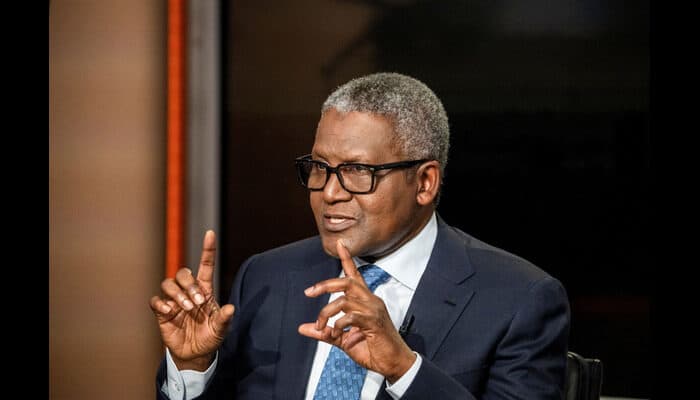
Africa's wealth watchers have a new milestone to track: the Dangote Petroleum Refinery & Petrochemicals is about to become the single largest company on the Nigerian Exchange. When the listing completes next month, the refinery—already Africa's biggest single-train facility—will carry a valuation of N65.22 trillion, a figure that instantly redraws the hierarchy of Nigeria's equities market. For a continent that has long exported its raw resources and imported finished goods, this is a rare moment when a homegrown industrial giant tests the depth of local capital markets.
The numbers are stark. The company is selling 4.1 billion ordinary shares at N525 each, raising N2.15 trillion (about $1.6 billion) in gross proceeds. That ranks among the largest capital raises ever seen on the Nigerian bourse. The offer opens on 14 September 2026 and closes on 13 October 2026, giving investors a four-week window. Vetiva Advisory Services leads a syndicate of more than twenty issuing houses—one of the widest line-ups assembled for a Nigerian offer. After costs of N41.49 billion, the refiner expects to net roughly N2.1 trillion, all earmarked for an expansion programme that aims to double its current 700,000 barrels-per-day capacity by 2029 at an estimated cost of $14.3 billion.
Local context matters here. The Dangote name is synonymous with African business ambition. Aliko Dangote, Africa's richest man, built his fortune on cement, sugar and flour before betting billions on this refinery—a project that has already become central to Nigeria's push to end its costly dependence on imported fuel. The refinery, located in the Lekki Free Zone near Lagos, is a statement of intent: that African capital can fund and operate world-class infrastructure. The IPO is not just a listing; it is a test of whether Nigeria's retail investors—targeted at 10 million—will buy into a strategic asset that has, in less than two years, become a linchpin of the downstream sector.
For the wider African economy, the deal signals a shift. The NGX's market capitalisation, at N160.6 trillion before the listing, will leap to N225 trillion once the refinery is included. That is an overnight addition equivalent to a new top-five constituent. Only about 3.3 percent of the company will be free-floated, a modest slice that nonetheless opens ownership to a broader community. Dangote himself framed it as a shared African achievement, name-checking everyone from miners in Simandou to fishermen in Walvis Bay. The rhetoric is grand, but the mechanics are pragmatic: the proceeds fund only part of the expansion, with the rest to come from cash flow, debt and project finance.
What does this mean for wealth in Africa? It shows that local capital markets can absorb mega-deals, and that African tycoons are increasingly willing to list crown jewels at home rather than abroad. The refinery's success could inspire similar listings in energy, infrastructure and telecoms—sectors where family-owned conglomerates still dominate. It also gives Nigerian pension funds and retail investors a chance to own a piece of a strategic asset, deepening the pool of domestic capital. The risk, as ever, lies in execution: the expansion is phased, and global oil markets are volatile. But for now, the Dangote IPO is a landmark that will be studied from Lagos to London.
The offer closes on 13 October. After that, the refinery's shares will trade, and the market will render its verdict. If the listing performs, it could mark a turning point for how Africa finances its industrial ambitions—less reliance on foreign debt, more on local equity. For a continent that has long been a price-taker in global capital, that would be a quiet revolution.
More in MONEY
Perth Airport's Jason Waters warns of years of disruption as terminal consolidation nears

Nigel Teo Built GoodHood.SG to Revive Singapore's Kampung Spirit — and Funded It Himself for Years

Dongshan Precision's HK$10.7 billion Hong Kong IPO draws fewer than 10,000 retail applicants in mega-listing flop