Dangote Refinery Roadshow Turns African Exchanges Into a Single Capital Market
NGX Group's Dangote refinery roadshow reaches Gaborone as Botswana's bourse and Dangote Industries back cross-border listings across Africa.
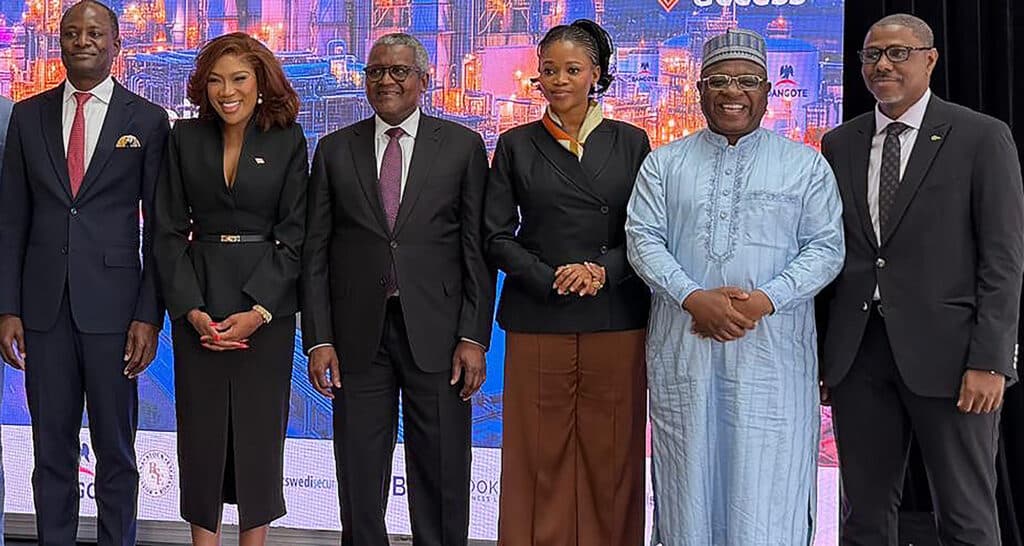
GABORONE — The most interesting thing happening in African capital markets right now is not a listing, a valuation or a record-breaking raise. It is a roadshow. On Wednesday, in a conference room in Botswana's capital, executives from Dangote Industries Limited and the Botswana Stock Exchange sat down with Nigerian Exchange Group to talk about how a single industrial asset can be sold to investors scattered across four or five different countries at once. For anyone who tracks where African capital actually moves, that is a quiet but consequential shift.
The asset in question is the Dangote Petroleum Refinery and Petrochemicals FZE offer, and the roadshow is NGX Group's attempt to market it beyond Nigeria's borders. The tour began in Lagos with an engagement convened by NGX Group in April 2026, moved to Nairobi, and arrived in Gaborone this week. From here it heads to the Egyptian Exchange and the Ethiopian Securities Exchange. At the Nairobi stop, Aliko Dangote — president and chief executive of Dangote Industries — credited NGX Group chairman Umaru Kwairanga and group managing director Temi Popoola with pushing the collaboration forward, and pointed to a planned refinery in Mokowe-Lamu, Kenya, as an example of how an African company might one day list in more than one market rather than being confined to its home exchange. Murat Erden, Dangote Industries' group chief financial officer, singled out the addition of WhatsApp as a subscription channel on NGX Invest, the group's electronic public-offering platform, which already runs through more than 180 distribution channels including stockbrokers, banks and fintech firms.
For outsiders, the names matter. Dangote Industries is the conglomerate built by Aliko Dangote, Africa's most recognisable industrialist, whose refinery project on the outskirts of Lagos is one of the largest private industrial bets ever made on the continent. The Botswana Stock Exchange is one of southern Africa's smaller but steadier bourses, led by chief executive Aobakwe Aupa Monyatsi, and its endorsement carries weight precisely because Botswana is not Nigeria — it is a different regulatory regime, a different investor base, a different currency. NGX Group, meanwhile, is the holding company behind the Nigerian Exchange, and under Kwairanga and Popoola it has spent the past year positioning itself as a convener rather than just a venue. Popoola's framing is blunt: the objective was always continental, to see what stronger connections between African capital markets could produce.
What the roadshow signals is subtler than a headline number. African exchanges have historically competed for the same slim pool of domestic listings, hemmed in by currency controls, fragmented settlement systems and investors who rarely look past their own borders. A cross-border offer, even one still being marketed, tests whether that fragmentation can be worked around — whether a Botswana pension fund or a Kenyan asset manager can subscribe to a Nigerian industrial asset without the usual friction. Monyatsi welcomed the collaboration and made a point of encouraging more markets to join. That is the tell: this is being framed as an open initiative, not a bilateral favour.
The commercial logic is easy to see from Dangote's side. A refinery of that scale needs deep, patient capital, and Nigeria's domestic investor base alone may not be enough. Widening the funnel to other African exchanges — and to retail investors reached through WhatsApp — is a way of broadening participation without waiting for global institutional money to warm up to the story. For NGX Group, the payoff is reputational and strategic: if it can prove that African exchanges can co-operate on a live offer, it becomes the natural hub for the next one.
The next stops are Cairo and Addis Ababa, two markets with very different profiles from Gaborone and Nairobi. Whether the roadshow converts into subscriptions across multiple jurisdictions is the question that matters. If it does, the template — one asset, many exchanges, digital distribution — could outlast the refinery offer itself. If it does not, it will still have shown African capital-market leaders something they have long suspected: that the distance between Lagos and Gaborone is shorter than the paperwork suggests.
More in MONEY