Britain's Food Supply Is Drying Up — and the Wealthy Are Starting to Notice
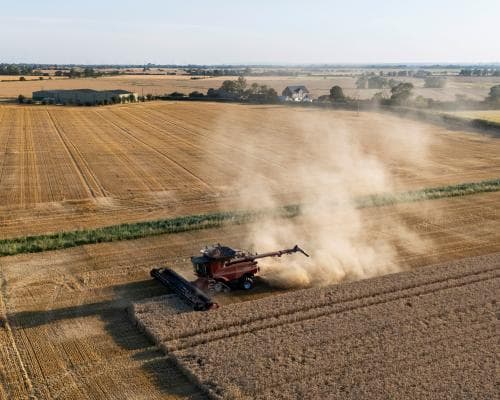
The picture of a British summer has always been green fields, gentle rain, and the distant hum of a tractor. Not this year. England just recorded its driest July on record — a mere 8% of average rainfall — and the country's farmers are now warning that the shelves of Waitrose and Tesco could soon look very different. The National Farmers' Union (NFU) has gone public with a blunt message: Britain could face food shortages, and this isn't a freak weather event. It's the new normal.
This is not just a story about parched soil and wilting lettuce. It's a story about capital, risk, and the quiet reshaping of global supply chains. The NFU's president, Tom Bradshaw, has formally asked the prime minister to step in, but the more interesting move is what he's proposing: tax breaks for farmers to build water storage systems on their own land. That's not a plea for charity — it's an investment pitch. And for anyone managing serious money, it's worth hearing.
Let's get to the numbers. England saw a third drought in five years, with some regions going over a month without meaningful rain. Winter floods had already made planting a nightmare, and now irrigation restrictions are strangling what's left. Wheat farmers report crops at half their normal height. The harvest is coming in earlier than ever — a desperate scramble to salvage anything before the sun bakes it further. The UK Health Security Agency has issued heat alerts for eight regions, with temperatures set to exceed 30°C again. The human toll is real, but the economic toll is just beginning to surface.
The NFU's warning isn't vague. Bradshaw told the BBC that shortages of food products are likely — not just British-grown items, but globally sourced ones too. His reasoning is sharp: the countries Britain relies on for imports — Spain, Morocco, Kenya — are also feeling climate stress. Their climates are changing, their yields are dropping, and their costs are rising. For a nation that imports nearly half its food, that's a structural vulnerability, not a seasonal blip.
For the wealthy, this is where the story gets interesting. Water is becoming the new oil — a scarce, underpriced asset with no substitute. Bradshaw's call for tax breaks on farm reservoirs is essentially a request for private capital to build public resilience. Look at what's already happening in California and Australia: institutional investors are buying water rights, farmland with secure irrigation commands a premium, and agri-tech startups are raising serious rounds to make every drop count. Britain is late to this party, but the invitation is now on the table.
There's also a broader market signal here. Food inflation is not a transitory thing that fades with a better harvest. It's a structural shift driven by climate volatility. The Bank of England has been fighting inflation for months, but it can't print rain. For investors, this means one thing: the cost of food will keep climbing, and the companies that control water, cold storage, and resilient supply chains will command higher multiples. The farmers who adapt — who build reservoirs, switch to drought-resistant crops, or invest in vertical farming — will be the ones who thrive.
Bradshaw's warning is a wake-up call, but it's also an opportunity. The wealthy have always moved early on scarce resources — that's how wealth gets built. Water infrastructure, agricultural land with secure access, and climate-resilient food producers are not just defensive plays; they're growth plays. The question is whether Britain's policymakers will create the incentives to make that capital flow. If they do, the next decade could see a quiet revolution in British agriculture. If they don't, the shortages will simply get worse — and the smart money will go elsewhere.
For now, the immediate picture is grim: half-height wheat, empty reservoirs, and a government that's been slow to act. But the long-term picture is clearer than ever. Climate change is rewriting the rules of food production, and the markets are starting to price it in. The investors who understand this — who see water as an asset, not an afterthought — will be the ones who profit from the chaos. The rest will just be paying more for their bread.