Glasgow's £162.6M Commonwealth Games Experiment Proves 'Lean' Can Beat 'Grandiose' — And That's a Lesson for Every Investor
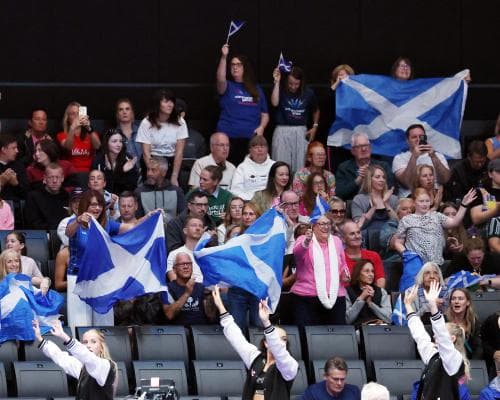
Eleven days. Ten sports. One city. And a budget that is barely a third of what Birmingham burned through four years ago. The Glasgow 2026 Commonwealth Games were supposed to be a stripped-down, make-do version of a global sporting spectacle — a sort of festival for the fiscally anxious. Instead, the organizers are calling it a triumph, and the chief executive of the Games, Phil Batty, is talking about the next 100 years. That's not just a feel-good sports story. That's a capital-allocation story.
Here's the money math: Glasgow spent £162.6 million to stage these Games. Birmingham spent £543 million in 2022. That's a 70% cost cut. And yet, the athletes, the associations, and the organizers are all walking away with the same word on their lips — 'phenomenal.' Batty told the Guardian that the Games 'exceeded expectations' and proved that major events can 'flex and evolve to be fit for purpose.' Katie Sadleir, the chief executive of Commonwealth Sport, echoed the sentiment, saying people are 'talking about it on the streets.'
Now, before you think this is just a victory lap for public-sector event planners, consider the mechanics. The revamped format cut the number of sports from 19 to 10. That's a brutal, unsentimental portfolio review. The organizers looked at every discipline, every venue, every line item, and asked: Does this generate enough return — in excitement, in participation, in broadcast value — to justify its cost? The ones that didn't, got cut. That's exactly how a good private-equity firm would approach a struggling asset. You prune the underperformers, focus on the core, and see if you can generate a better margin on a smaller base.
And there were plenty of skeptics. The absentee list was long — Britain's 800m Olympic champion Keely Hodgkinson, Canadian swimmer Summer McIntosh, Olympic 100m champion Julien Alfred all stayed home. TV visibility was limited, and some venues weren't sold out. But here's the thing: the organizers aren't selling tickets to the skeptics. They're selling a model. And the model is working. The projected spend is £162.6 million — a fraction of previous Games — and the next iteration in Amdavad, India, in 2030 will be built on this same lean blueprint.
This is the rare case where a 'downgrade' became an upgrade. The Commonwealth Games have long been the awkward middle child of global sports — not the Olympics, not the World Cup, but a sprawling, expensive, often forgettable gathering of 70-odd nations. Glasgow decided to stop pretending. They made the Games smaller, cheaper, and more focused. And in doing so, they may have just saved the event from irrelevance. That's a lesson that translates directly to how you manage wealth: sometimes the best way to grow is to shrink what doesn't work.
For the wealthy and the markets, this is a signal. The era of bloated, vanity-project spending — in sports, in real estate, in tech — is giving way to a new discipline. Investors are rewarding companies and governments that can do more with less. The Glasgow model is a template for how to run a massive undertaking without massive waste. It's the difference between buying a sprawling conglomerate and buying a focused compounder. The latter often wins over the long run.
So, what does the next 100 years look like? Batty says the Games are 'ready for the next 100 years.' That's bold talk for an event that nearly died from its own weight. But if Glasgow proved anything, it's that reinvention is possible — and that the market rewards those who dare to cut the fat. For the investor, the takeaway is simple: don't be afraid to sell the underperformers, trim the portfolio, and focus on what actually creates value. The Commonwealth Games just showed you how. And they did it for £162.6 million — a bargain at twice the price.