Political Capital at Risk: The Max Miller Scandal and the Price of a Seat
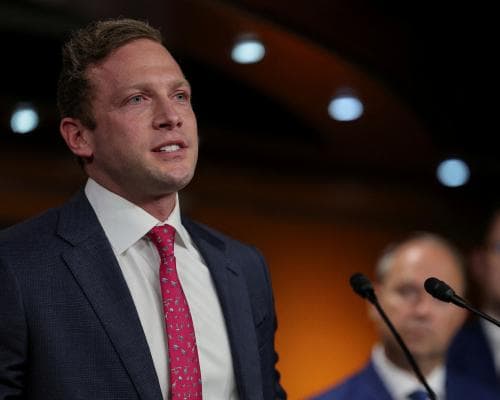
There's a moment in every political cycle when a scandal stops being a personal story and becomes a market event. For Ohio's seventh congressional district, that moment arrived on Sunday, when Senator Bernie Moreno — a man who knows the accused intimately as his former son-in-law — publicly called for Representative Max Miller to resign. The accusation is not a policy dispute or a fundraising squabble. It's a brutal, personal indictment that has suddenly repriced the value of a seat in the House of Representatives and exposed the raw mechanics of how political capital is built, spent, and destroyed.
Let's be clear about the stakes. Miller isn't just any backbencher. He's a Trump-aligned Republican in a district that the GOP has treated as safe territory. But safe is a relative term when your own family is testifying against you. Senator Moreno's statement — posted on X, no less — wasn't a whisper campaign. It was a public execution, timed just days before the deadline for Miller to be replaced on the ballot. That's not a coincidence. That's a calculated move by a political operator who knows exactly how to maximize leverage. The message to donors, to party leaders, and to voters is simple: this asset is toxic, and the price of holding it just went to zero.
The mechanics here are worth unpacking, because they reveal how political markets actually work. Miller's livestream denial on Sunday morning was a classic defense play — an attempt to shore up his position before the market opened. He insisted that no court or agency has ever substantiated the allegations, that no criminal charge has been filed, and that he cooperated fully with every investigation. That may be true, but in the court of public opinion — and in the primary election that decides who actually holds the seat — the standard is different. The allegations are specific and visceral: pouring hot water on Emily Moreno, holding a gun to her head, breaking their toddler daughter's collarbone. Whether or not they hold up in a legal setting, they are devastating in a political one. The window for Miller to withdraw or be replaced closes Wednesday, and every hour that passes without a resolution is another hour of bleeding.
For wealth builders and political investors, this is a case study in the fragility of intangible assets. A congressional seat is worth more than the salary and the pension. It's a platform for influence, a gateway to committee chairs, a magnet for donors, and a launching pad for higher office. The value of that platform is not fixed — it's a function of trust, and trust is a currency that can be devalued overnight. Miller's seat was worth millions in fundraising potential and policy leverage. Now, it's a liability. The Republican Party is facing a choice: defend a damaged incumbent and risk losing the district in November, or cut losses and find a replacement who can run on a clean slate. That's a classic asset-management decision, and the clock is ticking.
What does this signal for the broader market? First, it's a reminder that political risk is not just a foreign concept. Domestic scandals can move the needle in closely watched races, and the GOP's narrow margin in the House means every seat counts. Second, it shows the growing power of family testimony in politics — a trend that's not going away. When a sitting senator calls for his own son-in-law's resignation, it sends a signal to other politicians that personal conduct is now a tradable commodity. Third, it highlights the importance of timing. Moreno waited until the last possible moment to make his statement, maximizing the pressure on Miller and minimizing the time for a coordinated defense. That's a lesson in strategic patience for anyone navigating a crisis.
For the wealthy and the politically connected, the takeaway is straightforward: diversify your political exposure. Don't put all your capital — financial or reputational — into a single candidate, because a single scandal can wipe out your returns. The race in Ohio's seventh district is now a live experiment in how quickly a seemingly safe seat can become a battleground. Democrats are already circling, and they see an opportunity to flip a district that was once out of reach. The market for political capital is efficient in one sense: it prices in new information fast. But it's also irrational in another: it overreacts to headlines, and it punishes perceived weakness mercilessly.
As Wednesday's deadline approaches, the question is not whether Miller survives — it's whether the GOP can salvage the seat. The party's leadership will be making calculations behind closed doors, weighing the cost of a messy primary against the risk of a Democratic pickup. For the rest of us, this is a reminder that in politics, as in markets, the only constant is volatility. The smart money is already moving on, looking for the next opportunity — and the next scandal. The lesson is as old as Wall Street itself: when the story changes, the price changes. And when the story is this personal, the price can change overnight.