Cricket's New Money Game: Why England vs Pakistan Is a Masterclass in Asset Allocation
As England's Test team navigates a tricky opening day against Pakistan, the real action for wealth builders is in the economics of the sport itself — from broadcast rights battles to the private equity flooding into franchise cricket. This match is a live case study in how tradition and capital are colliding.
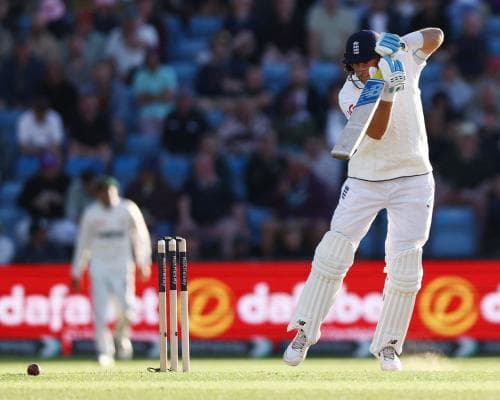
Forget the stock ticker for a moment. The most fascinating action in markets today isn't on Wall Street; it's on a cricket pitch in England, where a bloke in a cable-knit sweater with 'PEPSI' emblazoned across his chest is fielding at slip. That image — a centuries-old sport, a global soft-drink giant, and a player who holds a BA in English literature — is the perfect metaphor for the new money game. While Root and Cox grind out runs, a far more lucrative contest is being played in boardrooms, where the future of cricket is being bought, sold, and leveraged like a hot tech startup.
The immediate scorecard shows England at 90 for 2, with Ollie Cox and Joe Root steadying a wobbly ship. But the wealth story here isn't about the runs; it's about the stage. This isn't just a Test match; it's a flagship asset in a global sports portfolio that has seen valuations skyrocket over the past five years. The broadcast rights alone are a multi-billion-dollar war chest, and the recent influx of private equity into franchise leagues — from the IPL to The Hundred — has turned cricket from a gentleman's pastime into a serious alternative asset class. For the ultra-wealthy, owning a stake in a cricket team is the new yacht; it's a liquid, high-status investment that appreciates while you sip champagne in the pavilion.
Look at the mechanics on display. Pakistan's bowlers are mixing 'dross with diamonds' — an over of immaculate line and length followed by a short, wide ball that Root cuts for four with his eyes shut. That volatility is precisely what attracts capital. In a low-yield world, investors are hunting for assets with asymmetric upside. A cricket match offers that: a single session can swing the entire outcome, much like a single Fed announcement can swing a bond portfolio. The players, like fund managers, are judged on their ability to minimize the bad overs and maximize the good ones. When Rizwan is 'up' behind the stumps, he's not just a wicketkeeper; he's a risk manager, anticipating the unexpected delivery.
The heritage angle is where the real value lies. The Guardian's live blog mentions old-timers who faced Wes Hall in the northern league — 'terrifyingly magnificent' — and that history is the moat. Unlike a meme stock, cricket's value is anchored in decades of narrative, loyalty, and tradition. That's why private equity firms are paying premiums for a piece of it. They aren't buying runs; they're buying scarcity. There is only one Lord's, only one Ashes, only one first day of a Test series between England and Pakistan. That scarcity drives pricing power. The fact that a player is an English literature graduate, or that the Barmy Army is finding its evening voice, adds to the intangible brand equity that makes these assets resilient to economic downturns.
So what does this signal for the wealthy? It signals that the lines between sports, entertainment, and finance have fully blurred. The smartest capital is no longer just in index funds; it's in 'passion assets' that generate both financial returns and social capital. The deal flow in sports is up, with consortiums of billionaires and sovereign wealth funds circling everything from football clubs to cricket franchises. The trend is decidedly up, even if the market sector is 'Sports & Entertainment'. For the investor watching at home, the takeaway is to pay attention to how these rights are being packaged. If broadcast channels are cutting off, as the live blog suggests, it's because the streaming wars have made the distribution of this content as hotly contested as the game itself.
Looking forward, day two will be about consolidation — can England build on this platform, or will Pakistan's bowlers strike back? For us, the forward-looking play is clear: cricket's balance sheet is stronger than ever, but the volatility remains. The wealthy should treat these moments like a volatile trading day — hold your nerve, respect the history, and be ready to pounce when the short ball comes. Because in this game, as in markets, the ones who cut the loose ball for four are the ones who end up on top. The scoreboard may be tight now, but the long-term trajectory for cricket as an investment vehicle is as solid as a Root forward defensive.