The 250th: A Night of Fire, Fury, and the Pursuit of a New American Golden Age
The thermometer read 100°F when the first guests began to wilt on the National Mall. By the time Air Force One touched down, emergency services had already treated 51 people for heat-related illness. This was not the genteel, air-conditioned affair one might expect for a nation’s 250th birthday. This was a late-night, campaign-style rally, delayed by a passing storm, where the president finally appeared at 11:15 pm to declare a “golden age of America.” For those accustomed to the curated, climate-controlled luxury of private boxes at the Met Gala or superyacht charters in the Med, the scene was a jarring collision of brute-force patriotism and raw, un-air-conditioned reality.
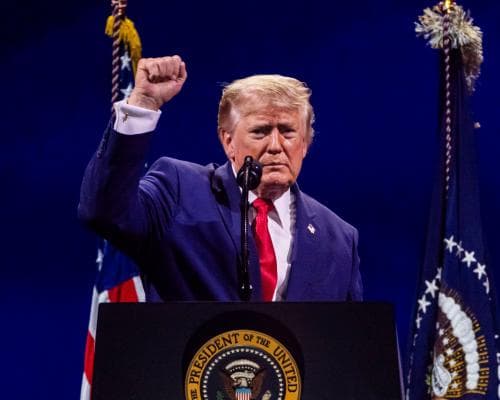
At the center of it all stood Donald Trump, not in a tuxedo but in his signature dark suit and red tie, speaking before what organizers billed as the largest fireworks display “in world history.” The speech itself was a familiar aria: “America is a nation of winners… Today our country is winning again.” He promised to take the nation “to new levels,” and reached for his favored topics—unfounded election fraud allegations, a new golden age, a narrative of unmatched achievement and unlimited potential. For the collectors and patrons who populate the pages of *The Curated Life*, the evening was less a celebration of history than a branding event, a live-action demonstration of how power and spectacle are now marketed to the 1%.
The craftsmanship of the event was in its sheer, overwhelming scale—a tactic more akin to a Las Vegas residency than a state dinner. The fireworks, billed as the largest in world history, lit the sky above the Washington Monument in a coordinated assault on the senses. The delayed start, the heat, the storm, the cancellation of the daytime parade in Philadelphia (where the Declaration was signed in 1776), and the eerie presence of an apparent white nationalist march through the capital all added to the sense of a nation staging a show that was both extravagant and unsettling. For the discerning observer, it was a reminder that luxury is not always about comfort; sometimes, it is about proximity to the raw, unfiltered engine of history.
From a collector’s perspective, the evening was a masterclass in scarcity and timing. The 250th anniversary of the United States is a once-in-a-lifetime event—a semiquincentennial that will not repeat for another 250 years. The extreme weather—a dangerous heatwave that upended long-planned celebrations—only heightened the sense of rarity. Those who braved the 100°F heat, who stayed through the storm delay, who watched the president speak at nearly midnight, were part of a very exclusive club. In the world of hypercars and private islands, exclusivity is the ultimate currency. Here, the cost of entry was not a ticket price but sheer endurance.
What this event signals about luxury taste is a shift away from understated elegance toward a more visceral, experiential form of wealth display. The ultra-wealthy no longer just want a box seat; they want to be in the room where the narrative is being written—even if that room is a sweltering outdoor mall with a delayed start and a security threat. It is the same impulse that drives collectors to bid on a wrecked Ferrari 250 GTO or to charter a yacht to a hurricane’s edge. The thrill is in the risk, the discomfort, the story. The 250th celebration was not a polished gala; it was a test of loyalty and a theater of power, and for those who passed, it was the most coveted ticket in the world.
Looking forward, the “golden age” Trump promised may not be a return to some imagined past but a new paradigm for how the ultra-wealthy engage with national identity. The cancellation of parades, the indoor inauguration in 2025 due to Arctic cold, and now this heatwave-marred outdoor rally suggest that the era of predictable, comfortable state ceremonies is over. The future of luxury patriotism will be rugged, weather-resistant, and deeply personal. For the editors of *The Curated Life*, the question is not whether the event was tasteful—it was not—but whether it was memorable. And by that measure, it was a masterpiece of controlled chaos, a night that will be talked about in boardrooms and on decks from St. Barts to Aspen for decades to come.