The Cosmic Flotsam of Forrest Beach: When Rocket Junk Becomes the Ultimate Collector’s Curiosity
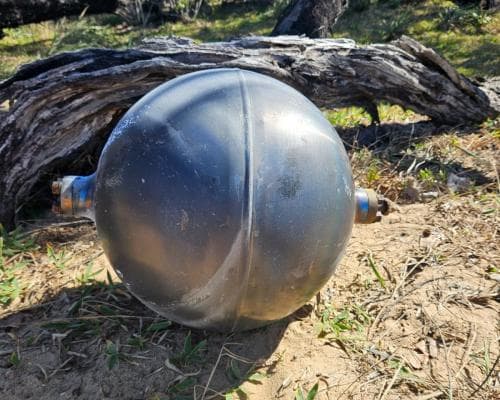
The first hint that something was off came from the chip shop. At Forrest Beach Takeaway, a chalkboard advertised a “space junk snack box,” with a cheeky promise: “unlike some stuff that washes up on our beach, you’ll be able to identify these objects.” The joke landed because, for days, locals had been finding large, blackened spheres scattered along the sand—objects that looked like they had fallen from another world. They had. The Australian Space Agency confirmed that these six spheres, now secured in drums or being “rendered safe,” are almost certainly space debris, possibly leftover fuel tanks or pressure vessels from rocket launches. These are not your average beachcomber’s treasures. They are “space balls,” the detritus of humanity’s reach for the stars, and they come with a warning: they may contain toxic rocket fuel.
For the readers of The Curated Life, the appeal of such objects is not in their danger, but in their rarity. We live in an age where the ultra-wealthy collect everything from vintage Ferraris to Banksy originals, from first-edition Proust to meteorites that fell in the Sahara. But space debris? That is a category so niche it barely exists. These spheres are not just industrial waste; they are artifacts of a new era—the era of commercial spaceflight, of SpaceX and Blue Origin, of rockets that leave behind their shells like a snake shedding skin. To own one would be to own a piece of that narrative, a tangible link to the moment when humanity began to treat the cosmos as a destination, not just a dream. The fact that they washed up on a quiet beach in Queensland only adds to the romance: a secret message from the void, delivered by the tide.
The craftsmanship of these objects is, paradoxically, both crude and exquisite. They are large spheres, likely made of high-grade aluminium or titanium alloys, designed to withstand the extreme pressures of launch and the vacuum of space. Their surfaces are charred from re-entry, a patina that no artisan can replicate. Each one is a unique piece of engineering, built to hold propellant or pressurised gas, and then discarded as the rocket stages separate. The price? There is no market—yet. But if one were to appear at a Sotheby’s auction, estimates would start at six figures, driven by the same forces that push a Rolex Daytona “Paul Newman” to millions: provenance, scarcity, and story. The Australian Space Agency’s involvement only heightens the allure; these are objects that governments want to study, not sell. For a private collector, acquiring one would require connections, discretion, and a willingness to navigate the legal and safety hurdles. The toxic fuel is a detail, not a deterrent—after all, the wealthy have always been drawn to dangerous beauty, from Fabergé eggs to vintage racing cars.
In the collector context, this is a market that barely exists, and that is precisely its appeal. The ultra-wealthy are always hunting for the next uncorrelated asset, the thing that no one else has. Space debris is the ultimate conversation piece, a trophy that says: I have not only seen the stars, I have touched what they left behind. It sits alongside the private jet and the superyacht as a symbol of access to the exclusive, the forbidden, the edge of human achievement. But there is a deeper resonance here. These spheres are a reminder that our age of exploration is messy, physical, and real. They are not digital NFTs or abstract investments; they are heavy, chemical, and dangerous. They demand a kind of stewardship that mirrors the care taken with a vintage wine cellar or a collection of antique firearms. The collector who acquires one becomes a custodian of history, a quiet partner in the space age.
What does this signal about luxury taste? It signals a shift from the merely expensive to the genuinely transcendent. The old markers—diamonds, yachts, châteaux—are becoming commonplace. The new markers are objects that carry a story of human ambition, risk, and the cosmos. A space ball from Forrest Beach is not just a decoration; it is a relic of our collective future. It whispers of the rockets that launched satellites, the astronauts who trained for months, the engineers who solved problems we cannot imagine. And it arrives not in a gallery or an auction house, but on a beach, delivered by the ocean, as if the universe itself wanted to remind us that the most precious things are often the ones we do not seek. For the discerning collector, the question is not whether to acquire such a piece, but how to do so with grace, discretion, and a sense of wonder.
Looking forward, the market for space debris is likely to grow as commercial launches multiply. The Australian Space Agency’s protocol for handling these objects may set a precedent for how such artifacts are treated: studied, documented, and eventually, perhaps, released to private hands. The ultra-wealthy who act now—who build relationships with space agencies, who fund recovery missions, who understand the legal landscape—will be the ones who define this nascent category. The rest will be left with the story of a chip shop and a chalkboard joke, while others own the real thing. In the end, the space balls of Forrest Beach are not a cautionary tale about pollution. They are an invitation. The question is: who will answer?