The EU Reset's New Power Broker: How Burnham's Negotiator Plans to Rewrite the Rules of Post-Brexit Services
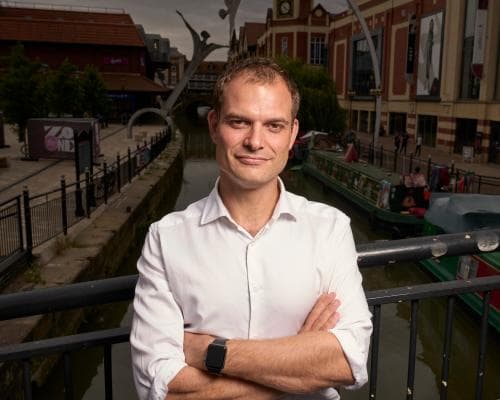
The art of the possible just got a new artist. When Hamish Falconer, the son of Labour grandee Charlie Falconer, took the helm of Britain's EU reset talks, he didn't just inherit a file—he inherited a paradox. The UK's red lines remain firmly drawn: no single market, no customs union. Yet Falconer's opening gambit to the Guardian is a masterclass in diplomatic jujitsu: 'I would want a deeper relationship, a more ambitious relationship with the EU.' For a nation that spent the better part of a decade arguing about sovereignty, that's not just a shift in tone. It's a signal that the Burnham government intends to weaponize pragmatism.
The real story here isn't the usual Westminster theater of summit dates and joint statements. It's the quiet, unglamorous machinery of economic integration—services. While goods trade has dominated post-Brexit discourse, services remain the UK's crown jewel, accounting for nearly 80% of its GDP. Falconer is zeroing in on this terrain, where the EU itself is less tightly integrated than in goods, creating a vacuum of rules that Britain can help shape. 'Services is obviously an area where the EU itself is less closely integrated,' he notes, and that's precisely the point. This isn't about reopening old wounds; it's about building a new architecture for a sector that's been left in the regulatory shadows.
The stakes are enormous. Visa-free travel for British professionals, mutual recognition of qualifications, and a framework for digital services—these aren't just bureaucratic niceties. They're the lifeblood of a modern economy that thrives on cross-border talent and data flows. Falconer, a former Middle East minister and seasoned Foreign Office negotiator, understands that the 'art of the possible' is often about finding the cracks in the monolith. The EU's own internal debates about its productivity challenge are a golden opportunity for the UK to position itself as a partner, not a supplicant. He's not asking for a return to the old days; he's proposing a bespoke, sector-specific integration that could become a model for other non-members.
But let's not romanticize the path ahead. The long-awaited reset summit, once slated for July, is still without a date, a casualty of Keir Starmer's resignation. That's a reminder that political turbulence is the only constant in this relationship. Falconer's 'sense of renewed pace' is admirable, but pace alone won't bridge the trust deficit that years of acrimony have built. The EU's instinct is to protect its single market's integrity, and any perception of cherry-picking will be met with suspicion. Yet Falconer's diplomatic pedigree—his father was a key architect of the Blair era's constitutional reforms—suggests he knows how to navigate these corridors. He's not a novice; he's a insider with a fresh mandate.
What does this signal for the broader geopolitical landscape? In a world of bloc politics and strategic autonomy, the UK is betting that agility trumps size. By focusing on services, Britain is carving out a niche that leverages its strengths—legal expertise, financial services, tech innovation—without getting bogged down in the EU's agricultural subsidies or regulatory heaviness. This could be the blueprint for a new kind of relationship: a 'deep but flexible' partnership that others like Switzerland or even Turkey might study. The ripple effect could redefine how non-members engage with the world's largest trading bloc.
For the investors and innovators watching from the sidelines, this is a quiet but significant signal. If Falconer can deliver even half of what he's hinting at, the cost of doing business between London and Brussels could drop dramatically. That's a tailwind for fintech, legal services, and the creative industries—sectors that thrive on frictionless cross-border collaboration. The market may not be pricing this in yet, but the smart money is already watching the negotiation calendar. As Falconer puts it, the art of the possible is shaped by the relationship between two people negotiating. And in this case, the artist is a man who knows that the most profound changes often come from the smallest, most precise strokes.
The future of UK-EU relations isn't about grand gestures or historic treaties. It's about the granular details of who can practice law in Paris, or how a British startup hires a developer in Berlin without a visa nightmare. Falconer's mission is to turn those details into a competitive advantage. The summit will eventually happen, but the real work is happening now, in the quiet corridors where negotiators trade drafts and red lines become flexible. For a Britain that's been searching for its post-Brexit identity, this is the closest thing to a strategy yet. And it's a strategy that just might work.