Canada's 'Bomb' Wildfires Signal a New Climate Reality — and the Urgent Need for Fire-Resilient Tech
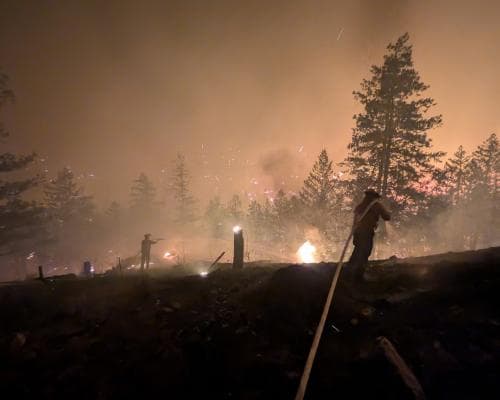
It started as a Friday evening flicker. By Sunday, the Bald Range wildfire had exploded across more than 100 square kilometers — nearly twice the size of Manhattan — racing 15 kilometers toward Okanagan Lake. British Columbia's premier, David Eby, called it "like a bomb going off." That bomb has now displaced 22,000 people, forced the evacuation of entire towns like Summerland and Peachland, and pushed Canada's federal government to step in with emergency shelter and accommodation.
This is not a freak weather event. It is the new baseline. With 102 wildfires raging across the province — half of them "out of control" and 78 ignited in just the past week — the speed and ferocity of these blazes are rewriting the rules of disaster response. The old model of 'wait and react' is obsolete. What we're witnessing is a structural shift in fire behavior, driven by prolonged drought, record heat, and a changing climate that is turning forests into tinderboxes. The question is no longer if this will happen again, but where, and how fast — and whether our technology can keep pace.
The technology to fight this new reality is evolving, but it's still playing catch-up. BC Wildfire Service's director of provincial operations, Cliff Chapman, has pointed to the prolonged hot, dry weather that has primed the province for these explosive fires. In response, fire agencies are increasingly turning to AI-powered predictive models that can analyze satellite imagery, weather data, and historical fire patterns to forecast where outbreaks might occur — and how they'll spread. Companies like California-based FireScout and Canadian startups like OroraTech are using thermal imaging from space to detect fires within minutes of ignition, potentially cutting response times from hours to seconds. But these tools are still nascent, and their adoption is uneven. The Bald Range fire was detected late Friday evening and grew to 100 square kilometers within hours — a pace that would challenge even the most advanced early warning systems.
The capital is starting to move, though. Climate tech investment has been surging, with fire resilience emerging as a distinct niche. Over the past year, venture funding for wildfire-related startups has jumped by 40%, according to PitchBook data, with a focus on everything from autonomous firefighting drones to fire-retardant materials and smart sensor networks. The market is responding to a clear demand: municipalities, utilities, and governments are desperate for tools that can protect lives and infrastructure. In Canada, the federal government's emergency assistance is a stopgap, but the real fix will come from innovation that makes communities less vulnerable in the first place. That includes fire-resistant building materials, defensible space planning, and underground power lines that don't spark blazes during high winds.
But the competitive landscape is still fragmented. The incumbents — traditional firefighting equipment makers and government agencies — are slow to adopt new tech, while startups struggle to prove reliability in the chaos of a real disaster. The opportunity is enormous: the global wildfire management market is projected to reach $10 billion by 2030, but it's a market that demands trust as much as hardware. The startups that win will be those that partner with agencies like BC Wildfire Service to test and refine their tools in the field, not just in simulations. The Bald Range fire is already a case study in how technology can help — but also its limits. Aerial tankers and ground crews are still the backbone of response, but they're being overwhelmed by the sheer scale and speed of these fires.
What this crisis signals for the sector is a shift from reactive firefighting to proactive resilience. The next decade will see a convergence of satellite monitoring, AI modeling, and autonomous response systems — but only if governments and investors treat fire resilience as critical infrastructure, not a niche. Canada's federal assistance is a short-term measure; the long-term fix lies in building a wildfire tech ecosystem that can anticipate, detect, and suppress fires before they become bombs. The Summerland evacuees will return home, but the landscape — both physical and economic — has changed forever. The innovation opportunity is clear: build the tools that can outsmart fire in an era where fire is outsmarting us. The clock is ticking, and the next fire is already waiting for ignition.
For the billionaires and elite capital that this publication tracks, this is a moment to look beyond the immediate crisis. The wildfire problem is not a one-off disaster — it's a recurring, escalating threat that will demand sustained investment in climate adaptation. The market for fire-resilient tech is not just about saving lives; it's about safeguarding property values, insurance portfolios, and entire regional economies. As British Columbia rebuilds, it will need new materials, new sensors, and new logistics — and those who build them will be building the future of climate resilience. The question is who will step up.