Greystar Under Fire: America’s Biggest Landlord Faces a Civil Rights Reckoning — and a Reputational Risk for Institutional Capital
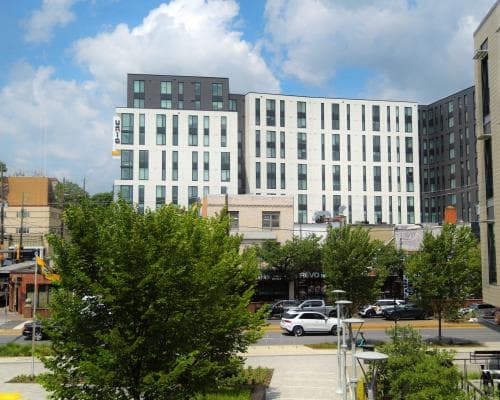
Imagine you’re a landlord with a million doors. You manage more rental units than any other company in the United States. You’re backed by institutional capital, you’re in every major market, and you operate with the scale of a small country. Now imagine the phone rings, and on the other end is a prospective tenant with a federal housing voucher — a legal promise that the government will pay most of the rent. What do you do?
If you’re Greystar, according to complaints filed this week in six states and Washington DC, you hang up. Or you tell them you don’t take vouchers. Or you impose conditions that make using the voucher impossible. That’s the allegation from the Housing Rights Initiative and the law firm Cohen Milstein, who filed 114 counts of fair housing law violations across California, Hawaii, Maryland, Michigan, New Jersey, Virginia, and the District of Columbia. And they have the recordings to prove it.
This is not a small-time slumlord story. Greystar is the largest owner and operator of apartments in the US, with over one million units under management as of December. Roughly 235,000 of those sit in the jurisdictions where the complaints were filed. The company is a behemoth of the modern rental economy — a machine built on institutional capital, private equity partnerships, and the steady cash flows of American renters. But this week, that machine is being accused of a systematic, corporate-level hostility toward the poor.
Here’s the mechanics: the complaints allege that Greystar refuses to accept Housing Choice Vouchers — commonly known as Section 8 — even in cities and states where local law requires landlords to take them. These are not federal guidelines; they are local ordinances passed in places like Washington DC, Los Angeles, and New Jersey, designed to prevent discrimination against low-income tenants. The Housing Rights Initiative sent undercover testers posing as voucher holders to Greystar-run buildings. In every single case, according to the group, staff either rejected the voucher outright or layered on unlawful conditions — like requiring the tenant to pay above-market rent or demanding multiple months of security deposit upfront. Aaron Carr, the group’s executive director, put it bluntly: “We have never encountered a landlord that operates with such brazen contempt and hostility toward the rule of law as Greystar.”
For the wealthy and the institutional investors who own pieces of Greystar’s portfolio — pension funds, sovereign wealth funds, private equity giants — this is a capital markets story dressed up as a civil rights one. The rental housing sector has been a darling of institutional capital for a decade. Low interest rates, demographic tailwinds, and a structural undersupply of homes made apartments a safe, yield-generating asset class. Greystar raised billions from investors like the Alaska Permanent Fund and Canada’s public pension plans. The model worked because scale drove efficiency, and efficiency drove returns. But scale also creates a target. When you manage a million units, every policy decision — every training manual, every leasing script — is a potential liability. And when that liability involves allegations of systemic discrimination, the reputational damage can ripple through the investor base.
Greystar’s response so far has been corporate boilerplate: “We are committed to fair housing practices in everything we do.” No specifics on the complaints. No admission of wrongdoing. But the recordings released by the Housing Rights Initiative are damning. They show a pattern, not a mistake. And in a world where ESG (environmental, social, and governance) criteria are increasingly part of how large institutions allocate capital, a landlord that can’t — or won’t — comply with local fair housing laws is a liability waiting to be priced in.
What does this mean for the wealthy and the markets? First, watch for regulatory escalation. If state attorneys general or the Department of Housing and Urban Development pick up these complaints, Greystar could face fines, consent decrees, or even forced changes to its leasing practices. Second, watch the investor reaction. Private equity-backed rental platforms have already faced scrutiny over rent increases and eviction practices. This adds a new layer of legal risk. Third, and most subtly, this is a reminder that in the age of massive, consolidated ownership of essential assets — housing, energy, data — the line between market efficiency and social harm is razor thin. The smartest capital is not just the most profitable; it’s the most defensible.
Greystar will likely settle, pay a fine, and promise to reform. That’s the usual playbook. But the reputational stain is harder to wash off. For the wealthy who own rental real estate — directly or through funds — the lesson is clear: scale brings scrutiny, and scrutiny brings cost. The days of quietly refusing vouchers are over. The market is watching, and so are the regulators. The question now is whether Greystar’s investors will demand more than a statement — or start asking tougher questions about what their money is really buying.