Inside the Treasury Sweepstakes: Why Business Is Betting on Shabana Mahmood Over Ed Miliband
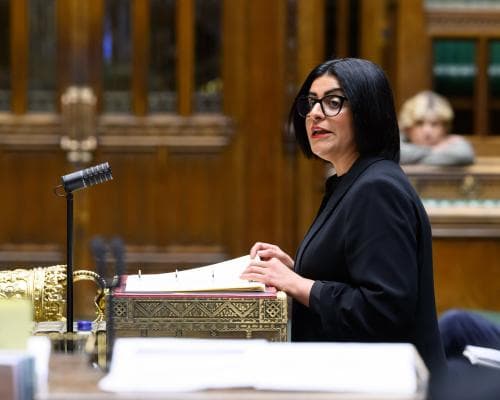
Imagine a chancellor who has never run an economy, never faced a business delegation, and whose biggest known policy footprint is in justice and home affairs. That is Shabana Mahmood, the woman now expected to take the keys to 11 Downing Street on Monday—and Britain's wealthiest investors are scrambling to figure out what she actually believes.
It was only a few weeks ago that the City of London was bracing for Ed Miliband as chancellor. The energy secretary, a committed climate hawk, had been the presumed frontrunner. Then came the backlash. Big business made clear that Miliband's ironclad commitment to net-zero targets—at a time when other nations are rowing back—would be a dealbreaker for capital investment. Now, after a brutal briefing battle, Mahmood has emerged as the likely successor to Rachel Reeves. The market's reaction? Relief mixed with intense curiosity.
The mechanics here are telling. Mahmood has no background in economic or business-facing departments. She has never served at the Treasury, the Business Department, or even on a select committee for finance. “I suspect there is relief,” said a public affairs boss at a large British manufacturer, speaking privately. “I can’t see how it would work with Miliband because of his personal ambitions in terms of net zero.” Yet the same source admitted that Mahmood is an “unknown quantity.” Another insider at a FTSE 250 company echoed that: few business leaders have ever dealt with her directly.
What makes this fascinating from a wealth perspective is the rarity of such a leap. In modern British politics, chancellors usually come from the Treasury or a closely related economic role. Mahmood, a barrister by training, has spent her career in justice and home affairs. That lack of a financial track record is both a risk and an opportunity. For the ultra-wealthy, it means the next phase of UK economic policy is a blank slate—and that uncertainty is already rippling through gilt yields and sterling futures.
The capital angle is sharp. If Mahmood is confirmed, the first signal to watch is her stance on fiscal rules. Reeves had committed to a strict set of debt targets; Miliband wanted to loosen them for green spending. Mahmood's silence on this is deafening. Investors are now betting she will take a more centrist, business-friendly line—perhaps even cutting corporate taxes or easing planning rules for infrastructure. That would be a boon for UK equities, especially in industrials and energy, but it also means the green transition may slow, hitting renewable energy funds and carbon credit markets.
For the wealthy, the real story is about succession and power. Burnham is set to become prime minister promising “good growth in every postcode.” But the chancellor he chooses will determine whether that growth is green, fast, or both. Mahmood's appointment would signal that Burnham is listening to business—and that the Labour Party's left flank has lost the battle for the Treasury. The message to capital markets is clear: stability over transformation, pragmatism over ideology.
Looking ahead, the next week will be critical. If Mahmood takes the role, her first major test will be the Spring Statement—a fiscal event that could reset investor confidence. The smart money is watching gilt yields and the pound. A calm market reaction would signal approval; a sell-off would mean the unknown quantity is too risky. For now, the world's smartest capital is holding its breath, waiting to see whether Britain's new chancellor is a friend or a gamble.
More in MONEY