Britain's Railways Are Melting: The £30M Heat Warning Investors Can't Ignore
Record heat is buckling Britain's Victorian-era rail network, causing derailments and £30M in losses — a stark signal for infrastructure investors that climate adaptation is now a material financial risk, not a future footnote.
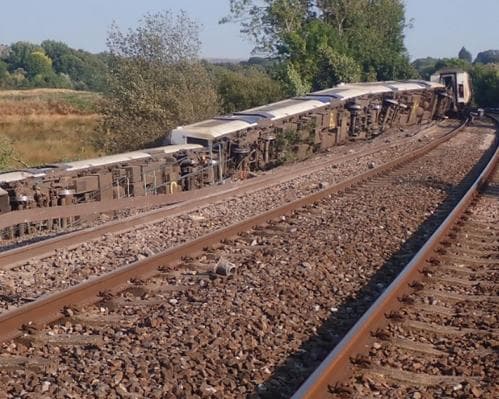
Two weeks ago, a train near Lewes in East Sussex left the tracks, injuring 30 people. The next day, at Wickford station in Essex, the rear carriages of a Greater Anglia service derailed — upright, but off the rails. No one was hurt, but the message was unmistakable: Britain's railways, engineered for drizzle and mild winters, are now fighting a war against the sun. And the sun is winning.
This isn't a niche engineering gripe. It's a balance-sheet event. In the summer of 2022, just two days of record heat forced nearly 7,700 train cancellations and racked up an estimated £30 million in costs, according to a Network Rail taskforce. This summer has been even more brutal — one of the hottest and driest on record, with drought declared across swaths of England and Wales. Network Rail itself admits the season has 'presented exceptional challenges.' For anyone managing capital tied to infrastructure, that's code for: your asset is aging faster than your depreciation schedule.
The physics is simple, but the consequences are not. Steel expands when it heats up. Modern tracks are welded into continuous lengths, so there's no slack. As the temperature climbs, the rails build up compressive stress — and eventually, they buckle. 'The classic concern for railways with hot weather is that the track might buckle,' says William Powrie, a geotechnical engineering professor at the University of Southampton. 'If they haven't got anywhere to go, they end up generating compressive stresses.' A structure under compression can fail. That's not an abstract theory; it's a derailment.
Here's the number that should freeze every infrastructure investor's coffee: Network Rail says most of the network can operate when track temperatures hit 46°C. But on a hot day, the rail itself can run 20 degrees hotter than the air. So when the thermometer reads 30°C, the track is already at the edge. And this isn't a one-off heatwave — it's a trend line. The Met Office has confirmed that UK summers are getting hotter and drier, with 40°C days no longer freakish. The railway was built for a climate that no longer exists.
So what's the fix? Some of it is old-school: painting rails white to reflect heat, or installing 'stress-relief' joints that give steel room to breathe. Some of it is brutally practical: slower trains, which reduce the dynamic forces on the track, and more frequent inspections on hot days. But the real solution is capital. Replacing or retrofitting thousands of miles of track to handle higher thermal loads isn't a quick fix — it's a multi-billion-pound programme. Network Rail's own estimates for climate resilience run into the billions, and that's before you count the cascading costs of delays, compensation, and lost freight revenue.
For wealth builders, this is a classic 'broken window' moment — but with a twist. The £30M bill from 2022 is a rounding error next to what's coming. Pension funds and private equity players who hold infrastructure assets as 'safe, inflation-linked' income are suddenly staring at a new risk class: climate-induced operational failure. The smart money is already shifting. Firms are pricing in 'heat resilience' clauses in concession agreements, and engineering consultancies are quietly pitching 'thermal hardening' as the next big infrastructure upgrade cycle — think of it as the railway equivalent of retrofitting buildings for earthquakes.
The train hasn't left the station on this one. It's already derailed. The question now is who pays for the fix — taxpayers, passengers, or the investors who own the bonds and equity behind Network Rail's £100B+ asset base. If you're holding UK rail debt, you're not just betting on the economy; you're betting on the weather. And the weather is no longer a safe bet. The next heatwave isn't a question of 'if' but 'when' — and the market hasn't fully priced in the buckle.