Bezos's $122 Billion Year: Why Blue Origin and Prometheus Are Rewriting the Wealth Map
Jeff Bezos added $122bn in a year as Blue Origin and AI startup Prometheus lifted his fortune to $372bn, second only to Elon Musk.
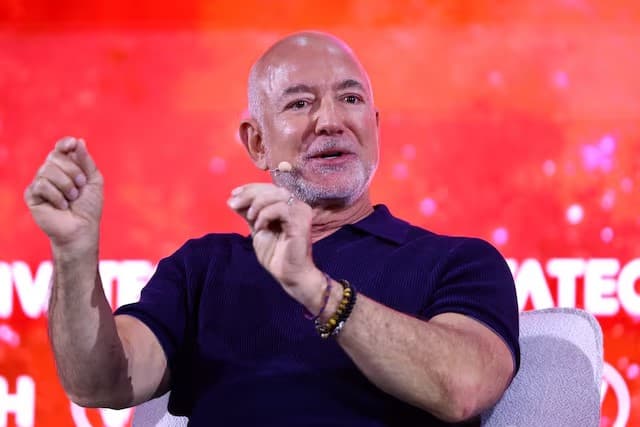
Jeff Bezos just posted the kind of year that makes even seasoned Africa-watchers sit up. The Amazon founder added $122 billion to his personal fortune over the past twelve months, according to the Bloomberg Billionaires Index, pushing his net worth to $372 billion — a 48.7% jump on the same period in 2025. That is not a market bounce. It is a re-rating of private assets, and it matters far beyond Seattle.
The mechanics are worth unpacking. Bezos, 62, is now the world's second-richest person, leapfrogging Alphabet co-founder Larry Page and sitting behind only Elon Musk, whose fortune Bloomberg estimates at $1.02 trillion. In the latest assessment alone, Bezos gained $7.31 billion, a 2% move. The headline driver is Blue Origin, his private space venture, in which Bloomberg estimates he holds roughly 93% — a stake valued with a 5% discount for its illiquid, privately held status. A valuation adjustment in October 2026 added about $85 billion to his estimated wealth. Separately, Prometheus, the AI startup he co-founded in 2025, raised funds at a $41 billion valuation in June 2026, with Bezos estimated to hold about 35%. Blue Origin itself raised $10 billion in September at a $140 billion post-money valuation, per PitchBook data.
For readers who track African capital, the Blue Origin story is not exotic. It is a template. Africa's own billionaires have spent the past decade doing exactly what Bezos is doing: converting operating cash flows from mature businesses into majority-owned, hard-to-value private assets — cement, telecoms towers, power, logistics, fintech — then watching those valuations compound outside public markets. Aliko Dangote's NGX-listed fortune swung by N1.47 trillion in a single quarter of 2026 on a cement rally, a reminder that even Africa's most visible wealth is hostage to the same forces: commodity cycles, currency risk, and the premium investors pay for scarce assets.
The difference is scale and liquidity. Bezos's $85 billion October mark-up came from an internal valuation adjustment, not a traded price. That is the same dynamic that lets African family offices quietly revalue a port concession or a data-centre roll-up without a single share changing hands. It also explains why the continent's wealthiest families increasingly structure holdings through Mauritius, Dubai and Luxembourg vehicles — to capture the same private-market premium Bezos enjoys, while managing the political and currency exposure that African operating assets carry.
What does this signal for capital flows into Africa? Two things. First, the AI and space capital cycle is pulling global allocators toward a narrow set of founders and geographies, which makes Africa's pitch harder — the continent must compete for the same pools of patient capital. Second, the playbook Bezos is running — control a cash-generative core, then build or back private ventures with defensible moats — is precisely the strategy that has produced Africa's most durable fortunes, from Dangote to the Motsepe family. The continent does not need a Bezos. It already has the operators. What it lacks is the deep, liquid exit market that turns private marks into realised wealth.
Watch the next twelve months for two signals. Whether Prometheus's $41 billion valuation holds through a funding round, and whether Blue Origin's cadence of launches justifies the $140 billion tag. If both stick, Bezos's gap to Musk narrows. If either slips, the private-market premium that has turbocharged his fortune — and that Africa's wealthiest families increasingly rely on — will be tested in public.