The $30,000 Bourbon Street Parade: How Black Motorcycle Clubs Are Redefining Freedom, Heritage, and Luxury on Two Wheels
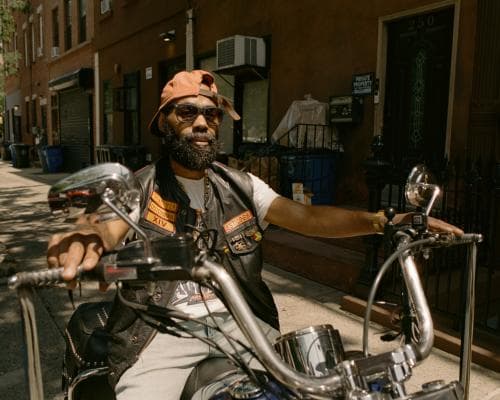
It started as a Memorial Day weekend girls’ getaway to Myrtle Beach. Patrice “Foxy” Johnson had no intention of joining a movement. But when she arrived, the streets were thrumming with thousands of riders. She watched the “backpacks”—women perched behind male motorcyclists—and felt a quiet revolution stir. She didn’t want to be a passenger. She wanted to own the road herself. That moment, three decades ago, birthed a story that now defines a corner of American luxury culture you won’t find in any showroom catalog. Johnson returned to Raleigh, enrolled in a foundational riding course at Johnston Community College, and hasn’t looked back. Today, she holds multiple leadership roles across the Black motorcycle community, a world where freedom, heritage, and horsepower converge.
The numbers are staggering. The Buffalo Soldiers Motorcycle Club, named after the all-Black cavalry units established by Congress in 1866, boasts roughly 5,000 members. Black Girls Ride (BGR), founded in 2011, has grown into a national force with five ambassadors, a digital magazine, a podcast, and its own gear line. Every summer, 250 to 300 BGR members descend on New Orleans for the Essence Festival. “The police officers will clear the street for us to walk down Bourbon Street with a second line band,” Johnson says. “We’re chanting: ‘Black Girls Ride! Black Girls Ride!’ We’re dancing in the street.” That moment—a private parade, streets closed, a community in full voice—is a luxury few can buy. It is earned through membership, passion, and a shared history.
The craftsmanship angle is visceral. These riders don’t just own motorcycles; they curate them. Custom paint jobs, hand-stitched leather seats, chrome detailing that catches the sun like a diamond bracelet. The bikes are rolling sculptures, often worth more than a year’s rent. But the real rarity is the heritage. Clubs like the Buffalo Soldiers MC carry a name that honors the first Black regiments after the Civil War—men who fought for a country that often denied them citizenship. To ride under that banner is to wear history on your sleeve, or rather, on your handlebars. The cost of entry isn’t just financial; it’s a commitment to a legacy of resilience and pride.
What does this signal about wealth and taste? In an era of hyper-curated experiences, the Black motorcycle club offers something the ultra-wealthy crave: authenticity. You cannot buy your way into the Buffalo Soldiers MC or Black Girls Ride. You have to show up, learn the history, and earn the patch. That exclusivity is more valuable than a numbered Birkin. It’s a community that polices itself with a code of honor, civic engagement, and mutual respect. BGR once “adopted” the Boys and Girls Club of New Orleans and raised more than $30,000. That kind of philanthropy is not a tax write-off; it’s a statement of values. For the discerning collector of experiences, this is the ultimate acquisition: a tribe that moves as one, powered by engines and purpose.
Looking forward, the road is widening. As younger generations seek meaning over mere objects, these clubs are becoming the new country clubs—but with better soundtracks. Expect more partnerships with luxury brands, more curated rides through Napa Valley or the Scottish Highlands, and more second-line parades that stop traffic. The message is clear: the best way to build community is on two wheels. And the best way to own your freedom is to ride it yourself.
The Experience
To experience this world, attend a Black Girls Ride meetup or the Essence Festival ride in New Orleans. Start by joining a local club chapter or taking a foundation riding course—your first step into a brotherhood of horsepower and heritage.
More in ENTERTAINMENT