The Anti-Playbook: Inside Womad’s Billionaire-Worthy Return to Analogue Luxury
Imagine this: You are standing in a queue for a portaloo, and the man next to you is Barrington Levy, reggae royalty, waiting his turn like anyone else. No velvet rope. No security cordon. Just a shared, slightly absurd moment of human equality before he walks back onstage and tells the promoter, in terms that would make a hedge fund CEO blush, exactly how long he intends to play. That is the magic of Womad, now reborn at Neston Park after a year’s hiatus. For those who have grown weary of curated VIP experiences—where every interaction is mediated by a handler and every view is from a gilded cage—this festival offers something far more precious: the luxury of the unscripted.
Womad’s new home is a masterstroke of exclusivity by subtraction. Phone signal is virtually nonexistent on site. For a crowd that typically orchestrates its social life through group chats and calendar invites, this is a radical act of deceleration. You cannot summon a driver or check a stock ticker. You must actually talk to people, arrange meet-ups by scribbling a time on a scrap of paper, or simply trust that serendipity will deliver you to the right tent. The arboretum layout folds the festival into a village-like intimacy, with camping zones mercifully close to the action. No more punishing treks across dust-choked fields. The vibe is less Coachella, more private estate gathering—the kind of weekend where you might start your morning with a djembe drum workshop, drift into laughing yoga, or soak in a wood-fired tub while basslines roll through the trees like distant thunder.
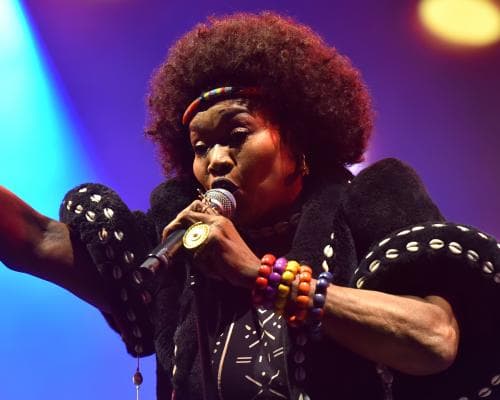
What sets Womad apart for the connoisseur of rare experience is its refusal to obey the standard luxury festival playbook. There are no bottle-service pavilions, no influencer photo ops. Instead, you get Daniela Mercury, the Brazilian hurricane, performing against visuals of favelas and Indigenous lands, calling out for democracy before closing with Michael Jackson’s They Don’t Care About Us. You get Greentea Peng, backed by an all-female brass section that rehearsed only the night before yet sounds impossibly tight—a testament to the kind of raw, unrepeatable talent that money cannot schedule. Then there is Oumou Sangaré, the Malian diva, delivering simple truths from the main stage: “Love is better, no war.” She follows it with a playful warning to women about handsome, fast-talking playboys. The crowd, a mix of seniors, families, and wide-eyed children, is spellbound. This is not entertainment as product; it is entertainment as communion.
For the ultra-wealthy, taste is increasingly defined not by what you can buy, but by what you can access that is not for sale. Womad’s hidden gems are found by wandering into smaller tents, where 83-year-old Aboriginal elder Kankawa Nagarra holds a crowd in cult-like fixation with desert blues and gospel. Sabine McCalla’s vocals, on the Village Stage, feel detached from time itself. The talks stage confronts political instability head-on, with Green Party leader Zack Polanski drawing a packed tent to discuss rent controls and arms sales, while Rick Wilson of The Lincoln Project dismantles the mechanics of MAGA with unsparing clarity. This is not escapism; it is engagement. The festival’s political edge runs straight through the weekend, a shared plea for peace and solidarity that feels more urgent than any luxury-brand activation.
What does this signal about the state of luxury? That the ultimate status symbol is no longer a private jet or a limited-edition watch—though those have their place. It is the ability to step out of the algorithm entirely. To be unreachable. To bump into a legend in a loo queue. To sit in on an intimate panel discussion hours after that same artist commanded a main stage. Womad is a reminder that the most covetable experiences are those that cannot be replicated, bought, or optimised. They simply happen. And if you are lucky enough to be there, you are part of something that the rest of the world—staring at their screens—will never quite understand.
Looking ahead, Womad’s return at Neston Park sets a new benchmark for the discerning traveller. This is not a festival you attend; it is a place you inhabit for a weekend, where the boundaries between spectator and performer dissolve into something resembling a temporary utopia. For those who have seen it all, done it all, and bought most of it, the rarest commodity left is genuine, unmediated human connection. Womad delivers that in spades, wrapped in the sound of a thousand voices singing together, no signal required.
The Experience
Book a private consultation with our travel desk to secure priority access to next year’s Womad, including curated camping upgrades and off-grid concierge services.
More in ENTERTAINMENT