The $100 Million Gamble: How Harry Potter’s Stage Magic Became the Ultimate Status Ticket
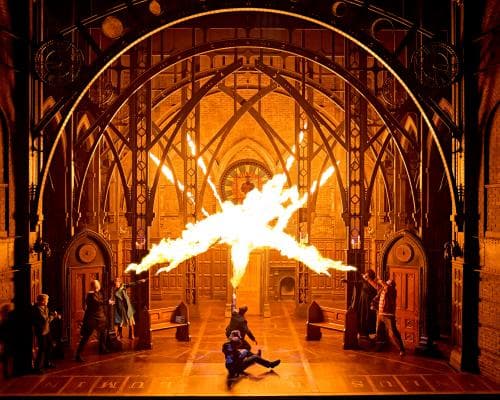
Imagine the world’s most valuable intellectual property — a franchise worth more than the GDP of a small country — handed to a playwright who had never written a stage sequel, starring an actor who initially thought the whole idea was a terrible mistake. That is how the most coveted ticket in live entertainment began. Not with a boardroom of suits, but with a quiet, almost absurd leap of faith. For the ultra-wealthy, Cursed Child is not just a show; it is a proof of concept: that risk, when curated by the right hands, becomes the rarest commodity of all.
Jamie Parker, the man who would become the adult Harry Potter on stage, remembers his first reaction: confusion. He was too old to play a teenager — or so he thought. He had read the first book, seen a few films, but had missed the cultural tsunami. Then he learned the play picks up 19 years after the final novel — a coda most fans overlooked. Parker admits he thought the show was a terrible idea. But as he says, “A lot of hit shows are terrible ideas on paper.” The difference? The team. Producers Sonia Friedman and Colin Callender, writer Jack Thorne, a creative roster so formidable Parker says he would have signed a contract blind just to work with them. By the end of rehearsals, he had listened to Stephen Fry’s audiobooks seven times. He became a Potterhead. And that transformation — from skeptic to true believer — is the same journey every audience member takes when they secure a seat.
The craftsmanship is staggering. Parker, who plays multiple instruments, found that musicality was the secret to the illusions. The magic tricks on stage are not CGI — they are live, physical, dangerous. Parker’s spatial awareness, he admits, is dreadful. He bangs his hand on every door latch. Yet he navigated tight entrances, heavy moving machinery, and high-speed choreography in near-total darkness without serious injury. “It’s a miracle,” he says. One night during a duel with Draco Malfoy, his wand snagged on his costume, helicoptered across the stage, and vanished into the dark. Without thinking, Parker launched himself after it, half his torso off the stage into the auditorium. He caught it. His co-star Alex Price cheered like he was watching cricket. That moment — raw, unrehearsed, terrifying — is the kind of rarity that cannot be replicated. For the collector of experiences, this is the equivalent of a one-of-one Patek Philippe: an unrepeatable convergence of skill, luck, and nerve.
What does this signal about taste in the luxury market? That exclusivity is no longer about velvet ropes and VIP sections. It is about access to something that cannot be streamed, downloaded, or replicated. Cursed Child is the theatrical equivalent of a private jet charter: you cannot just buy a ticket — you must plan months ahead, navigate a lottery system, or pay a premium on the secondary market that rivals a Birkin bag. The play’s first preview generated a “ripple of energy almost visual,” Parker recalls. Audiences flew in from Australia. The producers framed it as “opening the new Star Wars film in one cinema worldwide.” For the ultra-wealthy, that scarcity is the signal. It says: I was there. I saw the magic happen live. I understand that the greatest luxury is not owning things, but experiencing moments that cannot be owned.
Looking forward, Cursed Child has already proven that live theatre can command the same cultural and financial gravity as a blockbuster film franchise. The show continues to sell out in London, New York, and now Melbourne. For the connoisseur of status experiences, the next frontier is not a new watch or a faster car — it is the ability to sit in a dark room and watch a man catch his own wand in mid-air, knowing that for that split second, the magic was real. And that, in a world of infinite digital content, is the rarest luxury of all.
The Experience
Secure your seats through the official West End or Broadway box offices — or contact a premium concierge service for priority access to sold-out performances in London, New York, or Melbourne.